
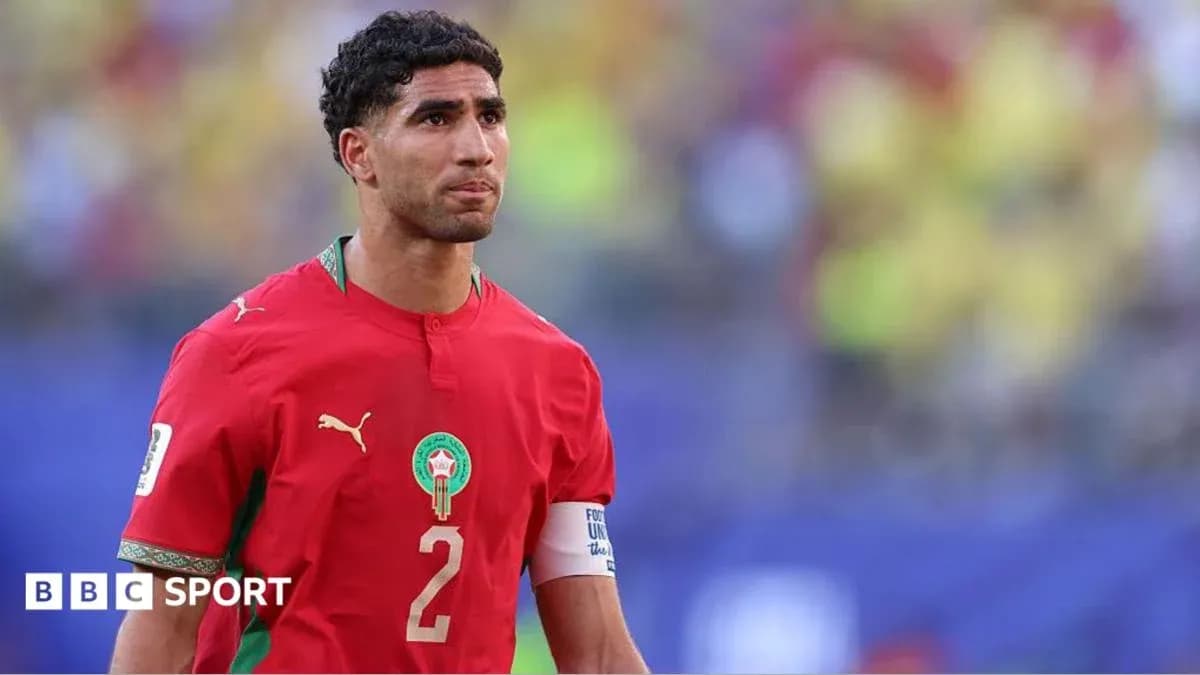
Achraf Hakimi Ordered to Stand Trial for Rape Amid World Cup Campaign
Achraf Hakimi, the captain of Morocco and one of the most high-profile defenders in world football, has been ordered to stand trial for rape in France, casting a stark shadow over his World Cup campaign.
French prosecutors in Nanterre, on the western outskirts of Paris, confirmed that the 27-year-old Paris St-Germain full-back will face trial over allegations dating back to 2023, when a 24-year-old woman accused him of raping her at his home in the French capital.
A Long Road to Trial
The public prosecutor's office opened a preliminary investigation in March 2023. Since then, the case has moved slowly but relentlessly through the French legal system.
In February 2026, an investigating judge ordered that Hakimi stand trial. French media report that a recent appeal by the defender’s legal team to have the case thrown out has failed, clearing the way for proceedings to go ahead. No trial date has yet been set.
Hakimi has consistently denied the accusations. On Friday, as he prepared to lead Morocco into their second World Cup group match against Scotland (23:00 BST), he broke his public silence with a pointed message on social media.
"The justice system looked me in the eye and said, 'If you weren't famous, there would never have been a case,'" he wrote.
"I chose to remain silent for years. I believed that maintaining my dignity, being patient, and trusting in the justice system would allow the right decisions to be made.
"Today, a story that isn't mine is being told at the expense of my family, my life, and above all, the truth. I sometimes feel like I've become an easy target.
"I've been waiting for this trial since day one. And now I'm eagerly awaiting it. Finally, I'll be able to speak."
Those words land in the middle of a World Cup, but the battle that matters most to Hakimi is clearly unfolding far from the pitch.
Relief and Resolve on the Other Side
For the woman who brought the complaint, the judge’s decision marks a turning point in a case that has already stretched over three years.
Her lawyer, Rachel-Flore Pardo, issued a statement welcoming the order to send the case to trial.
"After more than three years of legal proceedings, and after my client was, in her view, defamed and dragged through the mud by Achraf Hakimi's defence, this decision brings her relief and hope.
"Relief that she has been heard by the justice system and will have the right to a trial.
"Hope that this trial will help other women and further weaken the wall of denial and impunity surrounding sexual violence, including in the world of men's football."
The legal fight is now set. Both sides say they are ready for their day in court. The timeline, though, remains uncertain.
World Cup Stakes and Border Lines
On the field, Hakimi remains central to Morocco’s ambitions. He is set to wear the armband again as his country plays its second group game in the United States, where all three of their group fixtures are being staged.
But the legal case could have consequences beyond the courtroom if Morocco progress.
The World Cup is split across three co-hosts — the United States, Canada and Mexico — up to the quarter-finals, before the tournament moves exclusively to US soil. Any knockout fixture scheduled in Canada or Mexico could pose a serious problem for Hakimi’s ability to travel.
Canada’s government states it can deny entry to any person who has "committed or been convicted of a crime". The wording also leaves room for immigration officials to scrutinise individuals facing serious charges, even if they have not been convicted.
The issue is no longer theoretical. Last week, Ghana midfielder Thomas Partey missed his country’s World Cup opener against Panama after being denied entry to Canada. Partey, 32, has pleaded not guilty to seven charges of rape and one count of sexual assault involving allegations from four women between 2020 and 2022. He is due to stand trial next year.
For Morocco, the equation is clear: progress deep into the tournament and the question of where they play may determine whether their captain can join them.
A Career Under the Harshest Spotlight
Hakimi’s footballing story has, until now, been a tale of relentless ascent.
He made his international debut for Morocco in 2016 at just 17 and has since amassed 97 caps, becoming the heartbeat of a golden generation. In Qatar in 2022, he was a driving force in the side that made history as the first African nation to reach a World Cup semi-final, a run that electrified a continent and reshaped expectations of what African teams can achieve on the biggest stage.
At club level, his career has been equally decorated. After spells with Real Madrid and Inter Milan, he joined Paris St-Germain in 2021. Since then he has collected 13 trophies with the French club, including back-to-back Champions League titles over the past two seasons, cementing his status as one of the premier attacking full-backs in the game.
Now, that glittering career runs parallel to a serious criminal case that will define how he is remembered far beyond football.
As Morocco chase another deep World Cup run in North America, their captain moves through a tournament framed not just by tactical questions and title dreams, but by borders, court dates and a looming trial that will demand answers no result on the pitch can provide.





