AC Milan W vs Parma W: A Snapshot of Serie A Women's Landscape
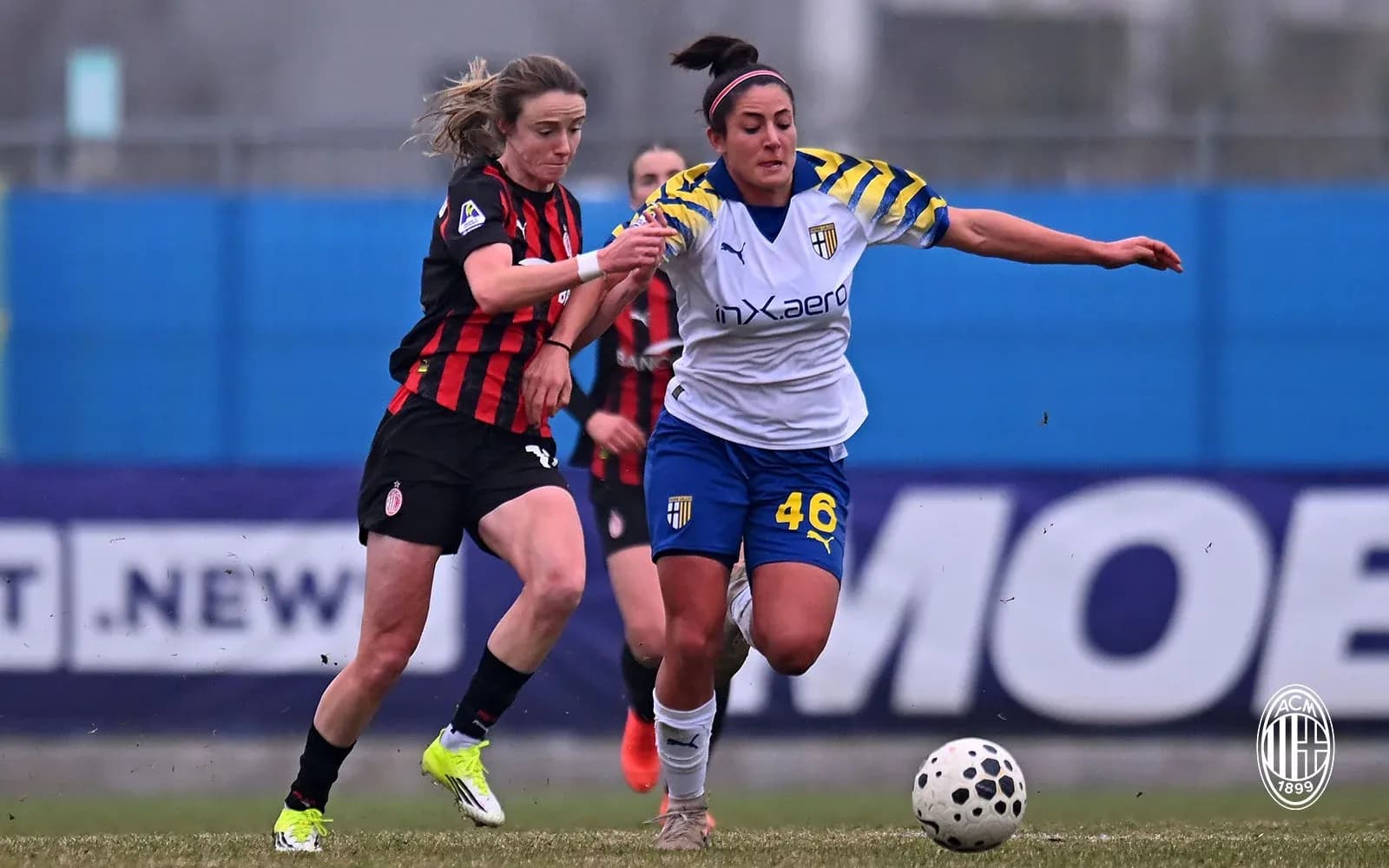
Under the grey Milan sky at Centro Sportivo Peppino Vismara, AC Milan W’s 3–1 win over Parma W felt less like a routine home victory and more like a snapshot of where these two clubs stand in the Serie A Women landscape.
Following this result, the table tells a clear story. Milan sit 6th with 32 points, their overall goal difference at 6 after scoring 31 and conceding 25. Across 21 league matches they have won 9, drawn 5 and lost 7, a profile of a side hovering just outside the elite but with enough quality to hurt anyone on their day. At home, they have been solid: 5 wins, 3 draws and 3 defeats from 11, with 18 goals scored and 15 conceded.
Parma, by contrast, remain locked in a survival fight. They are 10th with 16 points from 21 games, and their overall goal difference of -13 (15 scored, 28 conceded) underlines the thin margins they live on. Their home form has kept them afloat – 2 wins, 5 draws, 3 defeats, 13 goals scored and 14 conceded – but on their travels they have been fragile: 0 wins, 5 draws and 6 losses away, scoring just 2 and conceding 14.
The match itself mirrored those seasonal identities. Milan, already an offensively stronger side with an overall scoring average of 1.5 goals per game (1.6 at home), eventually overwhelmed a Parma team that averages only 0.7 goals overall and just 0.2 away. The 1–1 scoreline at half-time suggested a contest; the 3–1 full-time result confirmed the gap in firepower and depth.
Tactical voids and discipline
Both lineups were close to full strength, with no formal list of absentees provided. That stability allowed the coaches to lean into their seasonal identities rather than improvise.
Suzanne Bakker’s Milan started with L. Giuliani in goal, protected by a back line that included E. Koivisto and M. Keijzer, the latter a quietly important figure in this squad. Keijzer’s season numbers – 23 tackles, 3 successful blocks and 10 interceptions in 868 minutes – show why she is trusted to anchor the defensive line. Ahead of them, G. Arrigoni and M. Mascarello formed part of a midfield that balances aggression and circulation, while C. Grimshaw and S. Stokic provided the legs and verticality. Up front, T. Kyvag and C. Dompig were tasked with stretching Parma’s back line.
Giovanni Valenti’s Parma set up around a defensive core that has spent the season under siege, especially away from home. M. Copetti started in goal, shielded by C. Minuscoli, C. Ambrosi and D. Cox. In midfield, M. Uffren and L. Dominguez were central, with C. Prugna and I. Rabot asked to connect the lines, while G. Distefano and A. Kerr gave Parma their attacking thrust.
Discipline has been a live wire for both teams this season. Milan’s yellow card profile shows a pronounced late-game spike: 31.58% of their cautions arrive between 76–90 minutes. They also spread red cards across the second half, with 1 red each in the 46–60, 61–75 and 76–90 ranges, underlining how their intensity can tip into risk as matches stretch. Parma are similar but even more volatile late: 29.17% of their yellow cards also fall in the 76–90 window, and their only red card this season has come in that same late phase (100.00% of their reds between 76–90).
On an afternoon where Milan were pushing to turn 1–1 into a statement win and Parma were chasing a precious point, that shared tendency toward late indiscipline was always going to hover over proceedings. For Milan, players like Mascarello – who has collected 4 yellows this season – walk a fine line between competitive edge and costly fouls. For Parma, Uffren’s 7 yellow cards and 24 fouls committed frame her as both indispensable and perpetually one challenge away from trouble. She has also missed a penalty this season, a detail that underlines how much responsibility she carries in both directions.
Key matchups
Hunter vs shield
Milan’s attacking “hunter” identity is best personified by K. van Dooren, even though she started this match on the bench. With 5 goals from 18 shots (12 on target) and a rating of 6.9, she is Milan’s leading scorer this campaign. Her threat is not just in finishing but in occupying defensive lines and opening space for runners like Grimshaw and Dompig.
Parma’s “shield” has been their collective defensive structure, especially at home, but away from home they concede an average of 1.3 goals per match and have already shipped 14 on their travels. Copetti and the back three were always likely to face sustained pressure from a Milan side that averages 1.6 goals at home and has produced home wins as emphatic as 3–0. The 3–1 scoreline fits neatly into that statistical pattern: Parma’s away defence bending under a volume of chances rather than a single moment of collapse.
Engine room
The midfield battle was the true engine of this contest. For Milan, Grimshaw’s season output – 2 assists, 263 passes at 79% accuracy, 11 tackles and 4 successful blocks – marks her as the all-purpose connector. She can progress the ball, press, and protect the back line. Alongside her, Mascarello’s 368 passes and 15 key passes add structure and creativity, even as her 15 fouls and 4 yellows reveal the edge she brings out of possession.
Parma’s response came through Uffren and Distefano. Uffren has been their heartbeat: 512 passes at 82% accuracy, 32 tackles, 3 blocked shots and 34 interceptions. She is both metronome and shield, and her 60 duels won show how often she stands her ground. Distefano, listed among the league’s top assist providers with 2 assists and 16 key passes, is Parma’s primary transition outlet. She has attempted 31 dribbles with 11 successes, drawn 50 fouls, and blocked 3 shots – a profile of a wide forward who carries the ball, invites contact and works back diligently.
In this match, as Milan pushed higher after the break, the engine room tilted red and black. Grimshaw’s ability to break lines and win second balls gradually starved Distefano of the clean transition platforms she needs. When Parma’s first line of pressure was bypassed, Uffren was left covering too much space, and Milan’s third goal felt like the natural consequence of that structural strain.
Statistical prognosis and narrative verdict
Following this result, the numbers around both clubs feel more entrenched than ever. Milan’s overall goals-for tally of 31 against 25 conceded, their 7 clean sheets and 7 matches where they have failed to score paint a picture of a team still searching for consistency, but with a ceiling higher than their current 6th place suggests. Their use of flexible 4-3-3 and 4-2-3-1 structures across the season, and the presence of technical profiles like van Dooren, Grimshaw and Dompig, give them multiple attacking reference points.
Parma’s story is more fragile. They have kept 6 clean sheets overall, including 4 away, but the flip side is stark: they have failed to score in 11 matches, and 9 of those blanks have come on their travels. An away attack averaging 0.2 goals per game is living on the edge of survival, no matter how organised the defence. Their best home wins (2–0) and heaviest away defeats (4–0) reinforce the split personality between Tardini security and road vulnerability.
In xG terms – even without explicit figures – the structural indicators are clear. A Milan side that creates enough volume to average 1.6 home goals against a Parma team that struggles to reach even 1.0 overall was always likely to generate the better chances. Parma’s reliance on set pieces, transitions and isolated moments from Distefano or Uffren is simply a lower-probability route to goals.
The 3–1 scoreline, then, is less a surprise than a narrative confirmation. Milan’s squad depth and attacking layers eventually told, while Parma’s away frailties and limited offensive punch resurfaced. For Bakker, the task now is to turn this into a platform for a late push up the table, refining a side that already has a positive goal difference and multiple creative hubs. For Valenti, the mission is more urgent: harness the grit that has produced 10 draws overall, sharpen the cutting edge of players like Distefano and Uffren, and somehow translate home resilience into away survival.
In Milan, on this afternoon, the numbers and the narrative aligned. The league table, and the underlying data, suggest that may continue unless Parma can rewrite their attacking script on the road.