
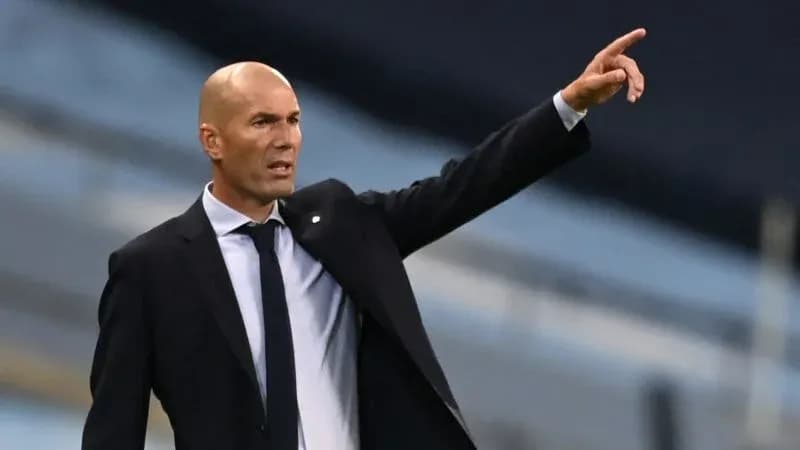
Zinedine Zidane Returns as Head Coach of France
Zinedine Zidane is back where many always believed he would end up.
The French Football Federation confirmed on Tuesday that the 54-year-old has been appointed head coach of France on a four-year deal, stepping into the seat vacated by Didier Deschamps after a bruising end to the 2026 World Cup cycle.
Deschamps walked away following a campaign that promised a coronation and ended in deflation. France, stacked with talent and heavily backed to go all the way in North America, fell to eventual champions Spain in the semifinals, then lost the third-place playoff to England. For a generation used to finals, medals and parades, fourth place felt like a comedown.
Into that void walks Zidane – the most iconic French footballer of his era, a serial winner as a coach, and a man who has been orbiting this job for years.
“Nothing greater than the French national team”
Zidane has never hidden what this role means to him. At his unveiling, he cut straight to the point.
“I have often said there is nothing greater than the French national team. It is therefore a joy and obviously a great honor to become the coach of France. It is also a responsibility. I want to thank President Philippe Diallo, the Executive Committee and the French Football Federation for their trust and salute the fourteen years of Didier and his staff,” he said.
“I also have a special thought today for all my teachers. Needless to say, I have a lot of ambition for the French Team!”
Ambition has followed him everywhere. As a player, it carried him from Marseille’s streets to the very summit of the sport. As a coach, it drove him through the pressure cooker of Real Madrid to three consecutive Champions League titles, two La Liga crowns and two Club World Cups. Now it meets its most emotional test: the national team shirt he once elevated, then left in chaos.
A legend returns to his first stage
For France, Zidane is not just a famous name returning to the fold. He is the architect of some of the country’s most cherished football memories.
In 1998, at the Stade de France, he rose twice above Brazil’s defence and buried two thumping headers in the World Cup final. Those goals, in a 3-0 win, delivered France’s first world title and the first star above the badge. He followed that with another masterful tournament at Euro 2000, driving Les Bleus to the European Championship and making France the first reigning world champions to add the Euros in the next cycle.
Those years forged the myth of “Zizou”: elegant, ruthless, unshakeable in the biggest moments.
Yet his international story never fully escaped its final image. In Berlin in 2006, in his last match for France, Zidane walked past the World Cup trophy and down the tunnel, sent off for headbutting Marco Materazzi in extra time of the final against Italy. France lost on penalties. The night ended not with a lap of honor, but with a red card and a nation stunned.
Eighteen years on, the same man returns with a chance to rewrite the closing chapter. France fans, who have long forgiven, will expect him to correct the only real blemish on an otherwise glittering national-team legacy.
From Madrid’s throne to France’s hot seat
This is Zidane’s first job in international management, but he arrives with a résumé that dwarfs most of his peers.
At Real Madrid, he navigated a dressing room loaded with egos and Ballon d’Or contenders and turned it into a relentless winning machine. Three Champions League titles in a row – a feat no coach had achieved in the modern era – cemented his reputation as a master of knockout football. Add two league titles and two Club World Cups, and his body of work in Spain speaks loudly enough.
He has already proved he can handle pressure, superstars and the unforgiving demands of a global fanbase. The France job will test all of that again, in a different way. There is no transfer market to fix problems, no second leg to repair a bad night. International football offers fewer games, less time, and almost no margin for error in major tournaments.
Yet this is the job he has quietly waited for. Since leaving Madrid in 2021 after his second spell in charge, Zidane has been linked with big clubs across Europe. He stayed patient. Deschamps stayed on. The timing never quite aligned. Now it does.
Balancing the firepower
If Zidane’s Madrid sides were defined by control and clarity in the biggest moments, his greatest challenge with France may be to impose that same sense of order on a wildly gifted but sometimes unbalanced squad.
France’s attacking options look like a video game squad list. Kylian Mbappé remains the headline act, a global superstar entering his prime and desperate to add another World Cup to his collection. Around him swirl Ousmane Dembélé, Michael Olise, Désiré Doué, Bradley Barcola and a conveyor belt of emerging forwards. The issue has not been talent. It has been harmony.
Since lifting the World Cup in 2018, France have often wrestled with their own abundance, searching for the right blend between explosive attacking play and defensive solidity. Systems have shifted, combinations have been tried, but the perfect balance has remained elusive, particularly against the very best opponents at the sharp end of tournaments.
Zidane’s mandate is clear: unlock the full potential of that offensive arsenal without sacrificing the defensive rigidity that underpinned France’s greatest modern triumphs.
His track record offers clues. At Madrid, he managed Cristiano Ronaldo and a galaxy of attacking stars, yet his teams were rarely reckless. They attacked with purpose, defended with discipline, and understood when to suffer. He will need to translate that club formula into an international rhythm, where cohesion must be built in brief windows and tested under the brightest lights.
Chasing an elite double
Looming over everything is the World Cup in 2030. The expectation is not subtle. France will go into that tournament as one of the favourites again, and Zidane will be judged, more than anything, on whether he can deliver another star.
If he does, he will join one of football’s most exclusive clubs: those who have lifted the World Cup as both player and manager. Deschamps is already in it. Zidane, his former teammate, now has the chance to match him, and perhaps surpass him, from the same technical area.
Between now and then lies the grind: qualifying campaigns, squad turnovers, tactical tweaks, the inevitable storms that follow any dip in form. Zidane knows all about the peaks. The question now is how he navigates the valleys with the tricolore on his chest and an impatient football nation at his back.
France have turned to a legend to restore their edge. Zidane has finally stepped into the role he seemed destined for. The next four years will reveal whether this is the perfect reunion – or the biggest gamble of his managerial life.





