World Cup Portraits: Capturing the Essence of Players
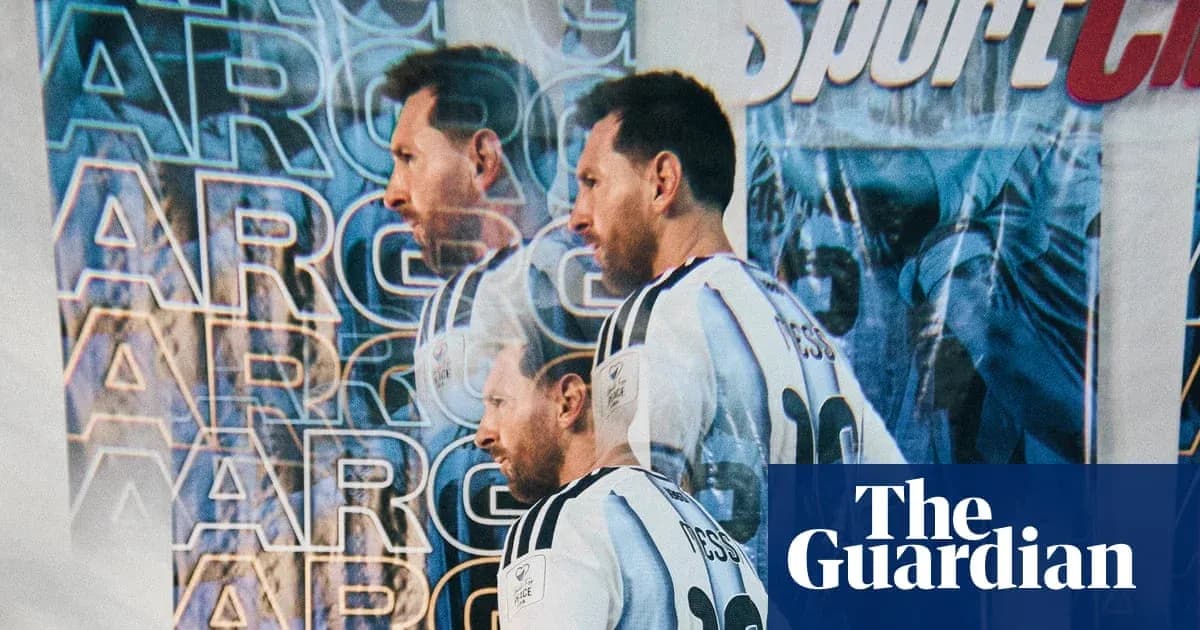
Lionel Messi stands bolt upright, eyes fixed, body locked. A man carved in floodlights. Across the room, Marc Cucurella flicks his hair and half-dances for the lens. Diego Moreira hides his eyes behind a forearm, a ghostly tattoo slipping into view. Harry Kane drops to one knee, unsure quite what to do with himself.
Welcome to the World Cup’s quietest circus: the official portrait session.
There are 1,248 players and 48 managers at this tournament, and not one of them can dodge this particular duty. No sliding tackles here, no VAR checks. Just a mark on the floor, a bank of lights, and a few precious minutes to decide how you want the world to see you.
These portraits, shot by Getty Images on behalf of Fifa in the build-up to the tournament, are more than headshots. They’re tiny character studies. A rigid Messi. A playful Cucurella. A brooding Moreira. Each frame hints at ego, nerves, mischief or complete indifference.
Behind the camera, the operation runs like a factory line. Getty assigned two photographers to every team, each with a different set: one plain, one more distinctive. While one player steps into a neutral backdrop, another moves into a more stylised environment, the whole squad rotating through with the efficiency of a well-drilled set-piece routine.
The lighting is deliberately simple. A big studio strobe with a softbox hits the player’s body. A couple of rim lights from behind carve out shoulders and jawlines, giving shape and separation. The stage might look muted compared with the glossy 2022 World Cup portraits, but the trick this time lies in the glass, not the wall.
Special lens filters do the damage. They smear light, fracture colour, bend the edges of reality. A sharp face floats in a swirl of blur. Colours split and rejoin. Messi, for instance, appears caught inside a kaleidoscope, as if the world’s gaze has become something you can actually see.
Tom Jenkins, the Guardian sports photographer embedded in this world, knows how brutal the pace can be.
“With these kinds of shoots, you only get a few minutes with each player and you have to bash out various pictures and think incredibly quickly,” he says.
You can’t ease your way into it. There’s no warm-up, no extra time. One player steps out, another steps in, and the photographer has to switch from “school photo” to something worthy of a billboard in the space of a breath.
“You want some shots that are dead plain like a school photo – that’s how player portraits always used to be done – but these days you also want pictures that are more emotive and fun,” Jenkins explains. Some players arrive with their own ideas: goal celebrations, trademark gestures, carefully curated personas. Others stare blankly, waiting for direction. So the photographer comes armed with a mental playbook of poses, angles, tricks to coax out something real.
The power dynamic flips in these few minutes. On the pitch, these are global superstars. In the studio, the photographer calls the press. Every light, every filter, every inch of backdrop belongs to them.
“The interesting thing is that you’re in control of these superstars and every aspect of the shoot,” Jenkins says. “There’s a lot of pressure that comes with that. You have to make sure you’ve set things up and tested everything before they arrive, so that when the shoot starts you can just focus on them.”
Even the basics are choreographed. Name cards sit ready for every player – including Messi, in case anyone, somewhere in the editing chain, suffers a moment of madness and forgets the most recognisable footballer on the planet. Between shots, players lean over monitors, checking their images, tweaking a pose, adjusting a look. This is not the age of the reluctant subject.
“Most football players are very aware of their own image these days and they know how powerful it can be, especially through Instagram,” Jenkins says. Many have done this for fashion houses and grooming brands long before they ever did it for their country. Eberechi Eze has posed for Burberry. Declan Rice has fronted L’Oréal. By the time they walk into a World Cup portrait set, they know their angles.
Some lean into it. Some overdo it. Some, inevitably, get torn apart online.
England’s shoot provided a reminder that the internet is merciless. Rice was mocked for his sunburn, the red flush across his face becoming an instant punchline. Anthony Gordon’s look drew comparisons with Princess Diana. Dean Henderson’s side-eye expression went viral for all the wrong reasons, unsettling rather than suave.
But scroll past the memes and there’s something else: genuinely inventive work. The more creative frames of Jude Bellingham and his teammates show what can be done in-camera when the photographer takes risks, even if the subject offers little more than a shrug. Light, glass, timing – those tools still matter.
One image, though, has towered above the rest. It isn’t a player at all.
It’s Marcelo Bielsa.
The Uruguay manager, shot by Michael Regan at the team’s base in Cancún, Mexico, wanted no part in the theatre. When his turn came, he simply refused the basic premise. No direct stare. No heroic stance. Instead, Bielsa looked down at his feet, shoulders slumped, gaze fixed on the floor.
The result is a portrait that crackles with resistance. It breaks every unspoken rule of the genre and yet feels completely faithful to the man. Bielsa later shrugged it off with a simple line: “I’m not a model.”
He didn’t need to be. The picture did the talking.
“Ultimately I think the best portrait is one that displays the individual’s personality, and that’s why the Bielsa picture is so brilliant,” Jenkins says. “It’s perfectly him.”
In a tournament obsessed with data, tactics and systems, these few frozen frames offer something rarer: a glimpse of who these people are when the whistle isn’t blowing and the ball isn’t at their feet.