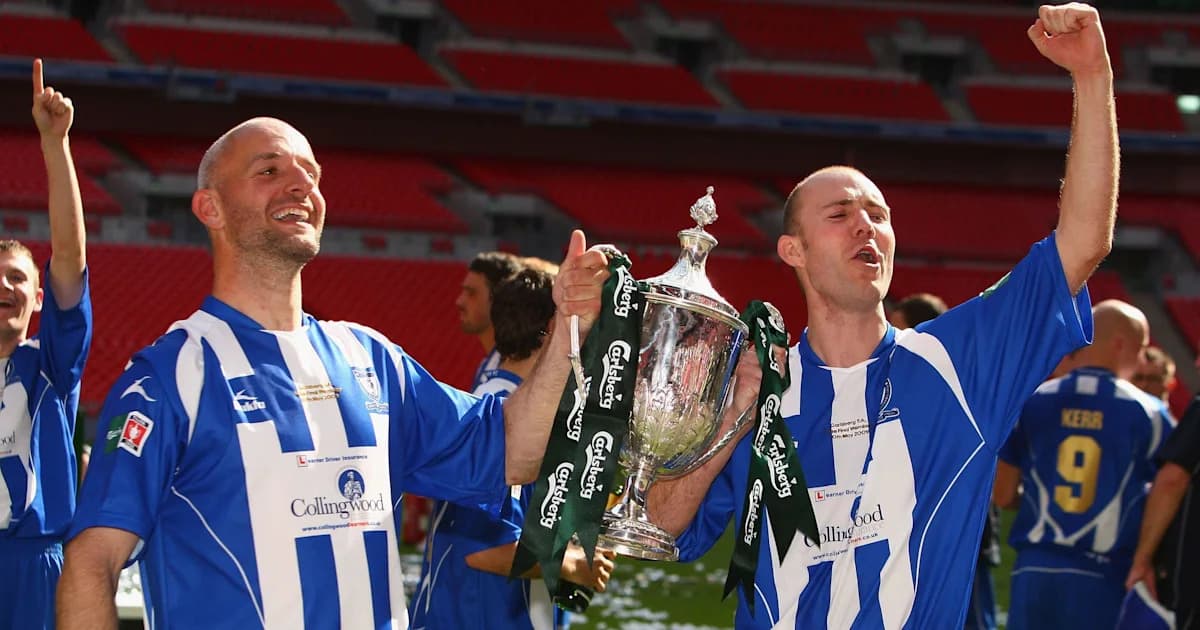
The Part-Time Team That Claimed Three Straight Wembley Finals
You might know Pep Guardiola's Manchester City for winning four consecutive League Cups from 2018 to 2021, but a lesser-known team achieved a similar feat earlier. Whitley Bay, a ninth-tier Northern Football League club, won three straight FA Vase finals between 2009 and 2011, an extraordinary accomplishment in non-league football.
Whitley Bay's Historic Triumphs
The FA Vase, created in 1974 for amateur teams, has never seen a club win it four times until The Seahorses. Their manager, Ian Chandler, an unassuming IT manager from Sunderland, guided them through this golden era. Chandler had played for Whitley Bay before taking the managerial reins in 2004, overseeing a decade of success.
Managing part-time was no simple task. Chandler juggled hotel arrangements and scouting reports instead of typical work meetings. The disappointment of missing out on Wembley in 2007-08 after a semi-final loss motivated the team to push further. Chandler even adopted a superstition of avoiding pre-match interviews following that heavy defeat.
Building a Team with Heart
"It's the hardest thing to keep a team together - as soon as players get noticed, they get picked up at higher level," Chandler told BBC Sport. "But after we got to the Vase semis, players wanted to stay and prove what they could do. Then the lads wanted to do it again. And again."
Though a lifelong Sunderland supporter, Chandler modeled his team’s style on Kevin Keegan’s Newcastle, emphasizing entertaining football over cautious tactics. His philosophy was clear: fans want excitement, not dull matches.
Chairman Paul McIlduff, who appointed Chandler, praised the squad for their unity and talent. He said they had speed on the wings, skilled midfielders, and clinical strikers. Importantly, the dressing room culture discouraged arrogance; every player respected each other and played for the collective.
Key Players and Memorable Moments
A standout figure was Paul Robinson, nicknamed Whitley Bay's Maradona. Coming through Newcastle United’s academy, Robinson balanced football with working under Chandler at Sage software company. He recalls zoning out during work, imagining scoring goals and hoping opponents would be weak.
Robinson’s most iconic moment came in the 2010 FA Vase semi-final second leg, scoring a last-minute diving header in pouring rain to secure a 6-5 aggregate win over Barwell, igniting a pitch invasion.
Robinson reflects on the strong fan support in earlier rounds, with thousands attending home matches, creating a professional atmosphere rare for non-league football. Whitley Bay’s reputation grew so much that visiting teams showed up in suits, expecting a day out, only to face heavy defeats.
Impact on the Community and Volunteers
Whitley Bay’s success lifted spirits in the working-class coastal town near Newcastle. Volunteers worked tirelessly, canvassing local shops and selling tickets from vans to rally community support. Jenn Robinson, a volunteer, shared how shops displayed the club’s blue and white stripes, and local sponsors eagerly backed the team.
Newcastle United helped sell tickets, and North Tyneside Council provided security for large crowds at Hillheads Park stadium. Despite logistical hiccups like trains failing to go directly to Wembley, supporters were determined to make it to London for the finals.
Jenn Robinson recalled sitting in the royal box at the first Wembley final, noting the surreal experience of occupying Prince William’s seat before he had even used it.
Wembley Glory and Lasting Memories
Chandler’s son Benjamin served as mascot for all three finals. The first final in 2009 saw Whitley Bay beat Glossop North End 2-0 before a crowd of 12,200. The following year, they dominated Wroxham 6-1, with Paul Chow scoring the fastest goal in a Wembley final at 21 seconds—a record broken only 13 years later by Ilkay Gundogan.
The trilogy ended in 2011 with a thrilling 3-2 victory over Coalville Town, where Chow again scored the winner late in the game. Across these finals, almost 30,000 fans filled the stands. Post-match celebrations moved from modest pubs to rented rooms for families and friends, growing more festive each year.
In 2010, the team spent ten days together preparing and then relaxing in Marbella, an unforgettable experience for many players.
That year was also emotional, as former teammate Mark Taylor, diagnosed with motor neurone disease, joined celebrations despite having retired early. Chandler fondly recalls Taylor’s humor and presence as central to the team’s spirit.
Life After Glory
Success brought unexpected attention. Reporters visited Chandler’s workplace, and his mother even appeared on BBC Radio Newcastle. Chandler attended sports awards alongside icons like Sven Goran Eriksson and Sir Alex Ferguson, creating memories beyond football.
Robinson admits returning to office life felt like a letdown after Wembley glory, though his colleagues initially gave him a standing ovation. Teasing about Wembley tales soon returned things to normal.
Chandler left the club in 2014 after form dipped. Since then, Whitley Bay hasn’t claimed major trophies but remains a beloved part of the north-east’s football culture.
"We went out in Durham recently, and someone recognized me and started talking about that team," Chandler laughs. "Football means everything in the north-east. Those memories are still alive."