Western United's A-League Licence Termination and Future Plans
Western United’s A-League licence is gone. The club itself insists this is where the story starts again.
On Monday, the Australian Professional Leagues (APL) confirmed what had long felt inevitable: Western United had breached “a number of its obligations” under the conditional hibernation agreement struck in September last year. The deal was meant to buy time. Instead, it became a countdown.
The club had scoured for lifelines, including a takeover bid from an American investment group, but no rescue package landed. With Football Australia terminating its licence and the club sliding into liquidation late last year under the weight of a $15 million tax debt, the resurrection push was effectively over before this latest announcement drew a line under it.
The APL’s statement carried both finality and sympathy.
“It’s been a difficult period for everyone connected to Western United – and we want to acknowledge the management, staff, players and especially the fans – who have given so much to the club and will no doubt be hurt by this news,” APL chairperson Stephen Conroy wrote.
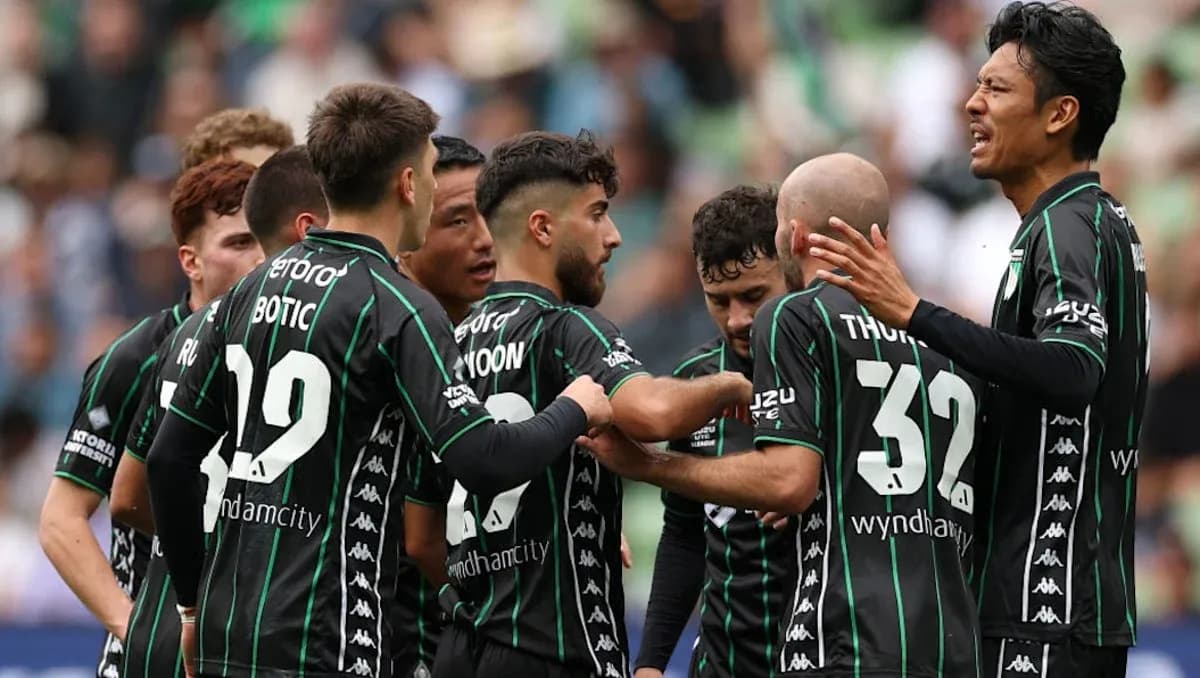
Those fans had already seen the foundations crumble. When Western United was placed in hibernation last year, every contracted player instantly became a free agent. The squad scattered, the dressing room emptied, but the club hierarchy clung to the idea that hibernation did not mean death.
Coach John Aloisi had read the signs early. In January he left to take charge of Chengdu Rongcheng FC in China, a move that underlined just how fragile Western United’s position had become. When the man who led them to an A-League Men title walked away, optimism took a heavy hit.
Now the licence has formally gone, Western United have chosen not to talk about endings.
“Today marks a significant moment in our history and the beginning of a new chapter,” the club said in a statement released after the APL decision.
The language was defiant, almost stubborn. The club said it had spent “recent months” working with the APL on “a pathway that gives the club the best opportunity to survive, rebuild and return to the A-League under new ownership”.
That is the pivot point. New custodians. New money. A fresh start.
“This creates an opportunity for new custodians, new investment and a fresh start,” the statement continued. The target is already set: a return to the A-League for the 2027/28 season, with Western United’s identity anchored in Melbourne’s west.
For now, identity is almost all that remains. No licence. No active senior teams in the A-League Men or Women. No coach. No contracted players. Just a name, a region, and a promise.
The club framed the next phase as a joint project with the APL, Wyndham City Council, various levels of government, potential owners and the wider football community, all tasked with finding a “sustainable way forward”.
“This should not be the end of Western United. It should be the reset that allows the club to rebuild and return stronger,” the club declared.
The A-League moves on without them. The fixture list will adjust, the competition will reshape, and new stories will fill the space Western United once occupied.
The real test now sits away from the pitch: can a club stripped back to its bare essentials turn a licence termination into the launch point for a genuine comeback in 2027/28, or will Melbourne’s west be left with only memories of what might have been?