
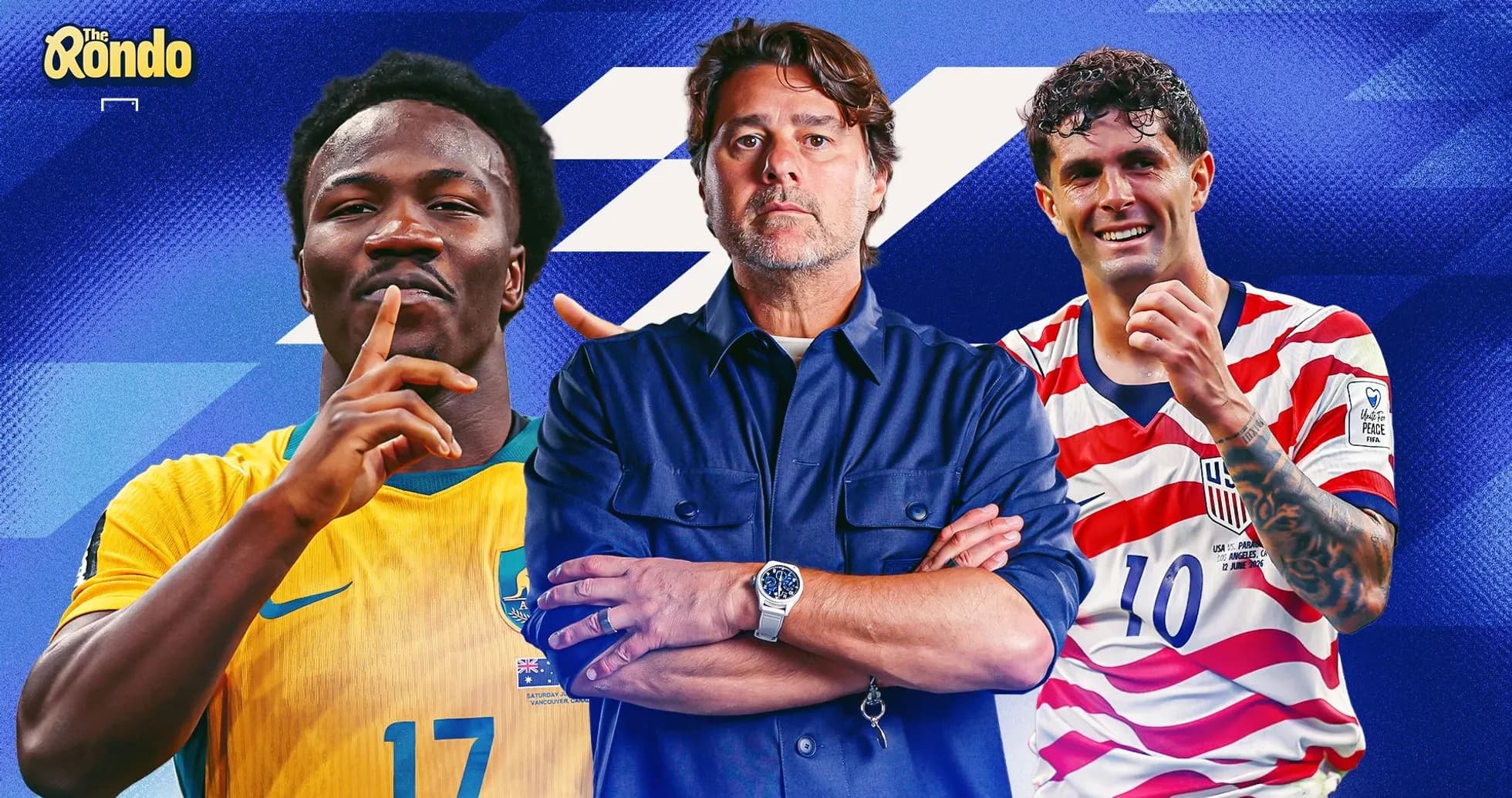
USMNT vs Australia: A Crucial Test Ahead
The United States walk into this one as clear favorites. Everyone knows it. The question is whether they play like it.
Paraguay felt like a statement. The USMNT were sharper, quicker, and far more ruthless than their opponents, the kind of complete performance that suggests a team ready to own a tournament rather than just survive it. Replicate that level, and Australia should be handled without too much drama.
But tournaments rarely follow the script.
A bruising test, not a showcase
This won’t be a parade. It’s shaping up as a scrap.
The consensus around the camp is that Australia will turn this into a physical, claustrophobic game. Fewer open lanes, more collisions, more nerves. A match decided not by patterns of play, but by who can produce a moment when the air gets tight.
The U.S. have more of those game-changers. That’s the edge. Yet Australia have one who can tilt a night all on his own: Nestory Irankunda.
He flashed it against Turkey, bursting into the spotlight with the kind of pace and directness that can shred even a settled back line. Against a U.S. defense that has looked sloppy at times over the past few months, he’s exactly the kind of threat that keeps coaches awake.
If Irankunda isolates Tim Ream in a foot race, everyone in the stadium will know how that ends. Chris Richards is coming off an ankle issue. The fullbacks, Sergiño Dest especially, love to bomb forward. There’s space to exploit. If Irankunda breaks out here, he won’t just hurt the U.S. — he’ll announce himself to the wider world.
The Pulisic question hanging over everything
All of it, though, sits under one looming cloud: Christian Pulisic.
Lose your best player and the entire tone of a tournament shifts. The U.S. have depth at striker. They do not have another Pulisic. He is the reference point for almost everything they do in the final third — the one who can beat a man, bend a defense out of shape, and create something from nothing.
He showed it again on the opening goal last game, gliding past his marker to manufacture the kind of moment that simply doesn’t exist on a tactics board. Ask the squad who the best is at beating a defender one-on-one, after Dest. The answer comes back quickly: Pulisic.
So Mauricio Pochettino faces the kind of decision that defines tournaments. Risk him now to all but lock up the group and then try to protect him later? Or bench him, exercise maximum caution, and trust that the rest of the team can drag this one over the line?
There’s a strong argument for starting him, grabbing control early, then wrapping him in cotton wool. But Pochettino is paid to weigh the long game, not just the next 90 minutes. And the longer-term implications are real. The U.S. look poised to do something special at this tournament. That ceiling drops if Pulisic can’t be part of the run-in.
Australia’s awkward, dangerous mix
This is a strange Australian generation. There isn’t the usual cluster of Premier League regulars to point to, the easy shorthand for quality. That can distort the picture.
They’re not elite across the board, but they’re not soft either. They’ll likely sit in a back five, dig in, and trust their structure. They won’t park the bus, but they will make the U.S. work for every inch between the lines.
On one flank, Irankunda will look to pin Dest back, or punish him when he doesn’t track. On the other end of the pitch, Mathew Ryan stands as the kind of veteran goalkeeper who can turn a tight game with a single save. He’s played at a high level in Europe, carries himself like someone who’s seen it all, and has been quietly confident all week about Australia’s chances.
Against Paraguay, Matt Freese barely broke a sweat. That won’t be the case if this turns into a one-goal game with Ryan at the other end, turning half-chances into frustration.
Who decides it for the U.S.?
If Australia sit deep, this becomes a showcase — or an examination — for the U.S. attackers.
Pulisic, if he plays, is the obvious focal point. But the pressure will fall heavily on those around him. Malik Tillman, in particular, sits at an interesting crossroads.
His off-ball work against Paraguay was outstanding: pressing, covering lanes, linking play. On the ball, though, he left something behind. Pochettino’s tweak, dropping a prototypical No. 10 into a No. 8 role, might prove one of the more important tactical wrinkles of this cycle. If Tillman can add a goal or assist to that industry, it could transform both his confidence and the team’s ceiling.
Then there’s Folarin Balogun. Paraguay offered him space. Australia won’t. If Pulisic is limited or absent, Balogun becomes the man who has to own the box, either by finishing half-chances or dragging defenders around to free others. This is the kind of match where a No. 9 earns his reputation: few touches, little room, one chance to be ruthless.
Some see it going all the way to the wire, decided late, maybe even by someone like Gio Reyna, still carving out his own redemption arc. However it comes, the U.S. will need a moment, not just a system.
The stakes: more than three points
On paper, a slip here wouldn’t be fatal. Three points can still be enough to escape a group. But tournaments are about more than math.
Drop points, and the path twists. Top spot becomes harder to claim. A collision course with a heavyweight like Argentina looms into view. Suddenly every minute in the final group game carries weight, every rotation becomes a risk.
For this program, it cuts deeper than that. Over the past two decades, the U.S. have repeatedly approached the next step, only to stumble when the door opened. A flat performance, an untimely misfire, a sense of “almost” that never quite turns into “arrived.”
This is exactly the kind of match that tests whether that pattern is finally changing.
U.S. Soccer hired Pochettino to push this team beyond its comfort zone, to turn promise into proof. Winning the group isn’t a luxury; it’s a statement that the investment, the vision, and the rhetoric are backed by results.
Australia will not make it easy. The game will likely be tight, tense, and occasionally ugly. But if the U.S. really are on the verge of something bigger, this is the night to show it — with or without their main man on the pitch.





