
Understanding Interceptions in Football: The Art of Defense
An interception barely exists in time. A pass leaves a boot, a defender reads the picture, steps in, and the ball is gone before its intended target even reacts. Less than a second, usually. Yet in that flicker, the brain has to solve a complex equation: speed, distance, angle, body position, balance, and the risk of being wrong.
This is where defending becomes thought made visible.
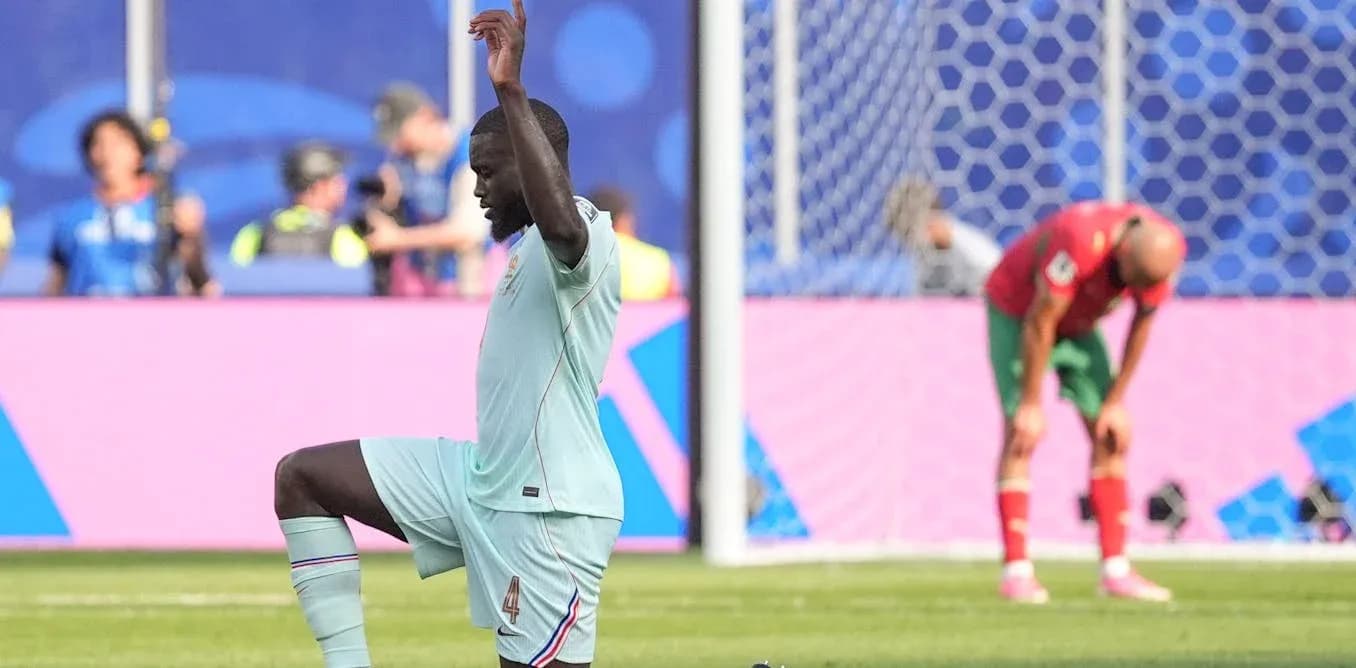
At the start of the 2026 World Cup semi-final week, one name sat at the top of the interception charts: Dayot Upamecano. Twelve interceptions. Twelve moments in which France’s centre-back saw danger early and moved quicker than everyone else. His tally is not a quirk of the data; it is a measure of how often an elite defender must run those mental calculations at the highest level.
Cape Verde, on their first World Cup adventure, told a different interception story.
They opened Group H against Euro 2024 winners Spain and refused to be overawed. Spain had the ball, as Spain always do, but Cape Verde had the lines. Fifteen interceptions in that 0-0 draw, repeatedly slicing through Spanish passing lanes, repeatedly buying themselves a breath of air and a chance to break.
Across four matches, they averaged roughly 13 interceptions per game. It was not a defensive masterclass in the traditional sense; it was survival through disruption. They scrapped their way out of the group and then went punch for punch with defending champions Argentina, losing 3-2 after extra time in the round of 32.
Those numbers do not prove interceptions “caused” Cape Verde’s progress. A high total can just as easily reveal a team pinned back for long stretches. But cutting out passes did something vital: it broke rhythm. It stopped superior sides from settling, and it created windows to counterattack before those sides could reset.
In modern football, the interception is not just a stat. It is a turning point waiting to happen.
The invisible work behind a single step
To understand why fatigue erodes this skill, you have to look closely at what one interception asks of the body and brain.
First comes prediction. A defender scans the field and guesses where the ball will travel and whether they can realistically get there first. Research on anticipation in sport shows that top athletes blend two streams of information: what they know about the situation and what they see in front of them.
In football terms, that means reading posture, approach, and shape. A passer opens their body, drops a shoulder, or angles their run. From those cues, a defender begins to anticipate the direction and weight of the pass before the ball is even struck.
Once the pass is played, speed becomes the brutal truth. In an experimental study of well-trained amateur footballers, players were less likely to even attempt an interception as passes grew faster. When they did go, their success rate dropped. The window closed too quickly.
Distance weighs in as well. A study of senior male futsal players showed that the defender’s starting distance from the ball helped determine whether an interception was possible at all. Yet that distance was not a fixed judgment. Players kept adjusting their speed and line in relation to the ball’s path until the action ended. An interception, in reality, is not a single decision; it is a rolling negotiation with the ball.
Experience sharpens those negotiations. In a football-specific study comparing expert and less-expert athletes, participants initially overestimated their ability to complete an interception task. With practice and direct feedback, their estimates became more accurate. They learned, in effect, what their bodies could and could not do.
That calibration is fragile. Fatigue presses against it.
When the mind tires before the legs
Mental fatigue is the quiet opponent: the tiredness and drop in alertness that follows long periods of concentration. In one study involving 20 professional male footballers, a demanding 30-minute mental task before a training match was enough to blunt their passing decisions. They still moved, still played, but the choices dulled.
Another study on well-trained male players found that mental fatigue reduced both the speed and accuracy of football-specific decisions. These experiments focused on passing and general decision-making, not interceptions, so they cannot claim a direct causal line to missed tackles in real matches. Yet interceptions rely on the same toolkit: selecting the right visual information, judging speed and distance, predicting outcomes, and acting under tight time pressure.
If the brain slows, the interception often disappears.
Then comes the more visible enemy: physical fatigue. A pass that felt comfortably reachable in the 15th minute might be a desperate gamble in the 85th. Research with 24 trained male players showed that acute physical fatigue cut down how far and how intensely they moved. It also altered aspects of their positioning and team play.
A related study drew a sharper distinction. Players with stronger decision-making skills managed to hold their positioning and effectiveness under acute physical fatigue, partly by moving at a slower pace. They conserved their energy and chose their moments. Those with weaker decision-making skills kept churning out similar physical numbers but lost their defensive sharpness and positional discipline.
The message is clear: the smartest defenders adapt their movement to their fading capacity. A tired centre-back cannot simply chase every passing lane. They must judge where the ball is going while listening to what their body can still deliver, all without abandoning a useful position.
When opponents start lying with their bodies
And just when the defender thinks they have the equation under control, the attacker starts to cheat it.
Research on deception in competitive sport explains how athletes disguise their intentions. In football, a passer might shape their body towards one teammate, inviting the interception, before slipping the ball somewhere else. The defender, already shifting weight towards the apparent target, is left wrong-footed and stranded.
Wait too long and the ball travels past you. Move too early and you are a victim of disguise.
This tension is where elite attacking and elite defending meet. The defender wants information; the attacker wants to feed them bad information. Every fake, every no-look pass, every slight change in hip angle is designed to corrupt the defender’s read.
For coaches, the implications are obvious. Training that treats interceptions as static drills – cones, predictable passes, fixed distances – strips away the chaos that defines real football. Research on designing realistic practice argues that sessions should preserve the key information and actions found in competition. For interceptions, that means moving opponents, varied pass speeds, realistic starting positions, and deliberate deception.
There is another layer: the state of the players when they make these calls. Fatigue changes not only how fast they can run, but in some circumstances how well they decide. A club that only tracks distance covered and high-intensity sprints risks missing a more subtle decline: the fading ability to make rapid, accurate judgments.
The goal is not to chase raw interception totals. The best defenders do not lunge at every ball; they know which opportunities are genuinely reachable and which would rip their team’s shape apart. They keep recalibrating as the pass unfolds, as the match wears on, as their legs grow heavy.
By the time Upamecano stretches out a boot and steals a pass in a World Cup semi-final, the crowd sees only the final touch. The real work – the reading, the recalculating, the battle with fatigue and disguise – has already happened, in that thin, brutal space where a defender decides whether to go or stay.





