UEFA Champions League Final: Paris Saint Germain vs Arsenal
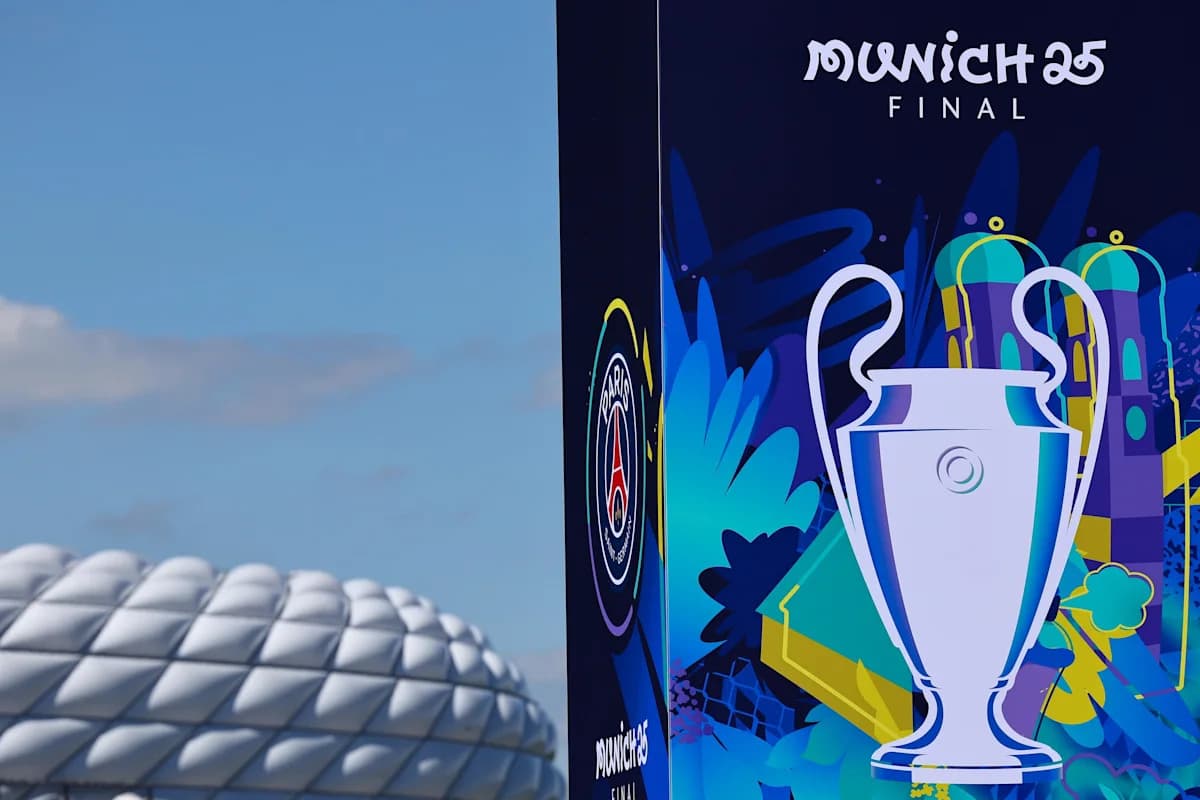
On 30 May 2026, the eyes of Europe turn to Puskas Arena in Budapest, where Paris Saint Germain and Arsenal walk out knowing that one game will define their calendar year in the UEFA Champions League. For Paris Saint Germain, this is the chance to turn an attacking campaign into the ultimate prize after navigating the play-off path. For Arsenal, top of the competition’s overall table, it is the opportunity to crown a near-perfect run with the club’s biggest modern triumph.
Season Context
Paris Saint Germain arrive as one of the most dangerous attacking sides in the competition, sitting with 14 points from 8 matches, built on 4 wins, 2 draws and 2 defeats, and a goal record of 21 scored and 11 conceded. That +10 goal difference underlines how their forward power has often outweighed defensive lapses (21 goals for, 11 against in 8 games).
Arsenal stand as the benchmark of consistency, leading the table in first place with 24 points from 8 games, after winning every match (8 wins, 0 draws, 0 losses) and posting 23 goals scored against only 4 conceded. That +19 goal difference and perfect points haul (24 from 8) frame this final as a test of whether their control and balance can survive one last examination.
Form & Momentum
Paris Saint Germain’s recent form string of DLDWL paints a picture of volatility, with dropped points more frequent than they would like (2 draws and 2 losses in their last 5 by that sequence) despite their overall scoring power of 2.6 goals per game across the 8 matches (21 goals in 8). Their defence, conceding 1.4 goals per match (11 in 8), leaves them occasionally exposed, which explains why a talented squad has not translated dominance into a smoother run (goal difference +10 but only 4 wins from 8).
Arsenal’s form of WWWWW is as emphatic as it looks, underpinned by a blend of solid attacking output and elite defensive security (23 goals scored and just 4 conceded in 8 games). Averaging 2.9 points per match (24 from 8) and conceding only 0.5 goals per game (4 in 8) justifies describing them as defensively outstanding (0 losses and a +19 goal difference). That combination of ruthlessness and control means they carry the psychological edge of a side that has not yet been beaten in this campaign.
Head-to-Head Patterns
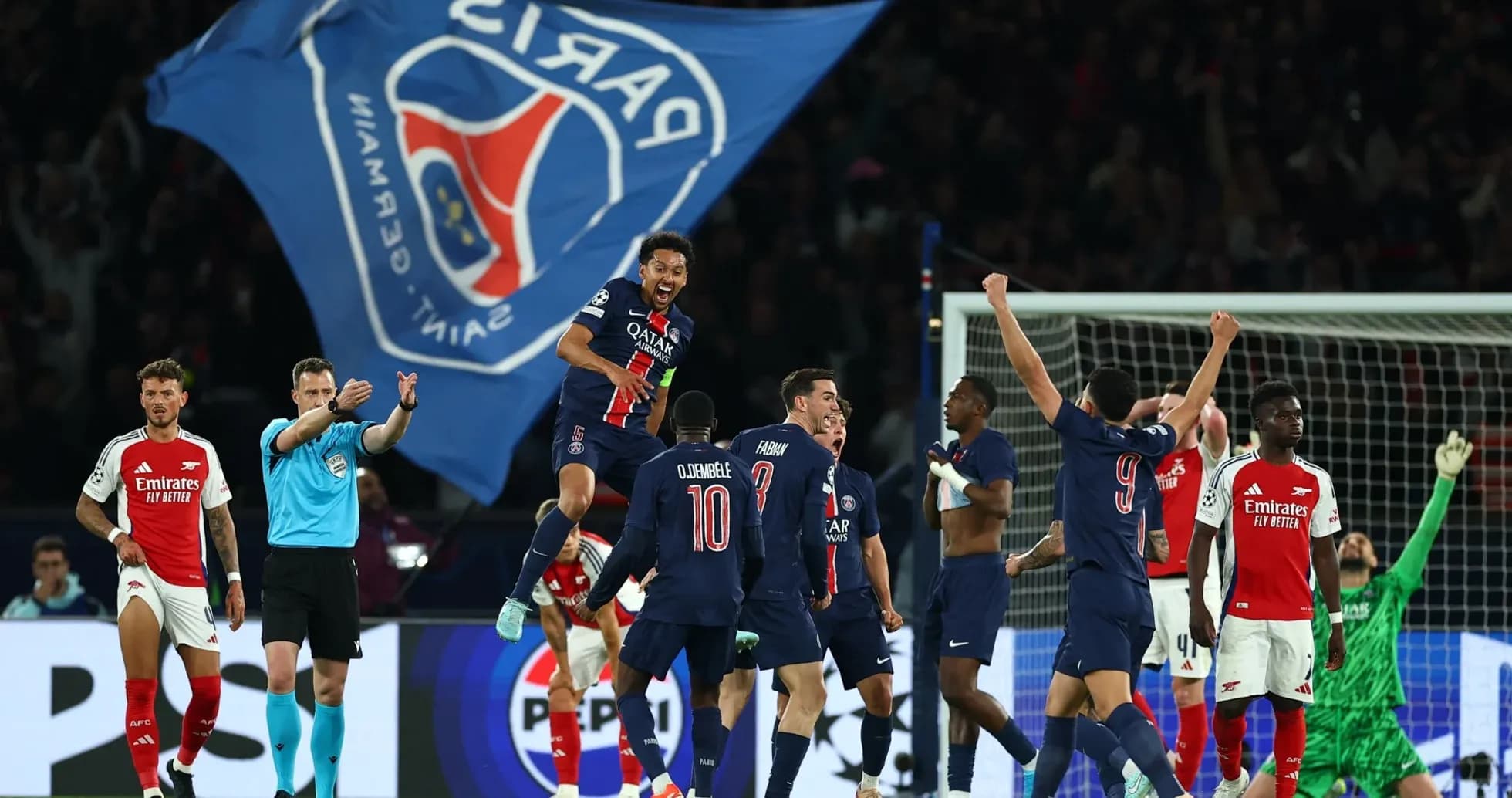
The recent meetings between these clubs have swung back and forth, adding intrigue to the final in Budapest. On 7 May 2025, Paris Saint Germain beat Arsenal 2-1 at Parc des Princes (UEFA Champions League, season 2024, May 2025), a result that showcased the French side’s ability to edge tight knockout ties at home. Just days earlier, on 29 April 2025, Paris Saint Germain had also won 1-0 away at Emirates Stadium (UEFA Champions League, season 2024, April 2025), proving they could impose themselves on English soil in high-stakes semi-final football. However, Arsenal had previously claimed a 2-0 home victory over Paris Saint Germain on 1 October 2024 at Emirates Stadium (UEFA Champions League, season 2024, October 2024), reminding everyone that when they find their rhythm, they can shut down this Paris attack completely.
Tactical Preview
Paris Saint Germain are expected to lean on a 4-3-3 structure, the system they have used in 16 matches in this competition sample, to maximise their attacking firepower. With 44 goals across those broader fixtures and an average of 2.8 goals per game in that wider context, they are built to overwhelm opponents with waves of attacks. K. Kvaratskhelia is the headline threat, combining 10 goals and 6 assists in this Champions League campaign with 30 shots (18 on target) and 51 attempted dribbles (29 successful), making him a constant one‑on‑one danger. Around him, O. Dembélé adds 7 goals and 2 assists, while D. Doué’s 5 goals and 4 assists underline Paris Saint Germain’s depth of scoring options. Vitinha, operating from midfield, knits the side together with 1,553 passes at 93% accuracy and 6 goals, giving Paris Saint Germain a playmaker who can both dictate and finish moves. Defensively, though, Paris Saint Germain’s record of 11 goals conceded in 8 Champions League matches (1.4 per game) suggests that their back line, which includes card-prone figures like I. Zabarnyi with one red card and L. Hernández with one red card, can be forced into errors when pressed.
Arsenal, by contrast, have alternated between 4-3-3 and 4-2-3-1, using the former 9 times and the latter 5 times, and their approach is built on balance and control. Their 23 goals in 8 Champions League matches (2.9 per game) are impressive, but the true foundation is a defence that has allowed only 6 goals in 14 matches in the broader statistical sample and 4 in the 8-match standings sample, reflecting a consistently tight structure. Clean sheets in 9 games across that wider context highlight how well-drilled their back line is, with midfield protection from players like Martín Zubimendi, who has 14 tackles, 10 interceptions and 4 yellow cards, embodying Arsenal’s combative edge in the centre. In attack, Gabriel Martinelli brings 6 goals and 2 assists with 38 dribble attempts (17 successful), while wide threats such as B. Saka and creative figures like M. Ødegaard (both listed as attackers or midfielders in the squad) fit naturally into either of Arsenal’s preferred shapes. Arsenal’s last five metrics — form 73%, attack 24%, defence 95% — suggest a side that has recently prioritised solidity (defence 95%) over pure attacking volume, a sensible posture against a free-scoring Paris Saint Germain.
The key tactical battle will pit Paris Saint Germain’s aggressive, high-tempo front line against Arsenal’s compact defensive block and structured pressing. If K. Kvaratskhelia and O. Dembélé can isolate Arsenal’s full-backs and convert Paris Saint Germain’s attacking averages into clear chances, the French side’s 21 goals in 8 Champions League games show they can outscore anyone. Yet Arsenal’s unblemished record (8 wins from 8) and miserly concessions (4 goals in 8) indicate they are adept at absorbing pressure and punishing mistakes, particularly with transition runners like Gabriel Martinelli. Midfield control, where Vitinha’s passing range meets the work rate and discipline of players such as D. Rice and Martín Zubimendi, may ultimately decide whether this becomes an open shoot-out or a cagey strategic duel.
Statistical Snapshot
- Competition: UEFA Champions League, season 2025 — 30 May 2026.
- Venue: Puskas Arena, Budapest.
- Prediction: Win or draw — Double chance : draw or Arsenal.
- Win Probabilities: Home 10% / Draw 45% / Away 45%.
- Model: Paris Saint Germain 42.0% — Arsenal 58.2%.
Betting Verdict
The prediction model leans towards Arsenal avoiding defeat, and the numbers support that view: Arsenal are unbeaten with 8 wins from 8 and a +19 goal difference (23 scored, 4 conceded), while Paris Saint Germain’s more erratic DLDWL form hints at vulnerability despite their firepower. With many bookmakers pricing Paris Saint Germain as narrow favourites around 2.30–2.40 for the home win and Arsenal closer to roughly 3.00–3.30, the value appears to lie in siding with Arsenal’s resilience. Given Arsenal’s defensive strength (0.5 goals conceded per game in the standings sample) and their recent success in the head-to-head semi-final tie despite ultimately losing the aggregate, the advised angle of “Double chance : draw or Arsenal” aligns with both form and matchup dynamics. In a tight final where margins are slim, backing Arsenal not to lose looks a more robust position than chasing Paris Saint Germain’s higher-variance attacking upside.