Uefa Challenges Infantino’s Leadership Amid Governance Crisis
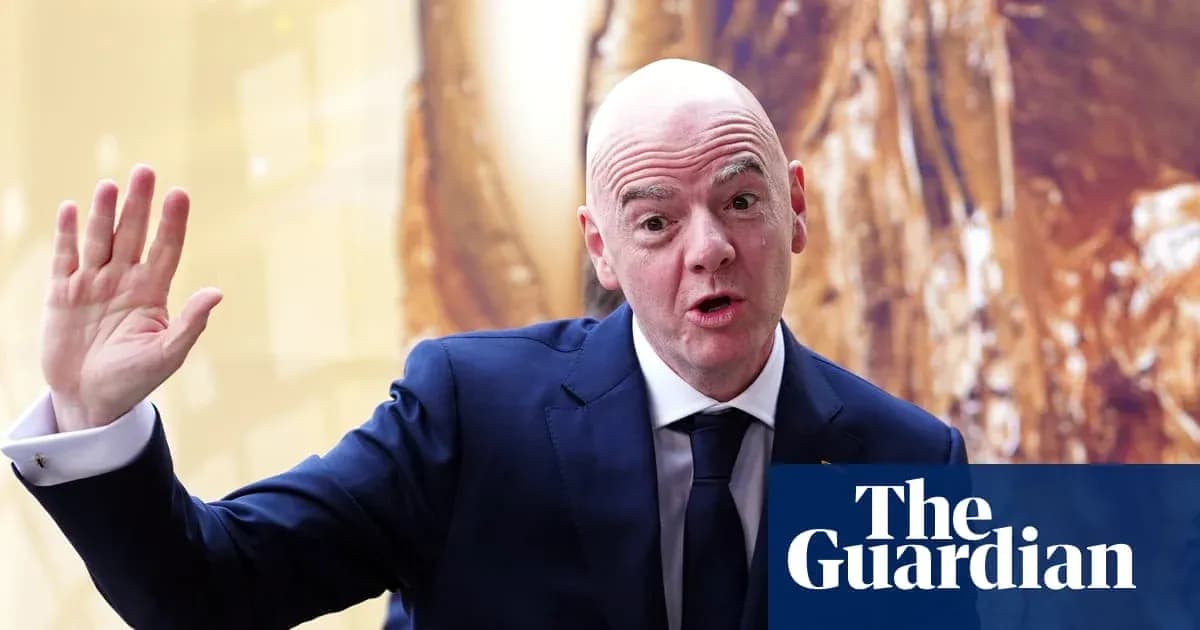
Uefa has fired a direct warning shot at Gianni Infantino, declaring that his style of leadership at Fifa is no longer acceptable and demanding a sweeping overhaul of the organisation’s governance.
In a blistering statement laced with references to “secret schemes”, “shabby backroom deals” and “faceless individuals”, European football’s governing body made plain it wants change at the top of Fifa – even after the sudden overnight collapse of Infantino’s controversial plan to sell stakes in the World Cup and other flagship competitions.
Uefa stopped short of openly calling for Infantino’s resignation. The message was still unmistakable. Senior European figures are determined he should not emerge intact from what they regard as a crisis entirely of his own making, a stance shared by many of the game’s most powerful national associations across the globe.
Behind the scenes, leading officials have already begun the hunt for a rival candidate to stand against Infantino in next year’s Fifa presidential election, with talks and lobbying expected to intensify in the coming days.
Ceferin leads the revolt
Under Aleksander Ceferin, Uefa has moved as a bloc. The Slovenian lawyer, who last week secured unanimous support from all 55 European member associations for a threatened World Cup boycott, is now driving a broader challenge to Fifa’s direction.
“We cannot keep going on like this with secret schemes on fast track timescales, cooked up by faceless individuals and of dubious benefit to the game,” Uefa’s statement read. “We must identify those responsible and hold them to account.”
The language was as sharp as anything seen in the long, often murky history of football politics. Uefa insisted it would now work with its own associations and “in close cooperation with other confederations” to examine how the episode unfolded and to draw up protections to stop it happening again. The review, it said, must be “thorough and fundamental”, with “no option off the table”.
Then came the blunt verdict: “The current Fifa leadership has not only lost Uefa’s confidence, but also that of many other members of the football family.”
Infantino’s promises thrown back at him
Uefa did not just criticise the project. It went after Infantino personally, accusing him of betraying the very pledges that carried him into office in 2016.
The statement quoted his own campaign rhetoric from a decade ago, when he sought the trust and votes of Fifa’s member associations. Back then, Infantino vowed: “Of course we have to be transparent. I have been this in the last 15 years of my life in Uefa. You will have to play a part every day in the life of Fifa.” He also told delegates: “The money of Fifa is your money. It’s not the money of the Fifa president. It’s your money. You are the national associations, and the money of Fifa has to serve for the development of football and not for anything else.”
Uefa’s verdict was damning. “On both these promises, he has failed to deliver,” the statement said. The “shabby, back room, opaque deal he hatched and tried to force through were anything but transparent. And with reserves standing at over $5bn, he has also failed to use associations’ money for the benefit of the game.”
The “deal” at the heart of the storm was Infantino’s proposal to create a new commercial vehicle, Fifa Forward Enterprise, and sell 20% of it to private investors. In return, he promised a huge uplift in funding for national associations: an increase in Fifa Forward payments from $8m to $20m over the next four-year cycle, plus a one-off $20m bonus for those signing up by a 19 September deadline.
The pressure finally told. Facing intense resistance, particularly from Europe, Fifa abruptly abandoned the plan overnight. For Uefa, that was not enough.
“This is a victory for the whole game,” its statement said. “But it must not be the end of the story. The proposal has gone. The task of rebuilding trust in Fifa has only just begun.”
Election battle looms
Until this week, Infantino’s grip on power looked unshakeable. He was widely expected to be re-elected unopposed for a third full term at next March’s Fifa Congress in Rabat.
He has already banked more than 200 letters of support from member associations endorsing his re-election campaign, a formidable show of strength on paper. Those letters, though, are not binding. They can be withdrawn, and the deadline for rivals to declare their intention to stand is 18 November.
Suddenly, the landscape has shifted. The same financial structure that helped secure Infantino’s dominance – equal central payments to all 211 Fifa members through the Fifa Forward programme – is now under direct attack from Uefa, which has long viewed the system as a form of patronage that cements his power.
The promise of a $20m signing bonus for associations that backed his new commercial scheme only intensified those suspicions and drew heavy criticism.
Uefa said it would “begin work immediately” with partners and stakeholders across the world to propose a new way of distributing Fifa’s resources through the existing Fifa Forward framework. “We must start to use some of that money that is sat idle in Fifa’s bank account to deliver the kick start that the grassroots and the wider game need in each of the 211 countries of Fifa,” it said. “But we don’t need to sell off the family silver to pay for it.”
Who could take on Infantino?
Attention now turns to who might be willing – and able – to challenge the 56-year-old.
Within Europe, Paris Saint-Germain president Nasser Al-Khelaifi is widely admired and seen by many as a potential standard-bearer. His influence is considerable; he also chairs the powerful European Football Clubs lobby group. Yet he is understood to be reluctant to step into a presidential race that would demand a global coalition, not just European backing.
Beyond Europe, two names already circulate in the corridors of power. Victor Montagliani, the Canadian president of Concacaf, has long been a prominent figure in North and Central America. Salman al-Khalifa, the Asian Football Confederation president who lost narrowly to Infantino in the 2016 Fifa election, is another plausible contender with unfinished business at world level.
Whether any of them is prepared to confront an incumbent who still commands public pledges from the majority of Fifa’s members remains to be seen. But Uefa’s intervention has changed the tone. Infantino is no longer the unchallenged reformer of 2016; he is the president under siege, accused by his former allies of betraying his own words.
The proposal has fallen. The money still sits in Fifa’s accounts. The real fight now is over who controls it – and what kind of Fifa will emerge from the wreckage.