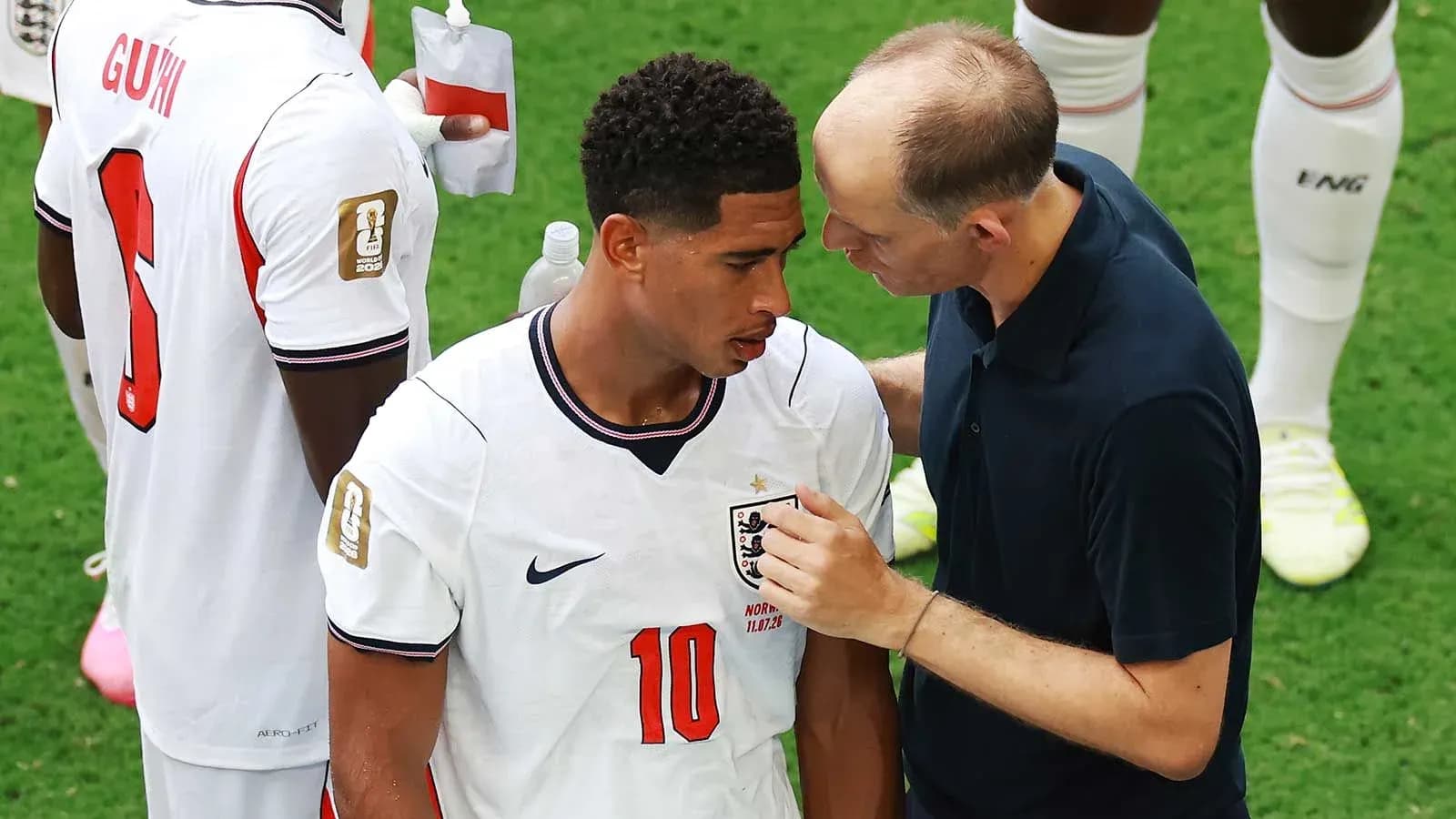
Thomas Tuchel and Jude Bellingham: Navigating Tensions Ahead of Semi-Final
Thomas Tuchel walked into England’s semi-final week with a storm already swirling around him and his star midfielder. Again.
The relationship between the German head coach and Jude Bellingham has lived under the spotlight ever since Tuchel’s mother described some of the midfielder’s on‑field antics as “repulsive” last summer. An apology followed, the noise died down, and the story was supposed to be over.
It wasn’t.
After England’s draining 2-1 extra-time quarter-final win over Norway, Tuchel cut a frustrated figure. The result was there; the performance, in his eyes, was not. He admitted he was “not happy with the team performance,” a line that quickly travelled and landed squarely on Bellingham’s shoulders.
The midfielder fired back, calling for more positivity. A flashpoint. Another one.
Tuchel did not let it fester. The following day, he gathered the squad, addressed the issue head-on and tried to strip away the drama before Argentina loom in the semi-final.
“I wonder who blows these things up, eh?” he told talkSPORT, bristling at the narrative. “So, there is nothing to blow up and if it's blown up, it's blown up in the media, of course.”
For Tuchel, the reaction from Bellingham was not a sign of a fractured dressing room but of a player running on fumes after 120 brutal minutes.
“What do you expect of a player that just played 120 minutes and gave literally everything,” he said, “if you shorten the comment of his coach, if you don't tell him that ‘he was world class,’ if you don't tell him that ‘he has world class actions’?”
That was his central grievance: the edit, not the emotion.
“If you just cut all this and tell him ‘oh, your coach said you were sloppy’ what do you expect? Yeah, of course you get the comment that you get and then you try to blow it up and people try to create misunderstandings and cracks where no cracks are.
“We come from the same place. We come from being competitive and I am a competitive coach. I push this team to the limit and that was my assessment.”
The pressure finally told in the mixed zone, where Bellingham, still riding the adrenaline of extra time, appeared to jab at Tuchel’s own modest playing past. He suggested the coach “maybe… doesn’t know what it’s like to play in those kind of conditions” or to face a player of Erling Haaland’s calibre.
For some managers, that would sting. Tuchel shrugged it off.
He rejected the idea that a lack of elite playing pedigree weakens his authority or his understanding of the game. The bond with his 23-year-old talisman, he insisted, remains unshaken.
“It's just what it is but we're as close as ever, and close more than ever before,” he said. “You can see that on the field. The energy and mentality in camp is excellent in the last days and we are ready to go for it tomorrow.”
Behind that calm front lies a man who still sees himself as the outsider who never quite made it as a player. Tuchel spoke candidly about the perspective he carries into the England dugout.
“I would still like to have a player's career, that was my dream,” the former Chelsea boss admitted. “I never thought about being a coach, never dreamt about being a coach on that kind of level, so I think this is basically the dream.
“I just feel also on the sideline very humbled, and from time to time it just strikes me on the sideline right before the match ‘I couldn't play here on this occasion.’”
He quickly snapped back to the point, though: knowledge is not reserved for those who have played at the highest level.
“I don't think that you have to play [to be a coach]. A funny quote, you don't have to be a horse to be a good jockey!” he joked.
The line drew a laugh, but the message was clear. Tuchel will not apologise for his route to the top, and he will not allow a heated post-match soundbite to define his relationship with the player who carries so much of England’s hope.
Argentina await. The questions about harmony, hierarchy and history will follow Tuchel and Bellingham all the way to kick-off. The only answer that will matter now will be written on the pitch.