Trabzonspor vs Ferencvarosi TC: Tactical Analysis of a 0-1 Defeat
Trabzonspor’s 0-1 home defeat to Ferencvarosi TC at Papara Park was defined less by volume of attacks and more by how each side managed territory, risk, and rhythm. In a UEFA Europa League Play-offs tie where the hosts held 66% of the ball and a 24-7 shot advantage in raw attempts (3 shots on goal, 15 off target, 6 blocked), Ferencvarosi TC’s compact 4-4-2 and game management turned structural inferiority into a controlled away win. The visitors accepted long defensive phases, committed 24 fouls, and leaned on transitions and set positioning rather than sustained possession (34%) to protect K. Zachariassen’s early strike.
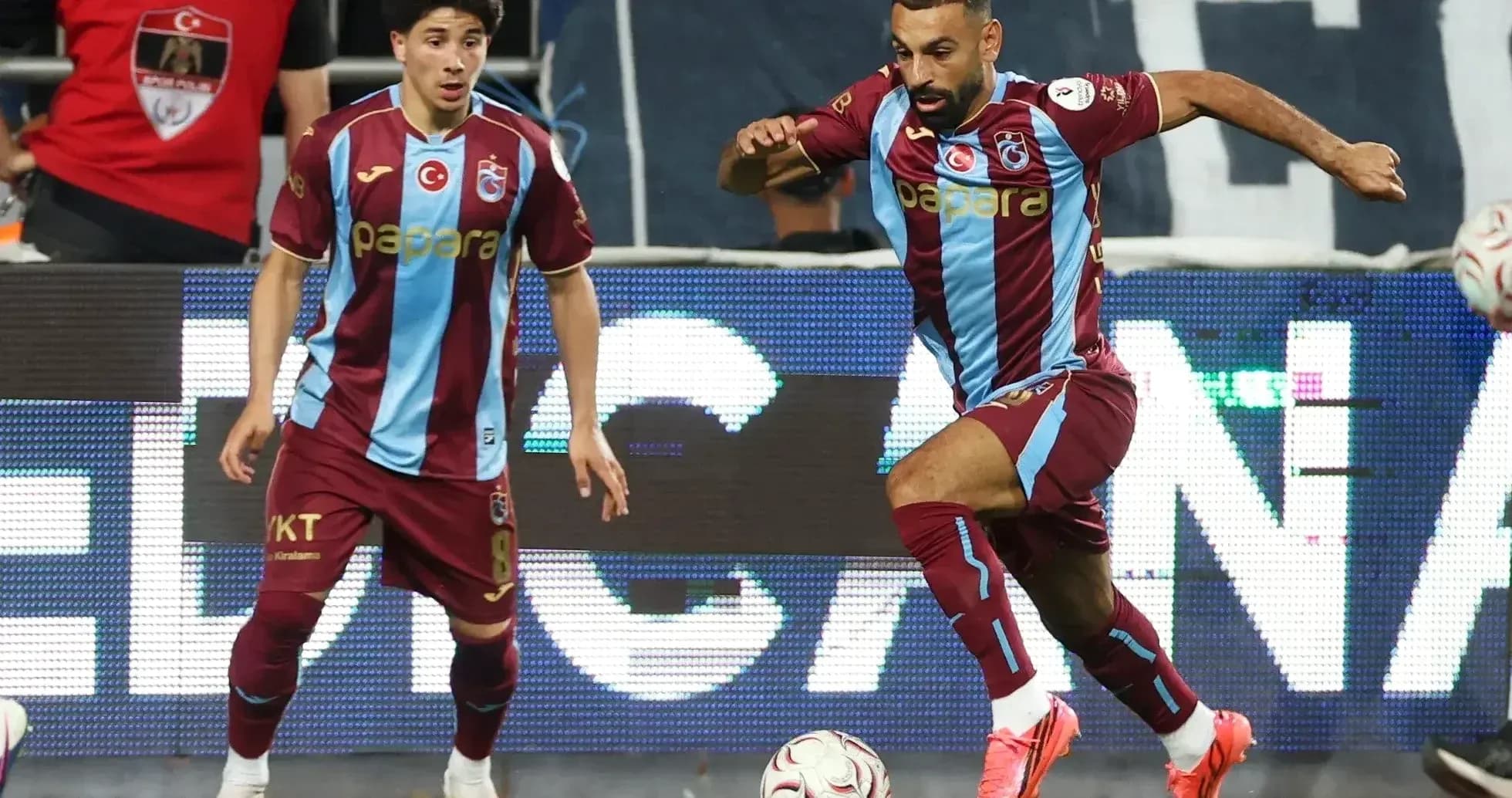
Trabzonspor lined up in a 4-2-3-1 that, on paper, should have given them central control and wide overloads. The double pivot of B. Bouchouari and M. Kabasakal in front of a back four of S. Lopes Cabral, C. Ozkacar, C. Nwaiwu and W. Pina was tasked with circulating possession and compressing Ferencvarosi TC into their own half. That part of the plan worked: the home side dominated the ball and forced the visitors into a low-to-mid block, with the attacking band of N. Saviolo, M. Salah and U. Nayir supporting lone striker P. Onuachu.
However, the shot profile exposes a tactical flaw. Trabzonspor’s 3 shots on goal out of 24 attempts suggest a lot of sterile possession and poor shot selection. With 15 efforts off target and 6 blocked, Ferencvarosi TC’s 4-4-2 block consistently forced Trabzonspor into rushed or low-percentage shooting lanes. Central lanes were congested by the narrow midfield quartet of K. Zachariassen, P. Rommens, M. Corbu and C. O’Dowda, while the back line of Cadu, T. Raemaekers, M. Gomez and O. Nagy stayed compact horizontally. Trabzonspor’s inability to manipulate that line with enough depth or third-man runs meant many attacks ended in speculative efforts rather than clear chances.
Key Tactical Moment
The key tactical moment came early: on 17 minutes, K. Zachariassen (Ferencvarosi TC) scored a Normal Goal assisted by O. Nagy, putting the visitors 0-1 up. That single action re-framed the entire game. Ferencvarosi TC could now fully embrace a reactive posture, dropping their 4-4-2 into a deeper shape with Dele and L. Joseph ready to press triggers and contest direct balls into Onuachu. From that point, Trabzonspor’s possession became more desperate than probing.
Half-Time Changes
At half-time, coach Fatih Tekke moved aggressively. The double change at 46' — R. Malinovskyi (IN) came on for B. Bouchouari (OUT) and A. Simsir (IN) came on for U. Nayir (OUT) — was a clear attempt to inject creativity between the lines and more mobility around Onuachu. Malinovskyi’s profile suggests a deeper playmaker capable of long-range threat, while Simsir offered more vertical running. Tactically, this likely shifted Trabzonspor closer to a 4-1-4-1 in possession, with Kabasakal anchoring and Malinovskyi stepping higher.
Yet Ferencvarosi TC’s response was equally strategic. Around the hour mark, they refreshed their pressing and wide coverage: at 61', A. Nagy (IN) came on for Dele (OUT) and G. Kanichowsky (IN) came on for P. Rommens (OUT). This preserved energy in the midfield line and maintained the ability to foul intelligently and break rhythm, as reflected in their 24 fouls and a flurry of yellow cards. P. Rommens had already been booked for Holding at 50', and later substitutes A. Osvath and G. Kanichowsky also went into the book for Roughing and Unsportsmanlike conduct respectively, underlining a deliberate, high-contact defensive strategy.
Structural Tweaks
Trabzonspor continued to chase structural tweaks. At 64', E. Muci (IN) came on for N. Saviolo (OUT), adding another technically gifted midfielder into the half-spaces. At 83', M. Eskihellac (IN) came on for W. Pina (OUT), likely pushing full-backs even higher and risking more in rest defence. But the late red card at 90+6' to C. Nwaiwu for Roughing encapsulated the frustration of a side that had spent most of the night attacking without clarity. The dismissal also reflects how often Trabzonspor’s centre-backs were left exposed to counters as the team piled forward.
Ferencvarosi TC's Game Management
On the Ferencvarosi TC side, Balazs Borbely’s substitutions were almost textbook game management. After the initial attacking intent with Dele and L. Joseph, the coach gradually tilted the 4-4-2 towards a 4-5-1 or even 4-1-4-1 out of possession. At 78', A. Osvath (IN) came on for K. Zachariassen (OUT), removing the goalscorer but adding fresh defensive legs and discipline in midfield. Simultaneously, K. Lisztes (IN) came on for L. Joseph (OUT), preserving a counter-attacking outlet. At 89', N. Zohore (IN) came on for Cadu (OUT), a late defensive adjustment to see out the final minutes and protect wide zones against Trabzonspor’s crosses.
Discipline and Statistics
Discipline was a key tactical layer. Ferencvarosi TC finished with 5 yellow cards — Dele (29' Roughing), K. Zachariassen (43' Roughing), P. Rommens (50' Holding), A. Osvath (89' Roughing), G. Kanichowsky (90+1' Unsportsmanlike conduct) — but no red, showing a willingness to incur bookings to break play and slow momentum. Trabzonspor, by contrast, had no yellow cards but 1 red card (C. Nwaiwu at 90+6' for Roughing), indicating that when they did overstep, it was in a more extreme, late-game context rather than a calibrated tactical foul.
Statistically, the contrast is stark. Trabzonspor’s 66% possession, 3 shots on goal, 15 shots off goal, 6 blocked shots, 7 corner kicks and only 3 fouls speak to a side that dominated territory but lacked incision and, crucially, edge in duels. Ferencvarosi TC, with 34% possession, 4 shots on goal, 3 shots off goal, 4 blocked shots, 5 corners and 24 fouls, played a classic away-cup script: take an early lead, compress space, accept a high foul count, and rely on structure rather than the ball.
Without data on passes, xG, or goalkeeper saves, the clearest tactical verdict comes from the shot and foul profiles. Trabzonspor built volume but not quality; Ferencvarosi TC built a game state that suited their defensive organisation and emotional control. The 0-1 scoreline at Papara Park is therefore less an upset of the numbers and more a reflection of whose game model dictated the terms after the 17th minute.