Beşiktaş Dominates Kauno Žalgiris 3–0 with Tactical Mastery
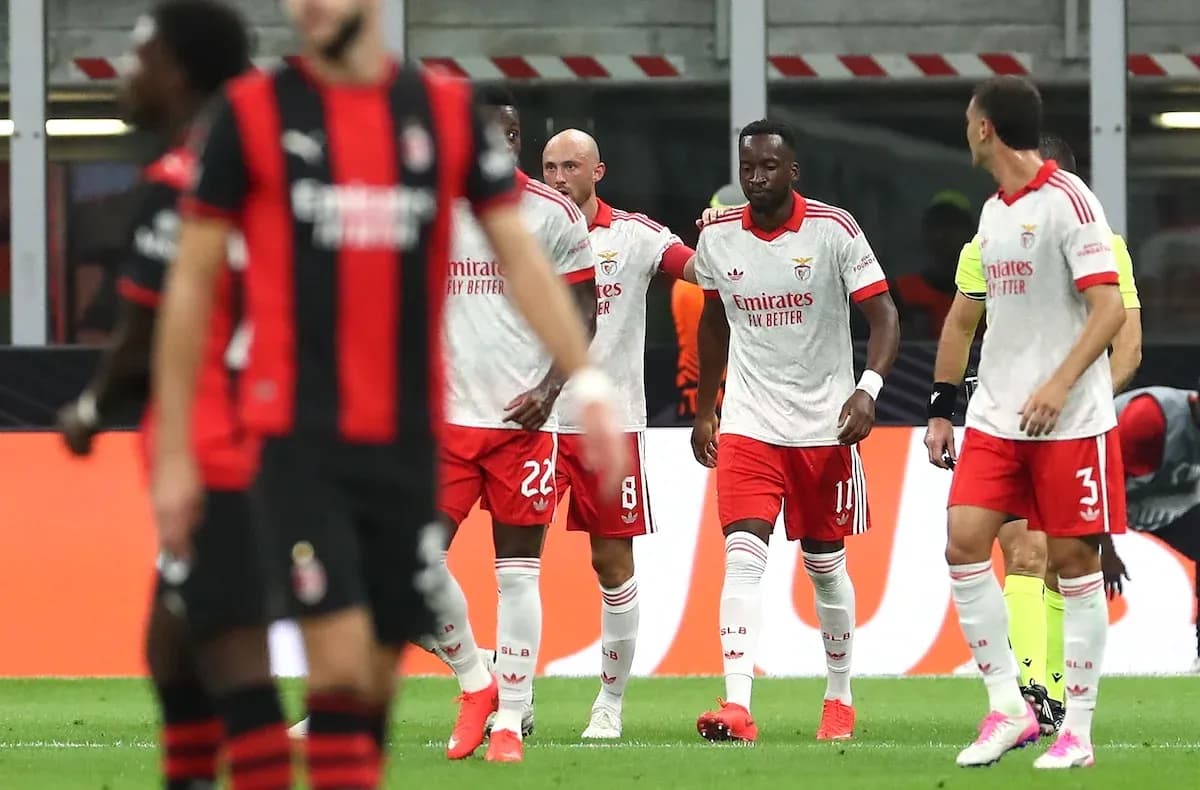
Beşiktaş’s 3–0 win over Kauno Žalgiris at Tüpraş Stadyumu was a textbook example of territorial dominance built on structure and width. The 4-1-4-1 chosen by Vincenzo Italiano functioned more like a high-possession 2-3-5 in attack, with both full-backs and the wide midfielders pinning Kauno Žalgiris deep and forcing the visitors into a reactive 4-5-1 block.
From the opening minutes, Beşiktaş imposed a clear plan: circulate the ball patiently, stretch the Lithuanian side horizontally, and then attack the half-spaces and the far post. The statistical profile underlines this control. Beşiktaş held 77% possession and generated 6 shots on goal, with an additional 8 shots off target and 7 blocked efforts. That volume, combined with 15 corner kicks, shows how relentlessly they kept Kauno Žalgiris in their own third and repeatedly forced last-ditch interventions.
The structure around the lone pivot was crucial. S. Ozcan, operating as the single holding midfielder, anchored transitions and allowed the back four of R. Yilmaz, T. Djalo, M. Murillo and E. Topcu to push higher than usual. In possession, Ozcan dropped in to form a temporary back three, freeing both full-backs to step into midfield zones. This created a stable rest-defense against counters while maintaining numerical superiority in build-up.
First Half
The early breakthrough at 6' from Oh Hyeon-Gyu, assisted by R. Yilmaz, was emblematic of the plan: full-back width, a forward attacking the box early, and midfielders arriving around the play. The second goal at 12' from M. Murillo, again assisted by R. Yilmaz, highlighted Beşiktaş’s aggressive use of set or second-phase situations, with a centre-back finishing in advanced territory. With a 2–0 cushion inside 12 minutes, Beşiktaş could fully lean into controlled possession rather than forced verticality.
Kauno Žalgiris, set up in a 4-2-3-1 by Eivinas Cerniauskas, never found a way to turn their double pivot into a platform for progression. They managed just 23% possession, 0 shots on goal and only 2 shots off target, with 1 blocked shot. Their attacking midfield line of L. Krekovic, F. Baldassarra and A. Benchaib, behind G. Debeljuh, was consistently pushed back, often forming a flat five in front of the back four just to contain Beşiktaş’s wide rotations.
Defensively, the visitors’ issues were twofold: they were pinned too deep to threaten transitions, and their attempts to contest central areas turned into repeated fouls. They committed 16 fouls to Beşiktaş’s 3 and collected 4 yellow cards, a clear indicator of a side perpetually arriving late to challenges and struggling with the tempo and spacing of the game. The penalty converted by O. Kokcu at 59' was the natural outcome of sustained pressure, with the visitors’ block increasingly desperate inside their own area.
Substitutions
The substitution patterns further underline the tactical story. At 46', V. Cerny (OUT) was replaced by I. Fakili (IN) for Beşiktaş, a like-for-like change that preserved the 4-1-4-1 structure while injecting fresh energy between the lines. Kauno Žalgiris responded at the same time with J. Moutachy (OUT) for L. Kastrati (IN) and G. Debeljuh (OUT) for M. Burba (IN), signaling a search for more mobility and direct threat, but without altering the fundamental defensive posture.
On the hour, Italiano adjusted his midfield dynamics: J. Olaitan (OUT) made way for A. Hadziahmetovic (IN), adding fresh legs and slightly more control in central zones, while Oh Hyeon-Gyu (OUT) for D. Vlahovic (IN) maintained a classic centre-forward reference to pin the Kauno Žalgiris centre-backs. Later, at 72', L. Trossard (OUT) for M. Rashica (IN) kept the wide threat high and direct, ensuring the home side’s intensity did not dip.
Cerniauskas’s later substitutions – A. Kalik (OUT) for Renan Oliveira (IN) at 62', L. Krekovic (OUT) for F. Ourega (IN) at 63', and A. Benchaib (OUT) for I. Fiolic (IN) at 79' – were aimed at refreshing the midfield line and perhaps adding some ball-carrying and creativity. Yet the structural problem remained: with so little possession and so few platforms to play out, these changes could not alter the fundamental pattern of the match.
Discipline and Tactical Control
The discipline data reinforces the tactical imbalance. While Beşiktaş picked up only 1 yellow card (to M. Murillo at 77'), Kauno Žalgiris’s 4 bookings – to Franco Baldassarra (67'), Renan Oliveira (68'), Anton Tolordava (72') and Ivan Fiolić (82') – trace a story of a team under constant stress, forced into late interventions as Beşiktaş circulated the ball and attacked the box.
Without goalkeeper saves, passes or xG values available, the clearest verdict lies in territorial and shot data. Beşiktaş’s 77% possession, 6 shots on goal, 15 corners and 3–0 scoreline against an opponent who failed to register a single shot on target describe a near-total tactical control. The 4-1-4-1 delivered numerical superiority in build-up, continuous width and a strong rest-defense, while Kauno Žalgiris’s 4-2-3-1 collapsed into a low, foul-prone block that never threatened to turn defense into attack.