Tottenham's Transformation Under Roberto de Zerbi: From Tears to Trophies
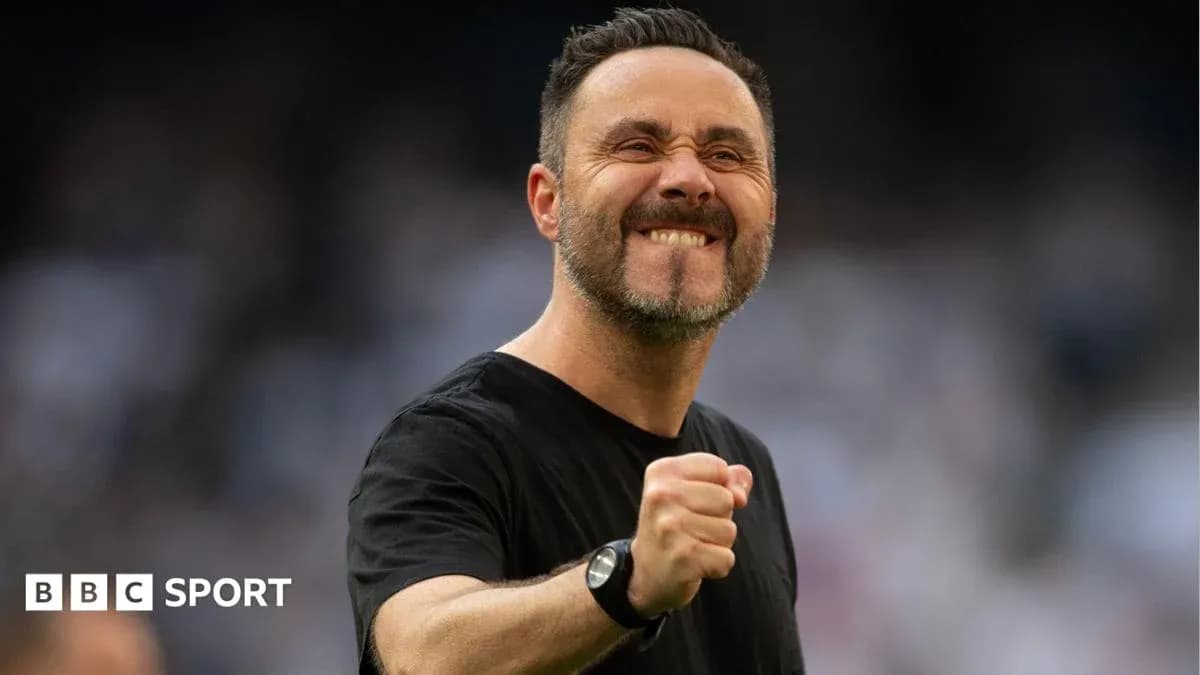
There is a line Roberto de Zerbi keeps coming back to when he talks about the day he walked into Tottenham:
“Did we pass away?”
It wasn’t a joke. Not in that dressing room at Sunderland, not with players on their backs, some in tears, after a 1-0 defeat that left Spurs staring at the abyss. That was his first game in charge. The first of seven to save a club that had forgotten how to breathe.
They survived on the final day. Barely. But four months on, the scene could not feel more different.
From tears in Sunderland to coffees in Sydney
The same squad that crumpled at the Stadium of Light now wanders through a private floor of a Sydney hotel, laughing over barista-made coffees, trading insults across a fiercely contested table tennis table. The Harbour Bridge and Opera House sit outside the window; inside, a club-record £237m worth of new signings is being folded into a group that suddenly dares to talk about trophies again.
- Sandro Tonali, the £100m centrepiece from Newcastle.
- Mateus Fernandes, prised from West Ham for £85m.
- Jan Paul van Hecke, Andrew Robertson, Martin Dubravka.
All have featured on this pre-season tour across Australia and New Zealand. Only Marcos Senesi, fresh from a World Cup final with Argentina, missed the trip, granted extended leave before finally joining up at Hotspur Way.
“I deserve to want the top players, because now Tottenham deserves to build up a top team,” De Zerbi says. The words don’t feel like bluster. Not when you remember where this started.
Back in April, Tottenham had two transfer blueprints on the table: one for a Premier League club, one for a Championship rebuild. De Zerbi insists he would have stayed either way. Survival meant Plan A. It also meant a reckoning.
“At the beginning of my time in April I had one million individual meetings,” he jokes. The message was not a joke. If a player wanted to leave, the deal was simple: help me stay up, and I’ll help you go. Refuse to fight, and “you stay underwater with me”.
Club captain Cristian Romero and goalkeeper Guglielmo Vicario remain in that grey zone – key figures whose futures are still uncertain, whose “will” De Zerbi says he will respect. But the mood music around Spurs has shifted.
New power structure, same relentless coach
Tottenham have not just changed coach; they have changed shape. New chief executive Vinai Venkatesham now fronts the organisation for the Lewis Family Trust. Johan Lange, the technical director, is the lone survivor from the previous hierarchy and leads negotiations alongside him.
They are flanked by director of football operations Rafi Moersen and performance director Dan Lewindon, both recruited from City Football Group. Lewindon’s brief is blunt: fix the injury record.
De Zerbi, though, does not sit back and let the suits work. He prowls every department. The transfer market, especially, is his hunting ground.
“In the transfer market, when I want one player, I become like a shark. No chance to say no.”
That mentality has already reshaped the squad. Spurs have outmuscled Manchester United and Manchester City for Fernandes and Tonali. They have beaten Chelsea to Van Hecke. They have spent big, but not blindly, in a window where speed and aggression became strategy.
“I love working in the transfer market. It’s not a pressure, it’s one of the nicest parts in my work, in my job,” he says. The attraction, he explains, lies in responsibility. When the coach calls, he owns the decision and the relationship.
With Fernandes, that bond began at home. Literally. De Zerbi spoke to the midfielder’s parents, promising his father that he would be a “second dad” in England. With Van Hecke, the hook was more mischievous.
After a 2-2 draw with Brighton in April, when Georginio Rutter’s 95th-minute equaliser cut deep into Spurs’ survival hopes, De Zerbi remembered the assist. He messaged Van Hecke: you tried to push Tottenham down for Brighton, now you have to come to me. “You have no choice.”
Tonali’s courtship followed a similar pattern. The day after Spurs secured their Premier League status with a final-day win over Everton, De Zerbi texted him. Soon after, he sat in Tonali’s home in Brescia. That conversation swung the deal. Club staff did the rest.
Now, with the midfield rebuilt and the defence reinforced, De Zerbi is teasing what he calls a final attacking “bomba”. Two forwards are expected, with Manchester City’s Savinho among the targets.
Spending big, thinking long
From the outside, the numbers look explosive. Internally, De Zerbi bristles at the idea that Spurs are spending recklessly. The Lewis family injected £100m into the club in June, money he insists was desperately needed. Chelsea, Arsenal, Liverpool – all have done similar, he argues. This is Tottenham catching up, not losing control.
There have been exits to balance the books. Luka Vuskovic’s £45m move to Brighton brought in a substantial fee. Questions still hang over Lucas Bergvall and Djed Spence. Every decision, De Zerbi says, is weighed as if the money were his own.
“We assessed the request of Vuskovic [to join Brighton], with Vinai, with Johan together, because I consider Tottenham’s money my money. It’s like the owner is my father, I think you don’t want to ask your father to lose money.”
That line says as much about his approach as any tactical board. Spurs, he insists, must sell high and buy low where they can, working to a five-year plan that builds rather than lurches.
That logic also underpinned a rare act of restraint: walking away from a permanent deal for Joao Palhinha from Bayern Munich. Not because the midfielder wasn’t good enough, but because the overall financial package wasn’t right. For a club trying to shake off chaos, that kind of discipline matters.
Cleaning the air after Sunderland
It wasn’t just the players who were broken in Sunderland. The shock of that defeat seeped into the training ground. Negativity, De Zerbi felt, was beginning to harden into culture.
“The day after I organised a meeting without players and I said, ‘The first one I see say something negative, I send you home immediately’.”
He wants to change “behaviour, attitude and spirit” at a club that has endured two traumatic seasons in a row. Seventeenth place, twice. Once with Ange Postecoglou and a Europa League triumph to soften the blow. Once with the genuine fear of relegation and a dressing room in pieces.
To break the cycle, he went back to basics. One big dinner in Mayfair, with alcohol, with laughter, with something resembling normality. He still believes Spurs were unlucky in those final matches, that survival should have come earlier. More importantly, he believes his players saw themselves as worse than the rest of the world did.
“I think they considered themselves in that moment worse than the people thought,” he admits. The healing, he says, is not finished. “I hope next time they organise [dinner and drinks] for themselves.”
That is the core of his project. Talent, money, tactics – all essential. But the real rebuild, in his eyes, lies in love, friendship, care. In a group that chooses to spend time together without being told.
“With love, friendship and care, you become top, top, top.”
From Sunderland’s floor to Sydney’s skyline, Tottenham have dragged themselves upright. The question now is not whether they have survived. It is whether this new, ruthless, expansive version of Spurs can finally live the way De Zerbi intends.