Tata Steel Withdraws Jamshedpur FC from ISL: A Major Shift in Indian Football
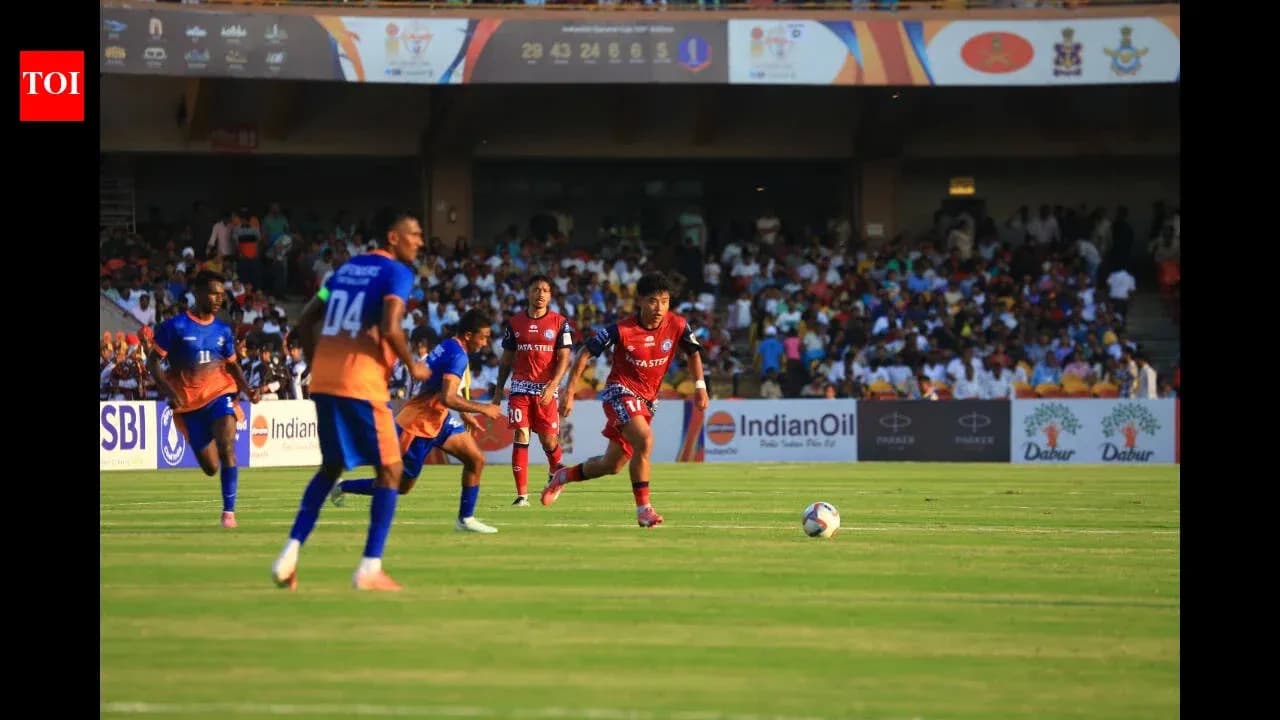
The lights are still on at the Durand Cup, where Jamshedpur’s senior team is battling away. But in the Indian Super League, one of its most distinctive clubs is about to disappear.
Nine years after winning the bid to give Jamshedpur its own ISL franchise, Tata Steel has decided to withdraw Jamshedpur FC from the top tier of Indian football. When the league kicks off in October 2026, the 2021-22 Shield winners will not be there.
The announcement came on Friday, quiet in tone but seismic in impact.
“Jamshedpur FC would like to confirm that it will not be participating in ISL from 2026-27 season onwards,” the club said in a statement, adding that Jamshedpur Football and Sporting Private Limited “remains committed, in other capacities, to the continued growth and development of football in India,” with a focus on grassroots and youth pathways.
No reasons were offered. The silence spoke loudly.
From The Furnace to uncertainty
For a brief, vivid spell, Jamshedpur FC felt like a model of what Indian club football could be. Backed by Tata Steel’s deep football roots, the franchise arrived in 2017 and quickly built a reputation for packed stands at the JRD Tata Sports Complex, a venue that earned the nickname “The Furnace” for its noise, colour and intensity.
The peak came in the 2021-22 season under Owen Coyle, when Jamshedpur stormed to the ISL League Winners’ Shield, finishing top of the table and turning The Furnace into one of the hardest away trips in the country.
Now, that same club has formally informed the All India Football Federation of its decision to step away from the ISL. Inside the organisation, the shock has already hit. CEO Mukul Choudhari called a staff meeting and told employees that the senior team would no longer continue, leaving close to 50 admin and technical staff across first team, youth and grassroots structures staring at an uncertain future.
The numbers behind the decision have not been made public. Sources indicate concerns over mounting losses and questions in some quarters about the league’s long-term sustainability. Whatever the balance sheet says, the sporting cost is clear.
A blow to ISL’s new club-led era
This is not just any exit. It comes at a delicate moment for the ISL.
For the first time, the league has moved to a club-led model, with teams collectively operating the competition through a new league operating entity, while the federation holds a 10% stake. On paper, it is a step toward greater autonomy and shared responsibility. In practice, one of the founding football powerhouses of the modern era is walking away just as that model beds in.
Jamshedpur’s withdrawal slices into the league’s credibility at a time when stability is its biggest currency. A club backed by Tata Steel, with deep institutional knowledge of Indian football, deciding it no longer wants to be part of the top tier raises uncomfortable questions the league will have to confront.
Players and contracts in limbo
Inside the dressing room, the situation is even more tangled.
Jamshedpur have at least 12 senior players on long-term contracts. Coyle, the coach who delivered their greatest season, is also still under contract. There has been no clarity yet on how the club will resolve those deals, what compensation may be due, or where those players and staff will land.
On top of that, six more players were signed this season on short-term contracts exclusively for the Durand Cup: former India midfielder Raynier Fernandes, Abhishek Ambekar, Aman CK, Devendra Murgaokar, Leewan Castanha and Provat Lakra. They are playing a tournament for a club whose top-tier future has already been written off.
Jamshedpur’s senior team continues to compete in the Durand Cup, but every minute they play now feels like borrowed time. The badge on the shirt is the same. The horizon is not.
Tata’s long football journey
For Tata Group, this is not a casual break from a passing interest. The company’s relationship with Indian football runs deep and long.
Its Mumbai-based team once collected some of the country’s most prestigious trophies, including the Durand Cup, the IFA Shield and the Rovers Cup. The group built a residential football academy that, over nearly three decades, has supplied close to 150 players to various Indian teams. Tata Steel has also brought elite clubs like PSV Eindhoven and Sao Paulo to India for friendlies, giving local players and fans rare glimpses of European and South American heavyweights.
Those investments are not going away, at least according to the club’s statement. The promise is to stay in the game through grassroots and talent development, to keep feeding the pipeline even as the flagship senior team shuts down.
But the reality is stark: the Tata name, once a constant presence on the top rungs of Indian football, will no longer sit on an ISL team sheet.
What remains
In Jamshedpur, memories will linger of packed nights at The Furnace, of that title-winning run, of a steel city that briefly became one of Indian football’s most compelling addresses.
In the ISL boardrooms, the exit of Jamshedpur FC lands as a warning shot. If a club with this backing and this heritage can walk away, who is truly safe in a league still fighting to prove its long-term economic and sporting stability?
The Durand Cup games will end soon. Contracts will be sorted, one way or another. Staff will move on. The league will kick off without one of its champions.
The real test now is simple: does Indian club football learn from this fracture, or does it treat the fall of The Furnace as just another line on a shrinking map?