Tampa Bay Rowdies Defeat Louisville City 2–0: Match Analysis
The lights have gone out at Lynn Family Stadium with the league leaders walking away 2–0 winners, but the story of Louisville City versus Tampa Bay Rowdies feels bigger than the scoreline. Following this result in the USL Championship group stage, the standings snapshot is stark: Tampa Bay remain top of USL 1 with 27 points from 11 matches, unbeaten with a goal difference of +14 (19 scored, 5 conceded). Louisville sit 6th on 16 points from the same 11 matches, perfectly balanced overall at 19 goals for and 19 against, their goal difference frozen at 0.
Heading into this game, the two sides brought contrasting seasonal identities. Louisville were chaos merchants: 11 fixtures, 5 wins, 1 draw, 5 defeats, scoring 1.7 goals per match overall and conceding 1.7 as well. At home, they had averaged 1.5 goals both for and against, with 3 wins and 3 losses in 6 outings. Tampa Bay arrived as the division’s metronome: 8 wins and 3 draws from 11, no defeats, 1.7 goals scored per match overall but underpinned by a miserly 0.5 goals conceded on average. On their travels, they had been even more ruthless defensively, allowing just 0.3 goals per away match while scoring 1.2.
The lineups underlined those identities. Simon Bird’s Louisville City leaned on experience at the back with D. Faundez in goal and S. Totsch anchoring a defensive unit that also featured J. Jones, K. Adams and A. Dia. In front of them, T. Davila and Z. Duncan offered the double-pivot presence, while A. McFadden and M. Akale were tasked with linking to a front line of C. Donovan and R. Serrano. It was a side built to play front-foot football but with a recent form line of “LLLLW” in the standings, the risk-reward balance was fragile.
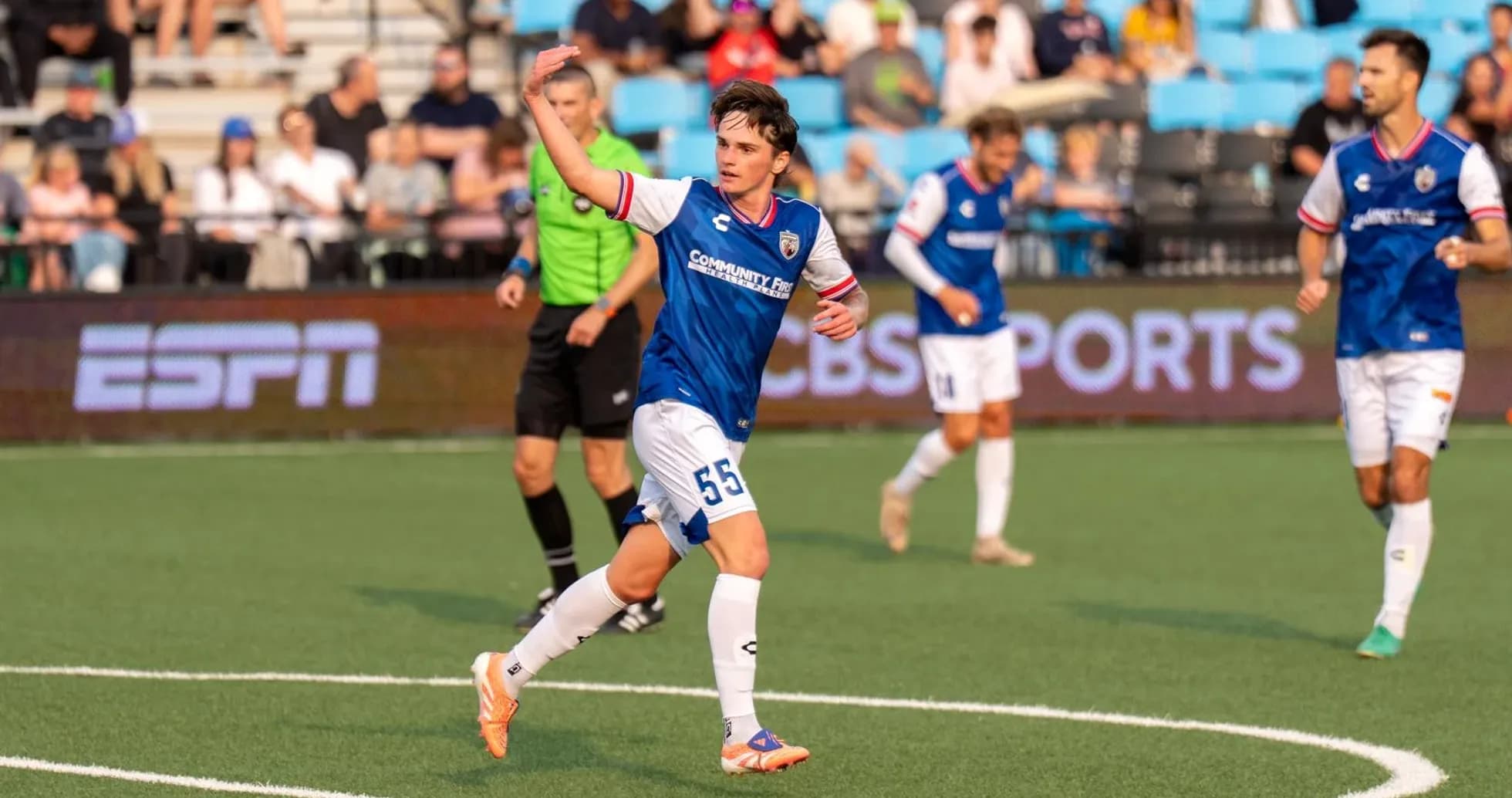
Dominic Casciato’s Rowdies, by contrast, looked like a team fully aligned with their statistical profile. J. Waite in goal fronted a back line with D. Acoff, L. Wyke, B. Schaefer and N. Dossantos, supported by C. Ostrem’s work on the flank. In midfield, L. Perez, S. Cruz, M. Schneider and Pedro Becker offered layers of control and pressing, with M. Myers leading the line. The bench—A. Pack, M. Micaletto, I. LeFlore, G. Vivi Quesada, E. Conway, Y. Leerman and K. Henderlong—gave Casciato the ability to adjust the tempo and game state rather than chase it.
If there was a tactical void in Louisville’s approach, it lay in their emotional management and discipline. Season-long card data shows a side that grows increasingly combustible as matches wear on: 27.78% of their yellow cards arrive between 46–60 minutes, and a further 22.22% between 76–90. The Rowdies, meanwhile, save their most combustible edge for the closing stretch, with 25.81% of their yellows in the 76–90 window. In a fixture that finished 0–2 and went the distance to 90 minutes under referee N. Bensalah, that late-game psychological battle was always going to be decisive.
The “Hunter vs Shield” matchup tilted heavily Tampa Bay’s way even before kickoff. Louisville’s attack at home had been respectable—9 goals in 6 matches, an average of 1.5—but they had also failed to score in 3 of those 6 home fixtures. That inconsistency met an away defence that had conceded just 2 goals in 6 matches, with 4 clean sheets on their travels. Tampa Bay’s defensive structure is not just about numbers; the squad composition suggests layers of protection. L. Wyke and B. Schaefer provide the central screen, while N. Dossantos and C. Ostrem can narrow to form a compact block. Ahead of them, S. Cruz and M. Schneider add legs and tactical fouling when necessary, allowing Pedro Becker to focus on ball progression and tempo.
On the other side of the duel, Louisville’s back line had to cope with a Rowdies attack that, while not explosive away from home at 1.2 goals per match, is ruthlessly efficient. Tampa Bay have never failed to score this season, home or away, and their biggest away win of 0–2 is precisely the margin they reproduced here. M. Myers’ presence up front pins centre-backs, while wide and half-space threats from players like D. Acoff and C. Ostrem stretch the defensive shape. Once Louisville had to chase the game after falling behind, the balance that had just about held their 1.5 goals-against home average together began to unravel.
In the “Engine Room” contest, Louisville’s pairing of T. Davila and Z. Duncan faced an uphill battle against Tampa’s layered midfield. Louisville’s season form string—“WWWWLDWLLLL”—tells of a side that can dominate for stretches but lacks control in adverse game states. When they fall behind, their tendency to pick up cards in the 46–60 and 76–90 windows suggests chasing with emotion rather than structure. Tampa Bay’s midfield, by contrast, is built to suffocate: S. Cruz’s energy, M. Schneider’s positioning and Pedro Becker’s distribution form a triangle that can both protect a lead and launch measured counters.
From a statistical prognosis standpoint, this 0–2 feels less like an upset and more like the logical extension of the numbers. Heading into this game, Tampa Bay’s expected pattern was clear: control territory, limit chances, and trust an attack that always finds at least one goal. Louisville, with a perfectly balanced 19–19 goal record and a home profile of 3 wins and 3 defeats, were always vulnerable to a side that punishes small margins.
Following this result, the narrative hardens. Tampa Bay’s unbeaten armour looks even thicker; their defensive metrics—0.5 goals conceded per match overall, 0.3 away—are now backed by another clean sheet in a hostile venue. Louisville remain a playoff-placed side on paper, but their form line of “LLLLW” in the standings screams volatility. For Bird, the task is now to turn a talented but emotionally erratic squad into one that can live with the league’s most ruthless machine. For Casciato and the Rowdies, the message is simpler: keep doing exactly this.