Spain's Tactical Domination in 3-0 Victory Over Austria
Spain’s 3-0 win over Austria at SoFi Stadium in this World Cup Round of 32 tie was a textbook demonstration of territorial control, structured pressing and wide overloads. The 1-0 half-time lead was ultimately converted into a comprehensive 3-0, with Spain turning 65% possession, 23 shots and 2.84 xG into a dominant scoreline, while holding Austria to just five attempts and 0.32 xG.
Executive Summary
Spain imposed a clear positional-play blueprint from the outset, using a technically secure midfield and aggressive full-backs to pin Austria deep and deny transitions. Austria, set up more conservatively, tried to compress central spaces and play vertically through Marcel Sabitzer and Michael Gregoritsch, but were suffocated by Spain’s rest defence and counter-press. The match evolved from patient Spanish probing at 1-0 into outright control once the second goal arrived, with Austria’s structural changes after the break failing to alter the shot or territory balance.
Scoring Sequence & Disciplinary Log
The opening goal on 36' crystallised Spain’s territorial dominance. Mikel Oyarzabal (Spain) finished after a delivery from Marc Cucurella, a pattern consistent with Spain’s use of their left-back as a high, creative outlet. That strike rewarded a first half in which Spain already had a clear volume of entries into the final third and were pinning Austria’s back line in their own box.
Austria reacted with a double change at 46', Carney Chukwuemeka (IN) coming on for Nicolas Seiwald (OUT) and Florian Grillitsch (IN) for Xaver Schlager (OUT), signalling a desire for more ball-carrying and progression from midfield. Further offensive intent came at 60', when Marko Arnautović (IN) replaced Michael Gregoritsch (OUT) and Saša Kalajdžić (IN) came on for Romano Schmid (OUT), shifting the focus toward more direct play and aerial presence.
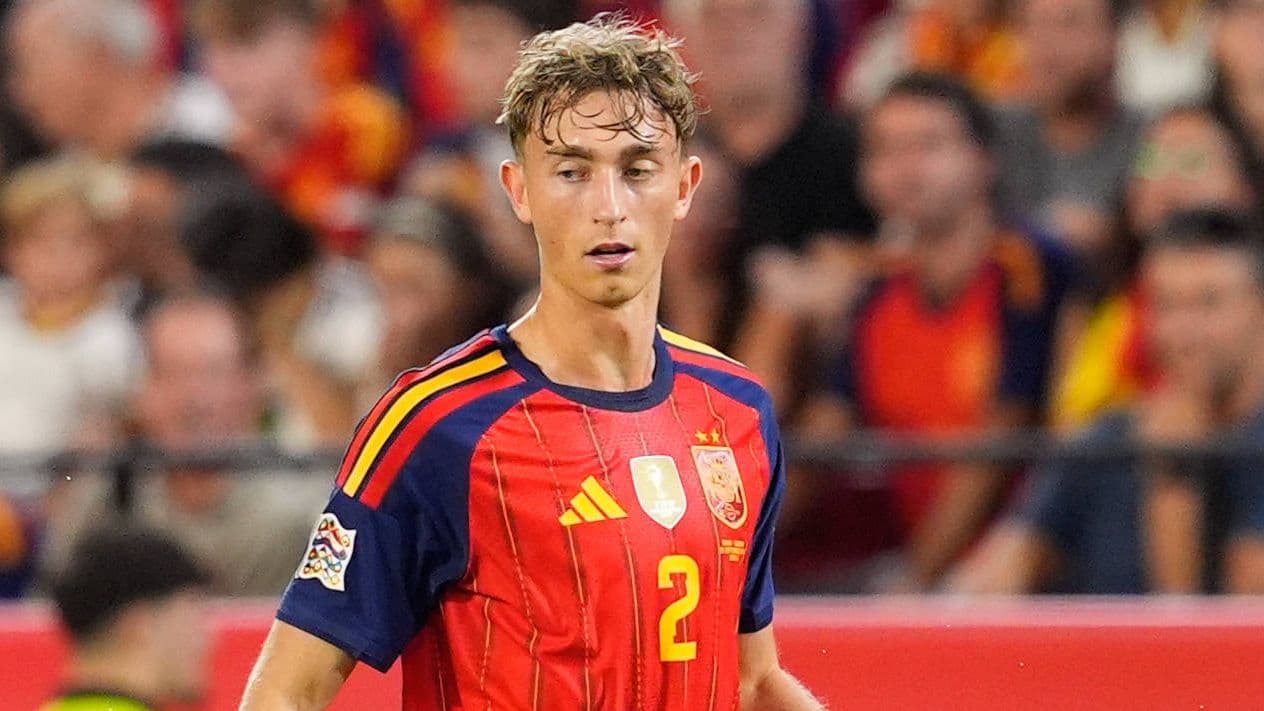
Spain’s second goal on 66' effectively killed the contest. Pedro Porro (Spain) struck after being supplied by Alex Baena, underlining Spain’s ability to involve the nominal right-back in advanced zones as an extra playmaker once Austria were forced deeper and wider by sustained pressure.
Luis de la Fuente then turned to game management at 71', introducing Mikel Merino (IN) for Dani Olmo (OUT) and Ferran Torres (IN) for Alex Baena (OUT), adding fresh legs and defensive stability between the lines without sacrificing counter-threat. Austria’s frustration surfaced on 83', when Stefan Posch (Austria) received a yellow card — Foul — reflecting their increasing reliance on late challenges to disrupt Spain’s rhythm.
Spain continued to refresh their wide and midfield zones, with Pablo Gavi (IN) for Lamine Yamal (OUT) on 85', while Austria swapped Alexander Prass (IN) for Stefan Posch (OUT) at the same minute, a move that slightly rebalanced their left side but did not change the pattern of play.
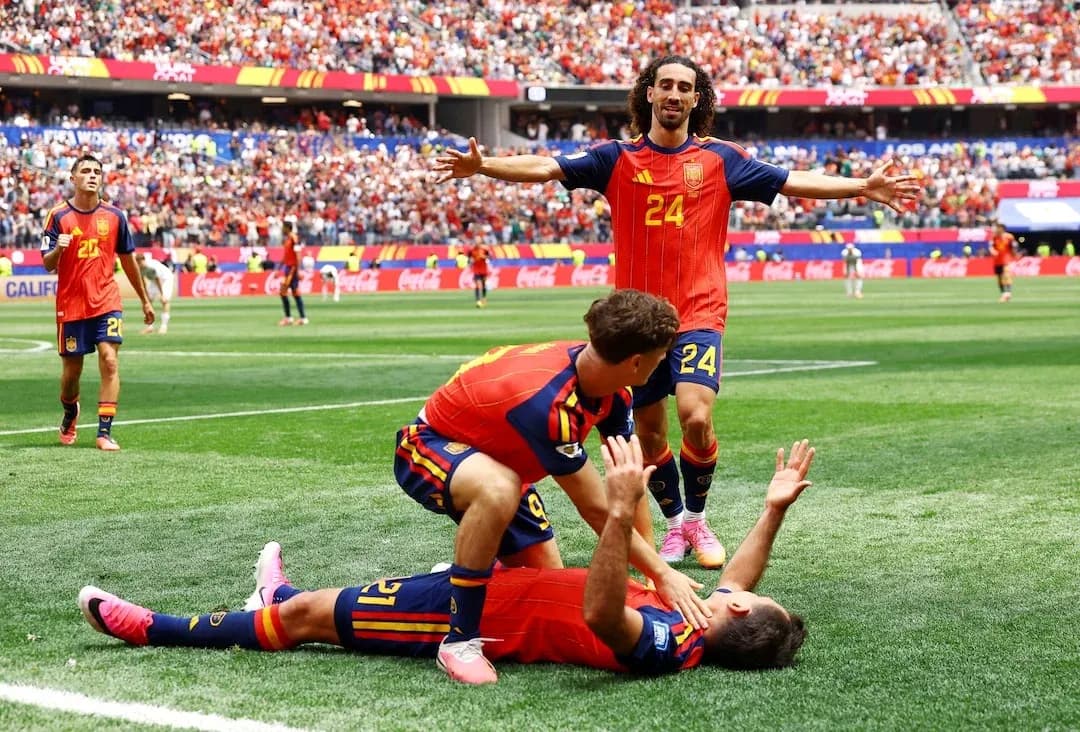
The third goal on 89' again came from the Oyarzabal–Cucurella connection: Mikel Oyarzabal (Spain) scored, assisted by Marc Cucurella. It encapsulated Spain’s capacity to keep creating from wide overloads even in the closing stages. Final changes at 90' — Marc Pubill (IN) for Aymeric Laporte (OUT) and Fabián Ruiz (IN) for Pedri (OUT) — were about protecting key players and closing the game with fresh energy in the back line and midfield.
Card summary (locked totals): Spain 0, Austria 1, Total 1.
83' Stefan Posch (Austria) — Foul.
Tactical Breakdown & Personnel
Spain’s structure, while not explicitly listed as a formation, functioned like a high-possession 4-3-3/4-2-3-1 hybrid. Rodri anchored midfield, with Pedri and Dani Olmo operating as advanced interiors, and Lamine Yamal plus Alex Baena supporting Mikel Oyarzabal from the half-spaces and wide channels. Pedro Porro and Marc Cucurella played aggressively high, often forming a five-man attacking line in settled possession.
The statistical dominance supports this: 629 total passes with 570 accurate (91%) allowed Spain to sustain long passing sequences, circulate side-to-side and constantly re-attack after regains. Their 23 total shots, with 10 on goal and seven blocked, show how often they were able to work the ball into shooting positions against a compact block. Fifteen shots inside the box highlight the quality of their occupation of central and half-space zones around Austria’s penalty area.
Without needing to make a save, Unai Simón (Spain) benefited from an outstanding collective defensive display. Austria managed only five shots in total, just one of them blocked and none on target. Spain’s rest defence, led by Aymeric Laporte and Pau Cubarsí with Rodri screening, prevented clean Austrian counters. The back line held a high starting position but with excellent spacing, which, combined with counter-pressing from Pedri and Dani Olmo, meant Austria rarely progressed beyond the first or second pass in transition.
Austria’s approach under Ralf Rangnick was clearly more reactive. With 346 passes (284 accurate, 82%), they were forced into longer, riskier balls. Their 35% possession reflects how infrequently they could establish stable phases in Spain’s half. The absence of corner kicks (0) is telling: they struggled to generate sustained pressure or territory to force defensive set-pieces, a usual lifeline for underdogs in knockout football.
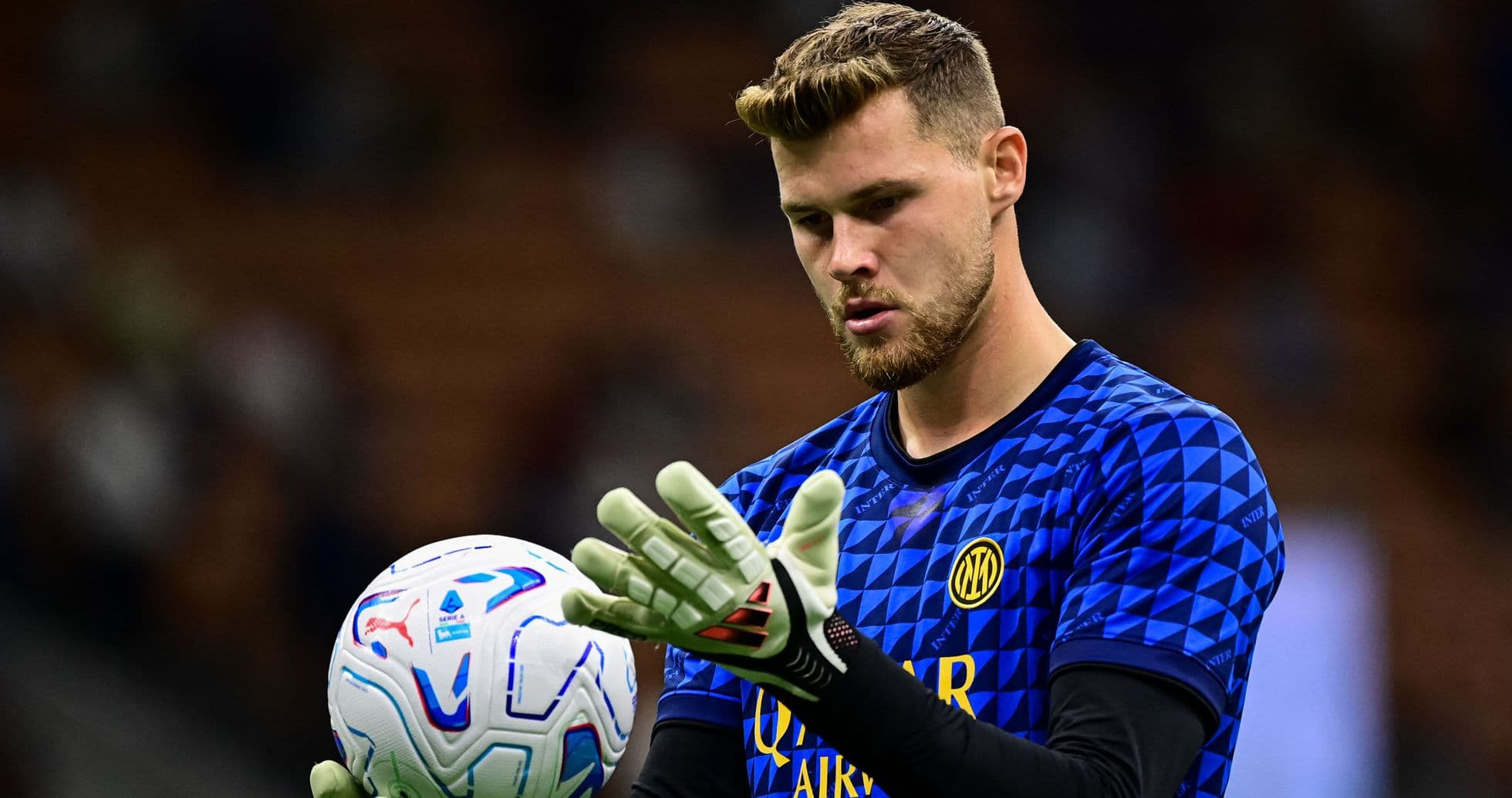
Defensively, Austria’s 15 fouls and the late yellow card for Posch speak to the strain of defending so deep and so often. The back four, with David Alaba as the most experienced organiser, had to absorb constant wide overloads and crosses. Yet Alexander Schlager (Austria) still made six saves, a strong individual workload that prevented the scoreline from becoming heavier, even though the goals prevented metric of -0.57 indicates Spain slightly outperformed the quality of their chances against him.
Spain’s substitutions were tactically coherent. Merino added height and duelling capacity in midfield, Ferran Torres provided depth runs to exploit a stretched Austrian back line, and Gavi’s introduction helped maintain pressing intensity. Late defensive rotation with Marc Pubill shored up the right side, while Fabián Ruiz’s passing range ensured Spain could continue to manage tempo in the closing minutes.
The Statistical Verdict
The final 3-0 score aligns closely with the underlying numbers. Spain’s xG of 2.84 versus Austria’s 0.32 underlines a chasm in chance quality and volume. Ten shots on goal to Austria’s zero and a 15–4 split in shots inside the box encapsulate how one-sided the contest was in terms of threat.
Possession (65%–35%) and passing accuracy (91%–82%) highlight Spain’s technical and structural superiority, while the 9–0 corner count reflects territorial dominance. Defensively, Spain’s ability to restrict Austria to five shots and no efforts on target, combined with only eight fouls conceded, speaks to controlled aggression and excellent positioning rather than emergency defending.
From a goalkeeping perspective, Unai Simón (Spain) was largely a spectator, while Alexander Schlager (Austria) had to deliver six saves under constant pressure. Both teams share the same goals prevented figure of -0.57, but in context, this underscores that Spain’s finishing was broadly in line with the quality they created, and Austria never generated enough threat to test Spain’s last line.
Overall, this was a tactically mature, data-backed domination by Spain: a high-possession, high-territory performance that translated cleanly into a 3-0 progression to the next round.