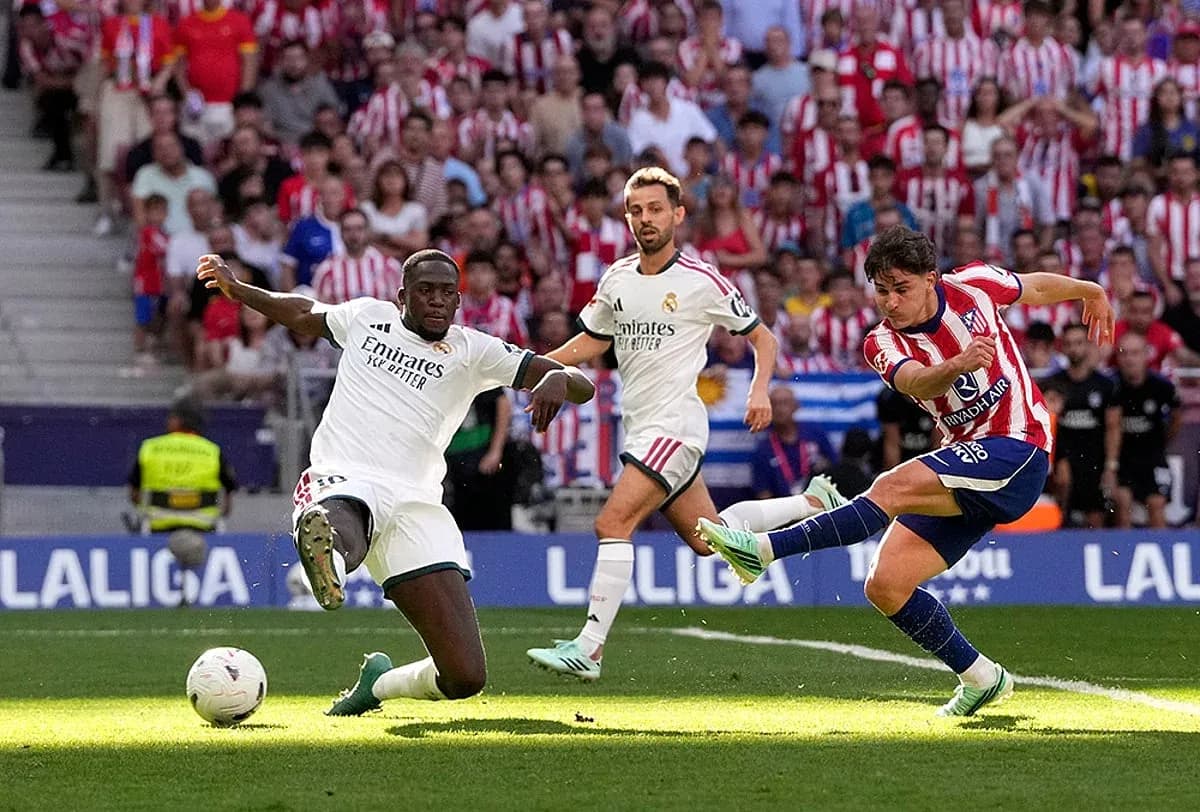
Sevilla vs Atletico Madrid: Tactical Insights from La Liga Clash
Under the late-summer lights of the Ramón Sánchez Pizjuán, Sevilla’s early-season optimism met the cold edge of Atletico Madrid’s efficiency. By full time, the scoreboard told a stark story: Sevilla 1–3 Atletico Madrid, all three away goals coming before the interval. For a Sevilla side that had entered Round 3 of La Liga in 5th place with 6 points and a positive goal difference of 1 (6 scored, 5 conceded overall), this was a brutal reminder of the margins at the top. Atletico, already 2nd with 7 points and a goal difference of 4 (7 for, 3 against overall), played like a team intent on staying in the Champions League places.
Luis Garcia Plaza stuck to Sevilla’s seasonal blueprint: a 4-2-3-1 that had been used in all three league games so far. Odisseas Vlachodimos anchored the side behind a back four of Javi Iglesias, Castrin, Kike Salas and Gabriel Suazo. In front of them, Lucien Agoume and Jon Guridi formed the double pivot, with a fluid band of three – M. Sierra, Peque and J. Diaz – supporting lone striker R. Ure.
On paper, this structure made sense. Heading into this game, Sevilla had scored 6 goals in total from 3 fixtures, averaging 2.0 goals per match overall, with 1.5 at home and a striking 3.0 on their travels. They had not failed to score once this season. The problem, as this match underlined, lay in the other direction: 5 goals conceded overall, including 4 at home at an average of 2.0 per home game, and still no clean sheets.
Atletico Madrid, by contrast, arrived with a defensive reputation already backed by the numbers: just 3 goals conceded in total across 3 games, 1.0 per match both at home and away, and one clean sheet already in the bank. Diego Simeone opted for a 4-4-2 that looked deceptively orthodox but functioned with modern elasticity. Jan Oblak was protected by a back four of Marcos Llorente, M. Pubill, David Hancko and Alejandro Grimaldo. Ahead of them, Giuliano Simeone and Pablo Barrios worked inside channels, Morten Hjulmand patrolled the central lane, and Ademola Lookman offered direct running from the left. Up front, Lee Kang-In and Álex Baena – listed as forwards here – formed a mobile, technical pairing.
The absences only sharpened the tactical edges. Sevilla were without R. Vargas due to transfer negotiations, removing a potential attacking rotation piece from Garcia Plaza’s bench. Atletico were missing J. Alvarez (personal reasons), Robin Le Normand (suspended after a red card), Thomas Lemar and O. Vargas (both coach’s decision), plus Alexander Sørloth with a muscle injury. On another night, losing a starting-calibre centre-back like Le Normand might have unsettled Atletico’s back line; instead, Hancko and Pubill stepped in with little fuss, aided by the collective protection in front of them.
The disciplinary profiles of both squads added another layer to the contest. Sevilla came into the fixture with a clear late-game edge in aggression: 27.27% of their yellow cards had arrived between 76-90 minutes and another 27.27% between 91-105, plus a red card in the 76-90 window. Players like Isaac Romero – 3 yellow cards in just 112 minutes, the league’s leading yellow-card collector so far – and Guridi, with 2 yellows, embody that combative edge. Suazo, too, had already committed 9 fouls and taken 2 yellows in three appearances. Atletico’s profile was more evenly spread: early and mid-half bookings, but again a red card in the 76-90 range, that one belonging to Le Normand.
On the night, though, the game was decided long before those chaotic late phases could matter. Atletico’s 4-4-2 morphed into a suffocating 4-2-2-2 out of possession, with Hjulmand and Barrios screening central lanes and Giuliano Simeone dropping in to form a compact block. That shape neutralised Sevilla’s central three behind Ure, forcing them wide where Llorente and Grimaldo could press aggressively but with cover.
The “Hunter vs Shield” duel was defined by Baena. Heading into this round, he was already one of La Liga’s most productive attackers: 3 goals and 1 assist in 163 minutes, with 4 shots (3 on target) and 7 key passes, plus an impressive rating of 7.63. Sevilla’s defence, built around the young pairing of Castrin and Kike Salas, had conceded 5 goals in 3 matches overall and 4 at home. That imbalance was ruthlessly exposed as Baena and Lee Kang-In found pockets between Sevilla’s lines. Lee’s season numbers – 1 goal, 1 assist, 5 tackles, 4 key passes and 9 successful dribbles out of 9 attempts – foreshadowed exactly the kind of press-resistant, line-breaking presence that gave Agoume and Guridi nightmares.
In the “Engine Room” battle, Hjulmand and Barrios had the edge over Agoume and Guridi. Guridi’s campaign so far has been mixed: 1 goal, 2 yellow cards, and a rating of 6.27, but only 2 tackles and modest duel success (4 won out of 22). Against Atletico’s central trio, that lack of defensive bite told. Hjulmand’s screening allowed Atletico’s full-backs to push high, with Llorente in particular underlining why he sits among the league’s assist leaders: 105 passes at 94% accuracy, 5 tackles, 4 blocks and 4 interceptions this season make him as much an auxiliary midfielder as a defender.
For Sevilla, the attacking spark that had carried them through the opening rounds – Isaac and Oso both with 1 goal and 1 assist each this season – was missing from the starting XI. Without Isaac’s relentless duels (26 contested, 10 won) and Oso’s vertical running, the 4-2-3-1 lacked penetration between the lines. Ure was isolated, feeding on half-chances against a back line that, even rotated, conceded only 1 goal on the night, in line with Atletico’s season average of 1.0 against.
Statistically, the result fits the broader pattern. Atletico’s total of 7 goals for and 3 against before this match already pointed to a side whose underlying balance between attack and defence is superior to Sevilla’s 6 for and 5 against. Sevilla’s home record – 3 scored and 4 conceded across 2 games – reflects a side that opens up too much in front of their own crowd. Atletico’s away profile – 3 scored and 1 conceded in their single trip before this – suggested they could travel with authority.
From a tactical prognosis standpoint, this fixture underlines two trajectories. Atletico Madrid, with a flexible 4-4-2, elite creators like Baena and Lee, and a back line that copes even without Le Normand, look built for sustained top-four contention. Their defensive solidity – 3 goals conceded in 3 games, plus one clean sheet – gives them a platform to let their forwards decide matches.
Sevilla, meanwhile, remain a high-variance side: 2.0 goals scored per game overall but 1.7 conceded, no clean sheets, and a disciplinary profile that spikes late on. The structure is there in the 4-2-3-1, and the talent is evident in players like Suazo, Oso and Isaac, but without tightening the defensive block in front of Vlachodimos and managing the emotional temperature in the final quarter-hour, nights like this against the league’s elite will continue to feel punishingly long.