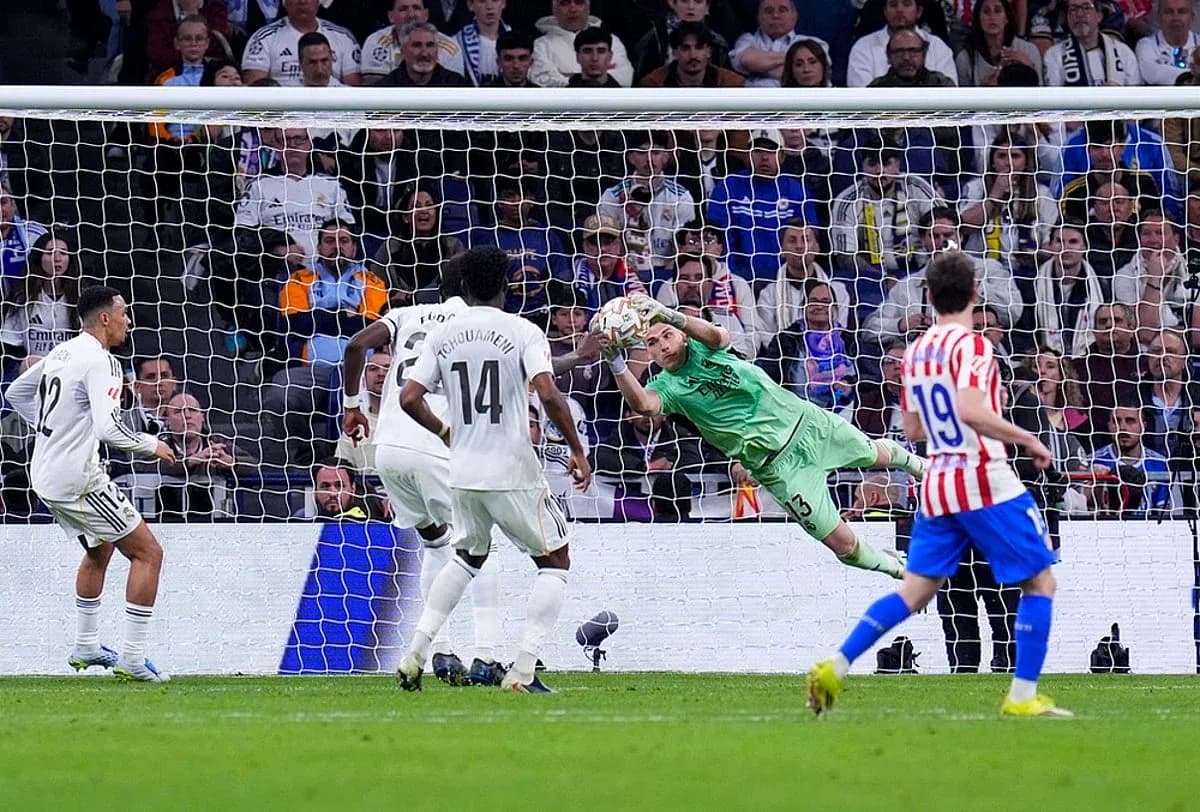
Atletico Madrid Dominates Osasuna 4-0 in La Liga Showdown
The Riyadh Air Metropolitano has already told the story: a 4–0 dismantling that underlined why Atletico Madrid sit in the Champions League places and why Osasuna remain a mid-table side still searching for defensive balance. This was Round 6 of La Liga, and across 90 minutes Diego Simeone’s reshaped Atletico translated their seasonal numbers into a ruthless, lived reality.
Heading into this game, Atletico’s seasonal DNA was clear. Fourth in La Liga with 13 points from 6 matches, they had built a goal difference of +8 overall, scoring 14 and conceding 6. At home they had been even more imposing: 8 goals scored and just 2 conceded across 3 league fixtures, an average of 2.7 goals for and 0.7 against on their own turf. Simeone has nudged his side from pure attrition to controlled aggression, and the 4-4-2 he chose here fit that evolution.
Opposite them, Osasuna arrived in Madrid as the classic dangerous but flawed visitor. Thirteenth in the table with 7 points from 6 matches, their overall goal difference was -7, the product of 5 goals scored and 12 conceded. On their travels, the numbers were stark: 4 scored but 10 conceded in 3 away games, an average of 1.3 goals for and 3.3 against away from home. Miguel Ramis Luis responded with a conservative 5-4-1, hoping to smother spaces that Atletico’s new creative core has been feasting on.
I. The Big Picture: Simeone’s New Spine
Simeone’s lineup told a story of controlled risk. Jan Oblak anchored a back four of Marcos Llorente, Cristian Romero, Robin Le Normand and Alejandro Grimaldo. In front of them, a technically gifted midfield: Lee Kang-In wide right, Koke and Johnny Cardoso in the middle, and Álex Baena from the left, tucking inside to become a roaming playmaker. Up front, Jonathan David and Ademola Lookman offered depth and dynamism.
This shape maximised Atletico’s season-long strengths. Overall, they have averaged 2.3 goals per game while conceding just 1.0. The 4-4-2 has been their most used system, deployed in 4 of 6 league matches, and this was its most fluid iteration. Baena, already with 4 goals and 1 assist in La Liga and averaging a 7.37 rating, functioned as the creative hinge, drifting into half-spaces and linking with Grimaldo’s overlaps. Lee, with 2 goals, 1 assist and 11 successful dribbles from 15 attempts this season, offered the one‑v‑one threat that stretched Osasuna’s compact block.
Osasuna’s 5-4-1, with Alejandro Fernandez in goal behind a line of Imanol Arguibide, Ransford Yeboah, Florian Boyomo, Unai Santos and Aitor Bretones, was built to absorb. Lucas Torró and Aimar Osambela sat central, with Joseba Dubasin and Rodrigo Riquelme Moro either side of them, while Raul Garcia led the line alone. On paper, it was a low block designed to protect a back line that had already shipped 10 goals away from home in just 3 matches.
II. Tactical Voids: Absences and Discipline
Both squads were carrying notable absences. Atletico were without J. Alvarez, P. Barrios and Alexander Sorloth, all ruled out with muscle injuries. Sorloth’s absence removed a classic reference point in the box, but it also pushed Simeone towards a more mobile, interchanging front line with David and Lookman, which ultimately suited the aggressive, front‑foot plan.
Osasuna’s defensive depth was hit harder. M. Gomez (hamstring), J. Herrando, A. Oroz and V. Rosier were all unavailable. For a side already conceding 2.0 goals per game overall, and 3.3 away, losing defensive and midfield options narrowed Ramis’s ability to adjust in-game.
Disciplinary trends framed the risk. Atletico’s yellow cards this season have been spread across the match, but there is a clear spike between 46–60 minutes, where 30.00% of their bookings arrive, and a red-card flashpoint between 76–90 minutes, where 100.00% of their dismissals have occurred. Le Normand himself has already seen red this season. Osasuna, meanwhile, show a different pattern: 28.57% of their yellows come in the 76–90 minute window and another 28.57% between 91–105, a late‑game rashness that often coincides with chasing matches.
III. Key Matchups: Hunter vs Shield, Engine Room vs Enforcer
The “Hunter vs Shield” battle tilted heavily Atletico’s way. As a collective, they had already produced a 4-0 home win and a 3-0 away win this season, underlining their capacity to run up scores once they break through. Against that, Osasuna’s away defence had already suffered a 4-0 defeat and conceded 5 goals across their worst away days. This fixture fit that pattern exactly: once Atletico’s first goal went in before half-time, the floodgates opened.
In midfield, the “Engine Room” duel was decisive. Koke and Cardoso gave Atletico control of tempo and second balls, while Baena and Lee attacked the spaces either side of Torró. Baena’s season numbers – 195 passes at 83% accuracy, 14 key passes and 4 goals – translated here into constant threat between the lines. Lee’s 9 fouls drawn and 31 duels won this season speak to his ability to destabilise a block; in this match, his dribbling and inside movements forced Osasuna’s wing-backs to collapse, freeing Grimaldo and Llorente on the outside.
Osasuna’s main offensive “Hunter”, Ante Budimir, started on the bench. With 4 league goals, 10 shots on target from 14 attempts, and 3 penalties scored from 3 taken, he is their most reliable finisher and aerial focal point, winning 42 of 68 duels. Holding him back initially blunted Osasuna’s ability to relieve pressure. When he did enter, the game state – and Atletico’s control – meant his usual penalty‑box gravity could not turn the tide.
IV. Statistical Prognosis: Why 4–0 Felt Inevitable
Following this result, Atletico’s home scoring rate and Osasuna’s away defensive record converged almost perfectly. A side averaging 2.7 goals at home and conceding just 0.7 hosted one conceding 3.3 away; a four‑goal margin without reply fits the broader pattern rather than defying it.
Atletico’s season-long penalty record – 1 taken, 1 scored, 100.00% conversion – underlines their clinical edge when they reach the box. Osasuna’s, with 3 scored from 3, shows they too can punish mistakes, but in Madrid they simply did not generate the territory or pressure to force those moments.
The late‑game disciplinary profiles also mattered. As Atletico surged in the second half, Osasuna’s tendency to accumulate late yellows made sustained resistance unlikely. Ramis’s 5-4-1, deprived of key defensive options and without Budimir’s outlet from the start, became a static target for a side that now marries Simeone’s old defensive steel with a far richer attacking palette.
In narrative terms, this 4–0 was not a freak result but a logical extension of the numbers. Atletico’s evolving 4-4-2, powered by Baena and Lee between the lines and backed by a defence that had already produced 3 clean sheets overall, met an Osasuna side whose away structure has yet to match its competitive spirit. The table, the statistics and the ninety minutes in Madrid all told the same story.