Scottish Football Season Preview: Challenges and Hopes
Scottish football usually greets a new season with a familiar tingle of anticipation. This year, it walks in with a limp.
The hangover from a wretched World Cup has not lifted. It has not even been treated. The Scottish FA has offered no detailed explanation, no roadmap, no sense that anyone in charge truly grasps the scale of the failure. Mike Mulraney, the president, last appeared in public squeezed into the background behind Gianni Infantino and the US president at Trump Tower, a bit-part extra in someone else’s show. Ian Maxwell, the chief executive, surfaced only briefly after Steve Clarke’s resignation to rail against “hysterical commentary” about Scotland’s performance.
These are the same executives who almost burst out laughing when it was suggested that a four-year contract for Clarke, signed just before departure for the United States, might be a touch cavalier. The joke has not aged well.
Maybe Mulraney and Maxwell are buried in the task of finding Clarke’s successor, a coach capable of ushering a creaking, ageing squad into its next phase. They deserve the time to get that call right. But the silence over the wider health of the national game is deafening. The World Cup exposed a big picture that club football has happily ignored for years. The anger over Scotland’s meek exit – rational or not – now bleeds straight into the Premiership’s return.
This season threatens to be toxic.
Fury in the stands, drift in the boardrooms
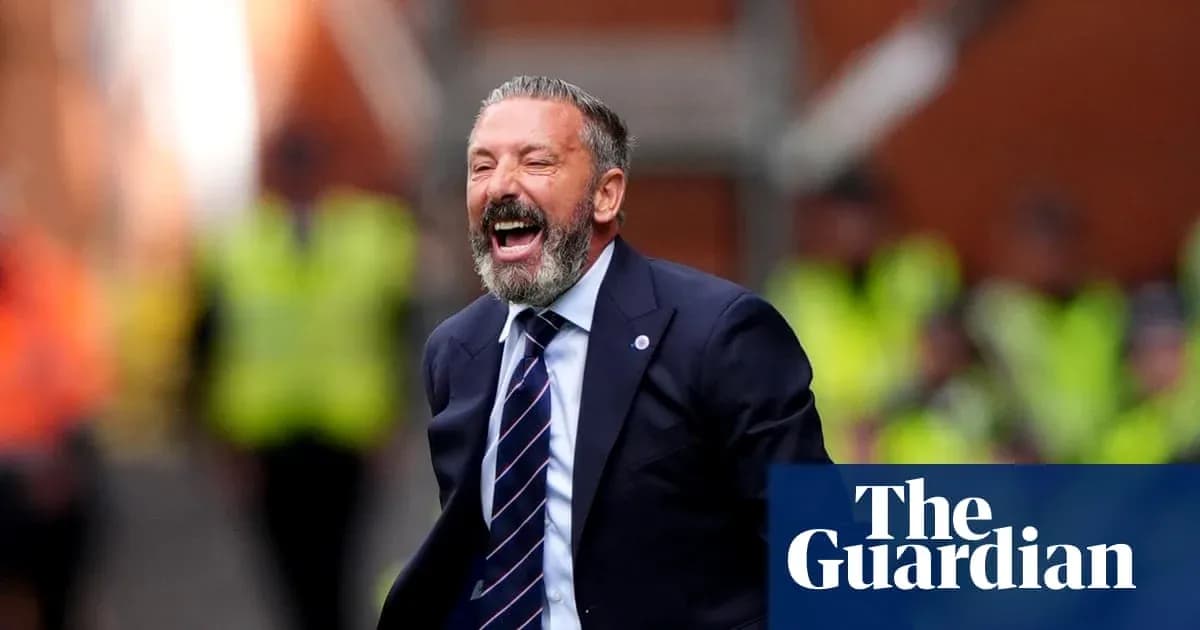
Celtic supporters remain at odds with their own hierarchy. They see a board that has grown comfortable, distant, insulated from the concerns of the terraces. Across the city, Rangers have turned to Derek McInnes, a manager steeped in the club’s culture yet deeply disliked by many who wear green and white. His appointment has sharpened old divides before a ball has been kicked.
Hearts fans are still wrestling with something more complex: the trauma of coming within minutes of a first title in 66 years, only to watch it vanish in the most agonising fashion at the end of 2025‑26. The bitterness from that run-in has not gone away. It was inflamed further on 11 June when the Scottish Professional Football League finally released the outcome of its disciplinary process into the pitch invasion that forced the early end of Celtic’s title-clinching game against Hearts.
What emerged was a list of wrist slaps. Hamilton Academical, Inverness and Stenhousemuir were ticked off. Celtic were handed a modest fine and a suspended, token reduction in tickets. For many, it felt like confirmation of a hierarchy that protects its biggest asset.
Rangers fans, never shy of a perceived conspiracy, had been relatively quiet until McInnes collected a touchline ban for his comments about a refereeing decision. The club has already criticised parts of an independent report into the disorder that followed their Scottish Cup defeat to Celtic in March. Trust between supporters, clubs and governing bodies is thin.
Motherwell, meanwhile, are consulting lawyers after being fined by the Scottish FA over a social media video. Hibs fans have gone into digital meltdown after a 2-0 defeat in Kosovo in a European qualifier, another dismal Scottish result abroad that barely raises an eyebrow now. The shock factor disappeared years ago.
Pockets of hope, and one big signing
Not every club is trudging into the season. Some have reasons to feel the pulse quicken.
Celtic’s record signing of Kasper Høgh has given supporters a jolt of excitement and a glimpse of what a bolder recruitment strategy could look like. The fee, substantial by Scottish standards, shows a willingness to flex financial muscle that many in the stands believe has been missing. Høgh arrives from the fertile ground of Bodø/Glimt, a club whose alumni often face scepticism once they leave that carefully constructed environment.
The doubts are familiar: can a player thrive away from a system that made him? At a price that many English Championship sides would barely notice, Høgh might have moved earlier without those questions. Yet at 25, with a strong physical profile and a direct, purposeful style, he looks tailored for Scottish football’s tempo and intensity.
Celtic’s real test lies elsewhere. They must be ready to replace key performers such as Arne Engels and Alistair Johnston if irresistible bids land, and do it without falling into the trap of treating net profit as the ultimate prize. Supporters have welcomed Høgh. They expect more of the same ambition, not another summer of balancing the books.
Rangers have taken a very different path. They have spent heavily in recent seasons and watched trophies head elsewhere. The result is a fanbase simmering with frustration and an American ownership that, curiously, has chosen not to confront the discontent or reshape the narrative.
McInnes’s arrival offers something tangible. Rangers open the league campaign at Dundee United on Friday night with a manager whose understanding of the club, its demands and its scars is deeper than that of several recent predecessors. Vanja Dragojevic, signed from Partizan Belgrade, looks a shrewd addition in midfield. The need for attacking flair remains, but McInnes’s first move has been to harden the team’s core. He has wanted this job for years and does not lack drive or stamina.
Rangers should be stronger, more coherent, harder to bully. Yet when the race is measured by course and distance, Celtic still set the standard.
Hearts, hope and hard reality
In Edinburgh, Hearts are still coming to terms with how close they came. Nobody connected with the club could reasonably be expected to have processed the collapse of that title challenge by now. It was too raw, too sudden, too cruel.
McInnes’s departure for Rangers, the arrival of Wouter Vrancken and his radically different style, and a surge in expectation have created a volatile mix. Hearts’ tilt at the championship arrived ahead of schedule, dragging the club into the consciousness of people who had barely glanced at Scottish football before.
Their Champions League qualifying defeat to Sturm Graz, comprehensive and sobering, underlined the scale of Vrancken’s task. He must reshape, refresh and modernise while managing a support that has had its appetite for success permanently altered. Patience would be wise. Whether it will be granted is another matter.
The middle class refuses to stand still
Beneath the duopoly, clubs are refusing to accept their fate as mere extras.
Motherwell’s work under Jens Berthel Askou, and in the months after his tenure, showed that teams outside the traditional elite do not have to cling on for survival. They can set the tone. The football was adventurous, crowds grew, and scouts from bigger leagues began to pay attention. The sales of Elijah Just and Elliot Watt for multimillion-pound fees vindicated a model that looks beyond the usual markets and refuses to be boxed in.
St Mirren are plotting a future built on younger players and a more attractive style. Kilmarnock, under Neil McCann at the end of last season, hinted at a similar shift towards more expansive football. Aberdeen, with Stephen Robinson now in charge, look ready to step up after a patchy spell. There is movement, there is thought, there is at least an attempt to evolve.
One long-running sore has almost healed: only one artificial pitch remains in the Premiership. For players, managers and purists alike, that alone is worth a small celebration.
A nation obsessed, a game unwell
Scotland’s relationship with football has never been in doubt. It is a national obsession, a weekly ritual, a social glue. The stadiums will still fill, the arguments will still rage, the old songs will still echo.
Yet the sport itself feels like a patient in need of urgent care. Governance is weak, communication from the top is almost non-existent, and the international team’s failings have ripped away the last layer of denial about where the game truly stands.
A new season should promise renewal. Right now, it only truly excites if it comes with something else: the courage to admit what is broken, and the imagination to fix it.