Saudi Roshn League's Missed World Cup Opportunities
Two summers ago, the Saudi Roshn League could point proudly to Europe and say it had a hand in Spain’s triumph. Nacho Fernandez and Aymeric Laporte were its own, flying the flag at Euro 2024 as La Roja climbed back to the summit of the continent.
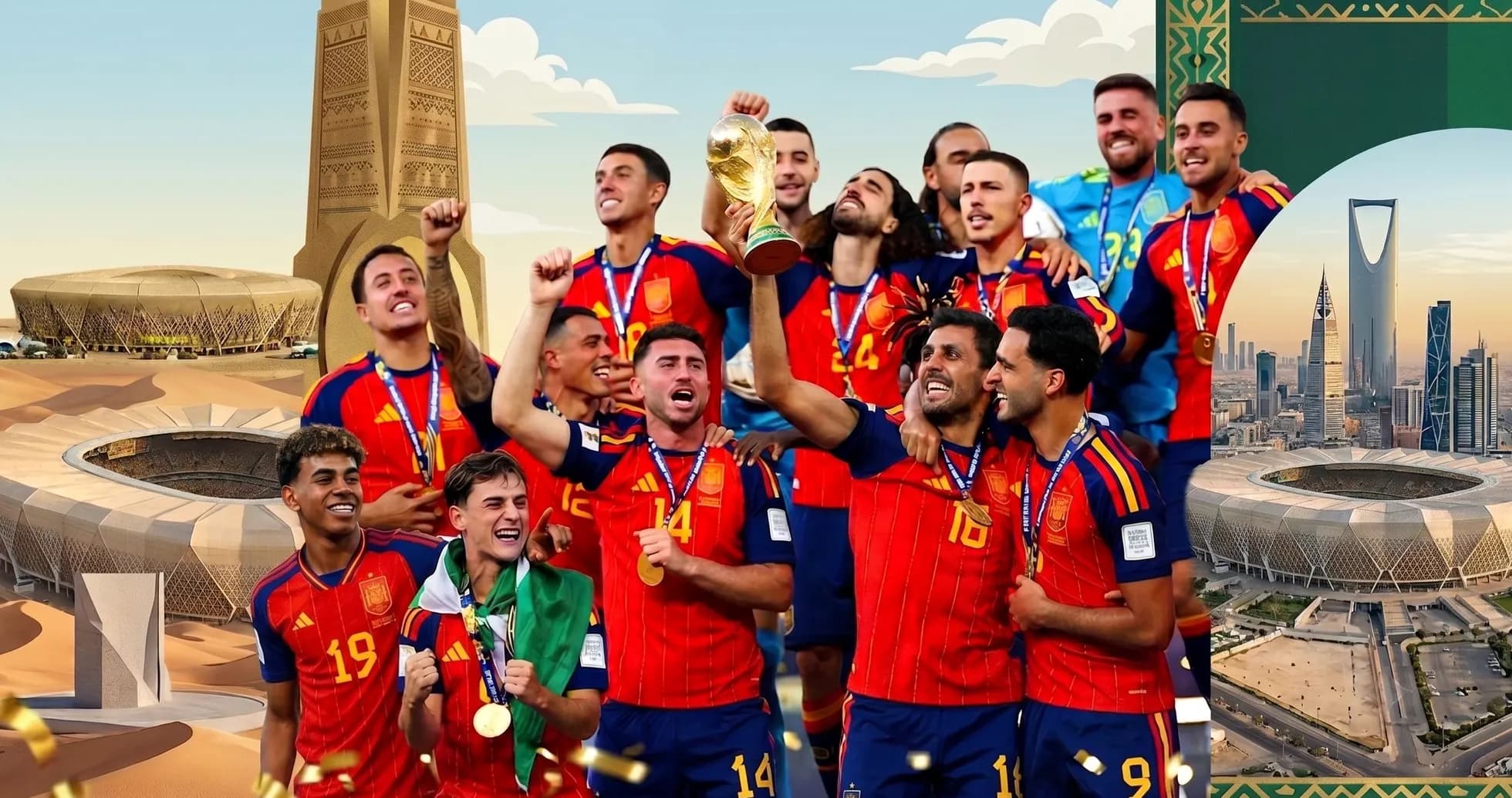
Now Spain are world champions. The Matadors have gone one step higher, lifting the 2026 World Cup. And this time, the Roshn League is watching from the outside.
From shared glory to missed chances
The contrast is stark. Back in 2024, Al-Qadisiyah and Al-Nassr basked in the glow of their players’ success, celebrating Nacho and Laporte as European champions. Today, the league is full of Spanish names, yet not a single one made Luis de la Fuente’s squad for the World Cup in North America.
Spain’s title run was built on familiar principles: icy tactical control, ruthless defensive organisation and a final decided by a single, nerveless strike against Argentina. But none of that glory is directly tied to a Saudi club this time. No Roshn League badge appeared on the shirt of a world champion.
That wasn’t for lack of trying.
Across recent seasons, Saudi clubs circled several of the players who now carry World Cup winner’s medals. Deals were discussed, approaches made, some transfers came close. None crossed the line. Had just one of those negotiations broken differently, the league could now boast a world champion in its ranks.
Instead, it settles for something else: presence, influence and a sizeable World Cup footprint. Forty-nine Roshn League players went to the tournament. That number alone underlines how deeply Saudi clubs have embedded themselves in the global game, even if the final, glittering step remains out of reach.
Laporte: the one that got away
No case sums up the missed opportunity quite like Aymeric Laporte.
The French-born defender, once the face of the Roshn League’s ambitions at Al-Nassr, returned to Europe and promptly anchored Spain’s march to the title. Alongside Pau Cubarsi, he formed a defensive wall that never really cracked, guiding De la Fuente’s side through the pressure of knockout football and all the way to the trophy.
And he did it just one season after walking away from Cristiano Ronaldo’s dressing room.
Laporte’s spell at Al-Nassr ended in a sour, public unraveling. Italian coach Stefano Pioli sanctioned him, exiling him from the group, forcing him to train alone and leaving him out of the decisive matches at the end of the campaign. The mood, Laporte later admitted, had turned “difficult” amid constant upheaval in management and on the touchline.
From that turmoil, he went back to Athletic Bilbao. From Bilbao, he went to the World Cup. From the World Cup, he came back a champion.
For the Roshn League, it is a painful what-if. A recent employee, now a global reference point, but no longer part of the project.
Laporte was not the only one. Across Spain’s squad, there were others who had been linked to Saudi clubs, tracked, courted, discussed. None of those moves materialised. The World Cup winners’ dressing room, so heavily scouted by Roshn League recruiters, contained not a single player contracted to a Saudi side.
No champions, but plenty of winners
Yet this is not a story of failure alone. While no Roshn League player climbed the podium as a world champion, the competition still delivered concrete rewards for Saudi clubs, both in footballing terms and on the balance sheet.
FIFA’s club benefits programme, as reported by French outlet L’Equipe, paid 4,300 euros per day for each player involved in the World Cup. The compensation covered the period from 1 June to 19 July 2026, with a total pot of 305.3 million euros distributed worldwide.
In that race, Saudi clubs were not spectators. They were major players.
Al-Hilal sent more footballers to the tournament than any other Saudi side: twelve in total. That alone guaranteed a serious financial windfall. On the pitch, their full-back Theo Hernandez stayed with France until the third-place match, carrying the club’s colours deep into the knockout rounds even though Les Bleus fell just short of the bronze.
Behind them, Al-Ahli and Al-Nassr shared second place among Saudi clubs, each contributing nine players to the World Cup. Al-Ahli had extra reason to celebrate. Their striker Ivan Toney helped England secure third place, writing his own small chapter in his national team’s history while quietly enhancing his value back in Jeddah.
Money flowed in. So did prestige.
Al-Qadisiyah, with six players involved, found its biggest winner in Julian Quinones. The Mexican forward lit up the tournament, scoring four goals and adding a decisive assist in just five matches. His performances did not bring a world title, but they did bring attention. For his club, he returns not just as a key player, but as a proven big-stage performer.
The last step
So the Roshn League leaves the 2026 World Cup with a curious mix of emotions.
It can point to 49 players on the grandest stage, to millions of euros banked, to stars like Hernandez, Toney and Quinones enhancing both their reputations and those of their clubs. It can point to its growing status as a league that supplies talent to the biggest national teams on earth.
What it cannot yet claim is the ultimate badge of honour: a reigning world champion under contract.
Twice now, Spain’s golden moments have brushed against Saudi ambitions. First with Nacho and Laporte as European champions wearing Saudi colours, then with Laporte stepping away just before he reached the very top of the game.
The structure is there. The money is there. The global presence is there.
The question now is simple: when the next World Cup rolls around, will a Roshn League club finally keep hold of – or win the race for – a player who ends the summer with a winner’s medal around his neck?