Ruben Amorim Reflects on Manchester United Mistakes as He Embraces Milan Challenge
Ruben Amorim doesn’t dodge the question anymore.
Months after a bruising spell at Manchester United ended with his dismissal, the Portuguese coach has laid bare his role in the failure, admitting he made “a lot of mistakes” at Old Trafford – and insisting those scars are now part of what makes him the right man for AC Milan.
From Old Trafford trauma to a Milan reset
United sacked Amorim in January, cutting short a tenure that never truly caught fire and ended amid open tension with the club’s hierarchy. His final weeks were marked by pointed comments, including a sharp rebuke of United’s decision-makers after a match at Elland Road against Leeds, when he suggested others at the club should “focus on their jobs”.
The numbers told their own story. In the Premier League, Amorim left with the worst win ratio of any United manager in history – 32 per cent. His side conceded 1.53 goals per game on average, again the worst figure for a United boss, and kept clean sheets in only 15 per cent of league matches. For a club built on dominance and control, those statistics were damning.
United also paid heavily to draw a line under the experiment. His exit, along with that of his staff – Carlos Fernandes, Adelio Candido, Emanuel Ferro and Jorge Vital – came with a compensation bill of £15.9million, a sum later reduced when Milan moved to appoint him.
“Not just for my success, but also for my failures”
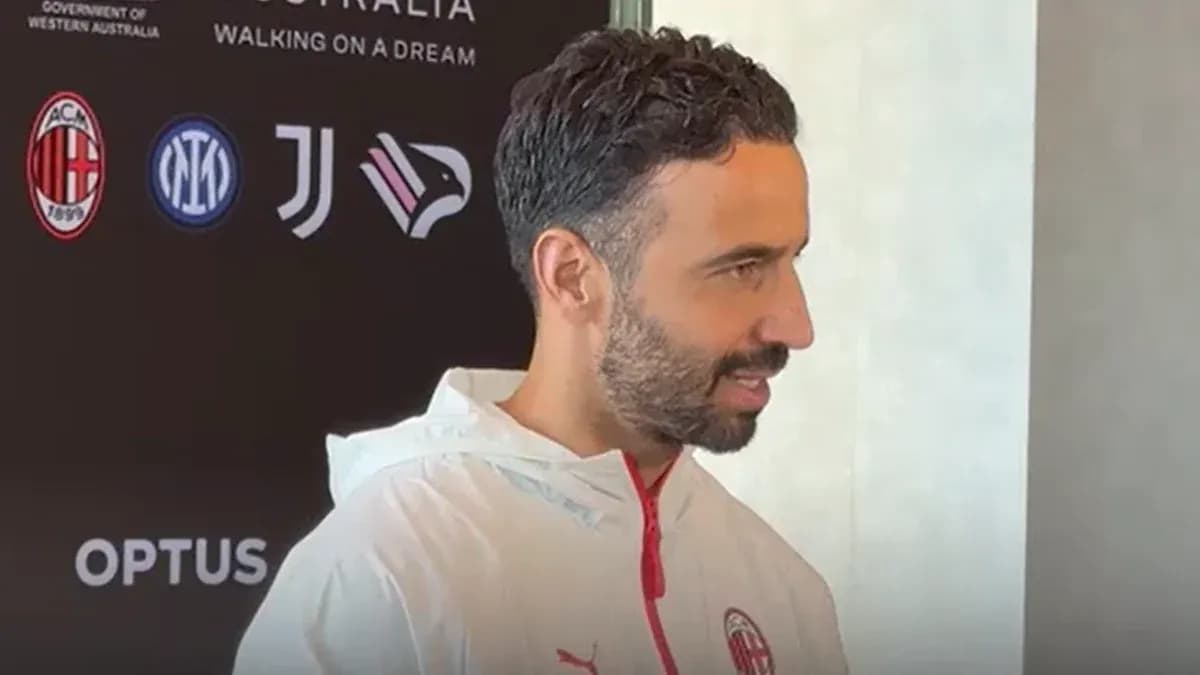
Now in Australia on Milan’s pre-season tour, Amorim cut a more reflective figure as he spoke to Sky Italia about why the Rossoneri chose him – and what really went wrong at United.
“They [Milan] appointed me because they felt I was the right guy for the way I want to play,” he said. “They want to play the same way, but I think they signed me not just for my success, but also for my experience with a top club like Manchester United and the reflections I shared in our meetings with Mr Cardinale.”
Those conversations with Gerry Cardinale, Milan’s owner, were shaped as much by what failed in Manchester as by what worked in his earlier career.
“They understood that I was prepared for this job, not just because of my past success, but also because of my failures. I think it helped a lot in those meetings.”
The message is clear: the collapse at Old Trafford is now part of his pitch.
Owning the mistakes
Pressed directly on what went wrong at United, Amorim didn’t offer excuses, nor did he dwell on boardroom politics or dressing-room dynamics.
“The first thing is that it doesn’t matter anymore. That is the feeling,” he said. “There’s a history, then something happens, the context changes, and you focus on the next challenge.
“I learned a lot. It would be hard to point to one thing, but the important thing that I clearly know is that I made a lot of mistakes. When you do this kind of reflection, and you understand that it was not just their fault, but also my fault, I think you can be a better coach and a better man.”
No attempt to shift blame. No attempt to rewrite the narrative. For a manager who clashed publicly with United’s hierarchy, this is a notable shift: accountability, not confrontation.
He still speaks with respect about the scale of the job he briefly held.
“I was really honoured to be the manager of Man United at the time, but now I’m at Milan.”
The chapter is closed. The lesson, he insists, remains open.
A boyhood fan with a rebuilding job
If United felt distant and conflicted by the end, Milan feels personal.
Amorim has already immersed himself in the club’s fabric, speaking with figures who embody its history.
“I spoke with some people at the club, like Massaro and Baresi and we exchanged messages,” he said. “That is the most important thing. To understand what kind of club I am and what the history of the club is.”
Here, he starts from a different place. Not as an outsider trying to learn the culture on the fly, but as someone who grew up admiring the red and black.
“For me, it was easier this time, because I’ve been a Milan fan since I was a boy. I understand the culture of the club and their history.”
That childhood allegiance won’t win him points if results go sour, but it does colour the way he talks about the job. This isn’t just another posting on the carousel.
“But that is the past. Our goal is to be the new future. They chose me for a reason, and one of the reasons is that I like to look at teams that are struggling.
“I know it’s tough, but we want to rebuild something. We have many things in a good place. The staff is in a good place; the organisation is fantastic. If this is my final destination, I’ll be pleased because it’s a dream to coach this club.”
A coach once judged on his inability to steady United now openly embraces the idea of taking on a club that needs rebuilding. The difference, he believes, is the hard-earned understanding of where he went wrong last time.
The failure at Old Trafford may yet define how he is remembered in England. In Milan, he wants it to be the foundation of something very different.