Roy Keane Critiques English Arrogance After World Cup Exit
Roy Keane has never had much time for English self‑congratulation. In the aftermath of England’s World Cup semi-final defeat to Argentina in Atlanta, he went after it with a sledgehammer.
While the inquest back home raged around Thomas Tuchel and his players, Keane’s sights were fixed elsewhere: on what he sees as a deep-rooted sense of entitlement in English football culture.
Semi-Final Exit, Full-Blown Meltdown
England had led. Anthony Gordon’s first-half strike put Tuchel’s side in front on Wednesday night, a goal that briefly had the travelling support daring to believe this might finally be their year.
Then came the familiar punch to the gut.
Enzo Fernández dragged Argentina level late on. Lautaro Martínez landed the decisive blow, firing Lionel Scaloni’s world champions into a second consecutive World Cup final and leaving England on their knees again at the penultimate hurdle.
The reaction at home was instant and unforgiving. Tuchel, brought in as the proven serial winner to turn near-misses into trophies, found himself at the centre of a storm. The tone was brutal: tactical autopsies, character assassinations, questions over the entire project.
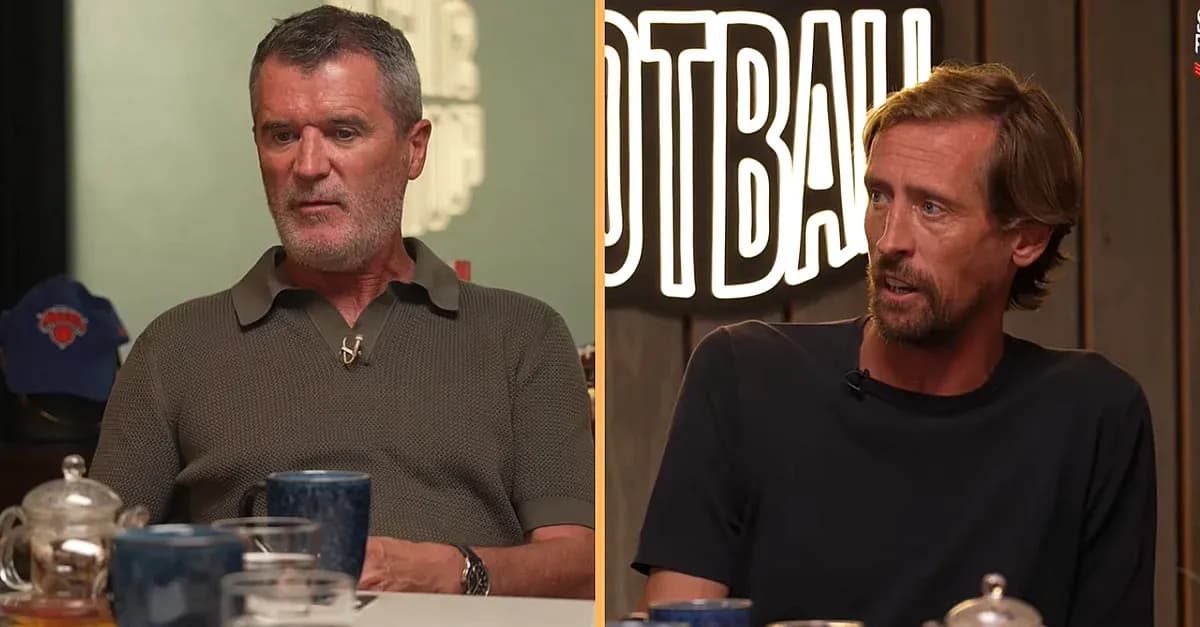
On the latest episode of Stick To Football, Keane sat alongside Gary Neville, Ian Wright and Peter Crouch and listened to the outrage being replayed and repackaged. He was having none of it.
Crouch’s Tweet And The Backlash
Crouch admitted he had been taken aback by the vitriol. In the hours after the defeat, he had posted a now-deleted message that tried to hold two truths at once: disappointment at England’s exit, and admiration for Argentina.
His tweet read:
“Gutted we are out, but watching Argentina was an experience, Messi's a genius and a hard bastard as well like the rest of them. I'm proud of our lads and what they've achieved at the World Cup, some real heroes emerged and it was a pleasure to have been here for it.”
A balanced, emotional response from someone who has lived the pressure of tournament football. The replies, though, were anything but balanced. Fury, accusations of lowered standards, claims that anything short of winning was unacceptable.
For Keane, that backlash said more about England than any tactical debate.
“I think this is the bit of arrogance with English fans comes into it and pundits or whatever,” he said. “Because, what, they got beaten in a semi-final? The World Cup is going on for nearly 100 years and England have won it once. There's been 23 World Cups so why are they thinking they should be winning it? They're competing, they came up short, that's what happens in sport unfortunately.”
No sugar-coating. No diplomatic caveats. Just a blunt reminder of history.
Fine Margins, Harsh Judgements
This England squad had been widely billed as one capable of going all the way. Talent across the pitch, depth on the bench, a coach with a Champions League on his CV. The narrative before the tournament was clear: no more excuses.
Keane didn’t deny the quality. He questioned the hysteria.
At this level, he argued, the margins are razor-thin. A semi-final defeat to the reigning champions, turned around by two late goals from players steeped in big-game experience, is a brutal lesson rather than a national disgrace.
That distinction matters. To Keane, the idea that anything short of lifting the trophy is a catastrophe is exactly the kind of thinking that poisons the debate around the national team and piles needless weight on every campaign.
England fell one step short again. Argentina march on to another final. The anger will rumble on, the post-mortems will multiply, and Tuchel will remain under fierce scrutiny.
But Keane’s challenge cuts through the noise: until England confront the gap between expectation and reality, how much will actually change the next time they find themselves one game from the biggest stage of all?