Ronaldinho Joins Ravenna: A New Era for the Club
On a blazing afternoon in Ravenna, the heat hangs over the cobbled streets like a curtain. This is a city that usually sells itself with fifth‑century mosaics and Dante, not stepovers and no-look passes. Yet in the historic centre, the talk is not of poets or emperors, but of a 46-year-old Brazilian who once shared a World Cup final stage with Madonna and Ronaldo.
Ronaldinho. In Ravenna. As a player.
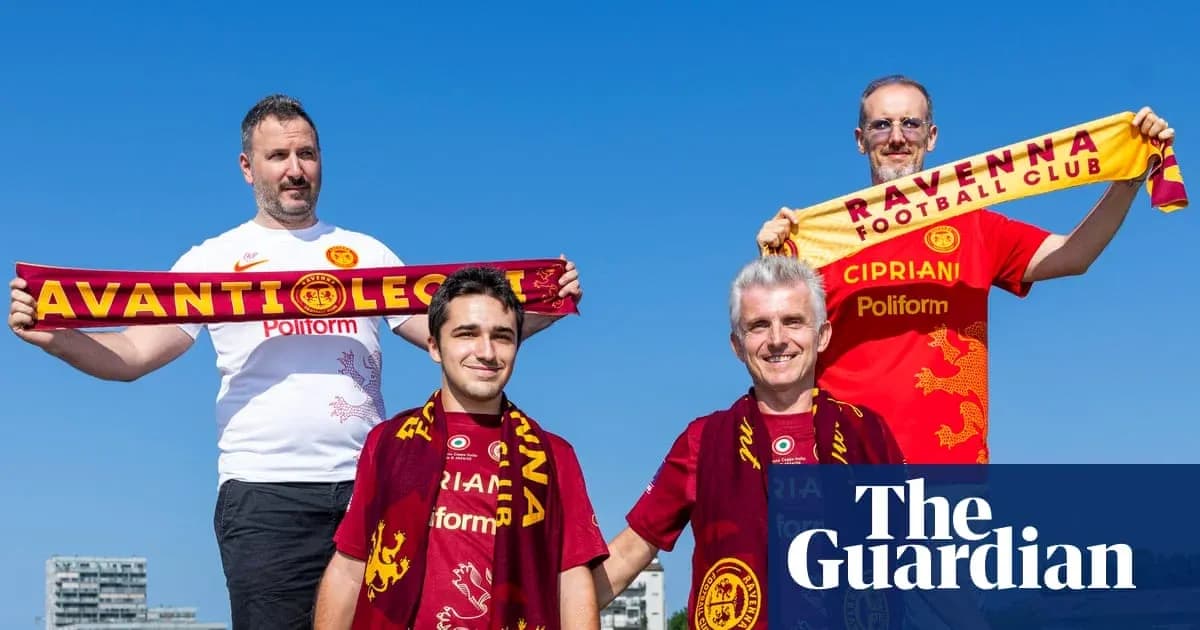
At a café, four Ravenna fans leaf through La Gazzetta dello Sport, the famous pink paper, and trade glances as they scan the headlines. They joke that they still haven’t seen him, the irony barely masking their disbelief. They know this smells like a commercial coup. Deep down, though, they cling to a wild, almost childish hope: that the 2005 Ballon d’Or winner will actually pull on their yellow and red shirt and dance one last time.
This is the surreal new reality in a corner of Emilia-Romagna that has rarely troubled the footballing map. The man behind the storm is Ignazio Cipriani, heir to the Venetian hospitality dynasty that created Harry’s Bar, and grandson of Raul Gardini, the industrialist and sailor who took Il Moro di Venezia to the 1992 America’s Cup final. A Ravenna native with a taste for big bets.
He walked into a Serie D club in 2024 and announced he was aiming for Serie A and, one day, the Champions League. It sounded like theatre. Then he started backing it up. In his first season as president, Ravenna won the Serie D Cup and secured promotion to Serie C. One rung climbed. Many more to go.
“It’s not a provocation. Serie A is the goal I declared from day one because I intend to reach it,” Cipriani has said, explaining his philosophy of working with his back against the wall, stripping away alibis and excuses.
That mindset paved the way for his most audacious move yet: bringing Ronaldinho back not as an ambassador, not as a guest of honour, but as a registered player.
The idea was born through Milan connections. Lorenzo Tonetti and Ariedo Braida, long-time AC Milan executives who once worked with Ronaldinho, opened the door. Cipriani admits he had nurtured the dream from the moment he bought the club. Meetings followed, then conversations, then what he describes as a genuine friendship. From that came a raft of ideas for Ravenna’s growth – and the headline-grabbing promise that Ronaldinho will wear the shirt and, if all goes to plan, score the final goal of his career in their colours.
The market reacted instantly. A dedicated website pushed out a special-edition jersey stamped with Ronaldinho’s “R10” logo. It vanished in hours. A global brand, a small provincial club, and a piece of marketing that sliced straight through the noise.
“If someone had told me three years ago that Ronaldinho was coming to Ravenna, I would have sent them straight to the psychiatric ward,” laughs Fabio, a lifelong fan.
The night the story broke, his phone lit up with international headlines blaring “Ronaldinho to Ravenna”. For a club more accustomed to regional derbies than global attention, it felt like a glitch in the matrix.
Because Ravenna are not, by any stretch, a sleeping giant. This is a club twice bankrupted, in 2001 and 2012, condemned to wander through Italy’s lower leagues. Seven seasons in Serie B stand as the high-water mark. The city has long been a volleyball stronghold, its football scene defined by modest budgets and short bus trips rather than grand away days.
Into that landscape steps one of the game’s great entertainers. “Ronaldinho is a unique icon,” Cipriani says. His dribbling, his smile, his irreverence made a generation fall in love with football. Ravenna now want to harness that aura to seduce a new wave of fans, in Italy and far beyond, and tie them emotionally to a small club on the Adriatic coast. The aim is not just a spike in social media followers but a bridge between eras, a global fanbase built around a local badge.
To sustain such ambition, the infrastructure must follow. The club is working with the municipality on renovating the Stadio Bruno Benelli, lifting its current capacity of just over 6,300. Cipriani’s ultimate vision stretches further: a new multi-purpose arena, open all week, with shops, concert space and an integrated Hotel Cipriani that plugs Ravenna’s football into its tourism machine.
For the city’s mayor, Alessandro Barattoni, this is more than a curiosity. It fits a broader strategy to push Ravenna onto the world stage. Long reliant on beach tourism and commercial ports, the city has been carefully broadening its reach, strengthening ties with the English-speaking world, hosting a visit from the British royal family and inaugurating the Lord Byron Museum.
Ronaldinho drops straight into that narrative. “Ronaldinho brings a whole new level of global fame,” Barattoni notes. When the news broke, his phone filled with messages from old classmates. For today’s kids, the Brazilian is often a YouTube highlight reel rather than a live memory, but the magnetism endures. The mayor, smiling, has even said he would happily show Ronaldinho around Ravenna’s cultural treasures, if schedules align.
Barattoni is keen, though, to define the city’s role. The alliance with the club rests on one word: internationalisation. Ronaldinho has fronted brands across continents; now that halo can help Ravenna project itself beyond traditional routes and showcase its own initiatives. The mayor also points out that the club’s work predates the Brazilian’s arrival: the stands at Bruno Benelli are younger, louder, more engaged than in years past. A community is knitting itself together around the team.
Not everyone is ready to embrace the spectacle. In the Curva Mero, the heart of the hardcore support, there is caution. Fabio acknowledges a certain reluctance among some groups. They see modern football driving up prices, pushing out lower-income families, turning clubs into platforms for visibility rather than shared identity. For them, every marketing stunt carries a risk: that the badge becomes a logo and the crowd a backdrop.
Cipriani knows he is walking that tightrope. “Without roots, no global project makes sense,” he says. Ravenna, he insists, is not a start-up brand but a story that long predates his ownership. Tradition, in his view, is not a brake on ambition but its base. Strip away the people in the stands and the club is an empty shell.
In those stands, the mood is shifting. “I’m 50 years old and I’ve been coming to the stadium since my school days,” says Giovanni, another fan. “I’m rediscovering the enthusiasm of the past. If it takes an icon like Ronaldinho and a local entrepreneur to make us dream of Serie A, then so be it. The important thing is never to forget the people in the stands.”
The “Ronaldinho Effect” is already visible at the box office. Ravenna have launched their season-ticket campaign with a target of 2,800 passes sold. Prices have risen by around 12% on average, with different increases across the sections, a delicate test of how far this new wave of excitement can stretch household budgets.
For now, the city is happily dizzy. On the pitch, work continues to build a squad capable of winning Serie C. Off it, all roads lead to 20 August. That is when Ronaldinho is expected to appear at a three-day summer festival in Marina di Ravenna, an event staged in unmistakable Cipriani style.
If he walks out in yellow and red, even just for a few minutes, a club battered by bankruptcies and years in the wilderness will have turned a fantasy into flesh. The question is no longer whether the world will notice Ravenna. It is how far this unlikely marriage of nostalgia and ambition can carry them up the Italian pyramid.