
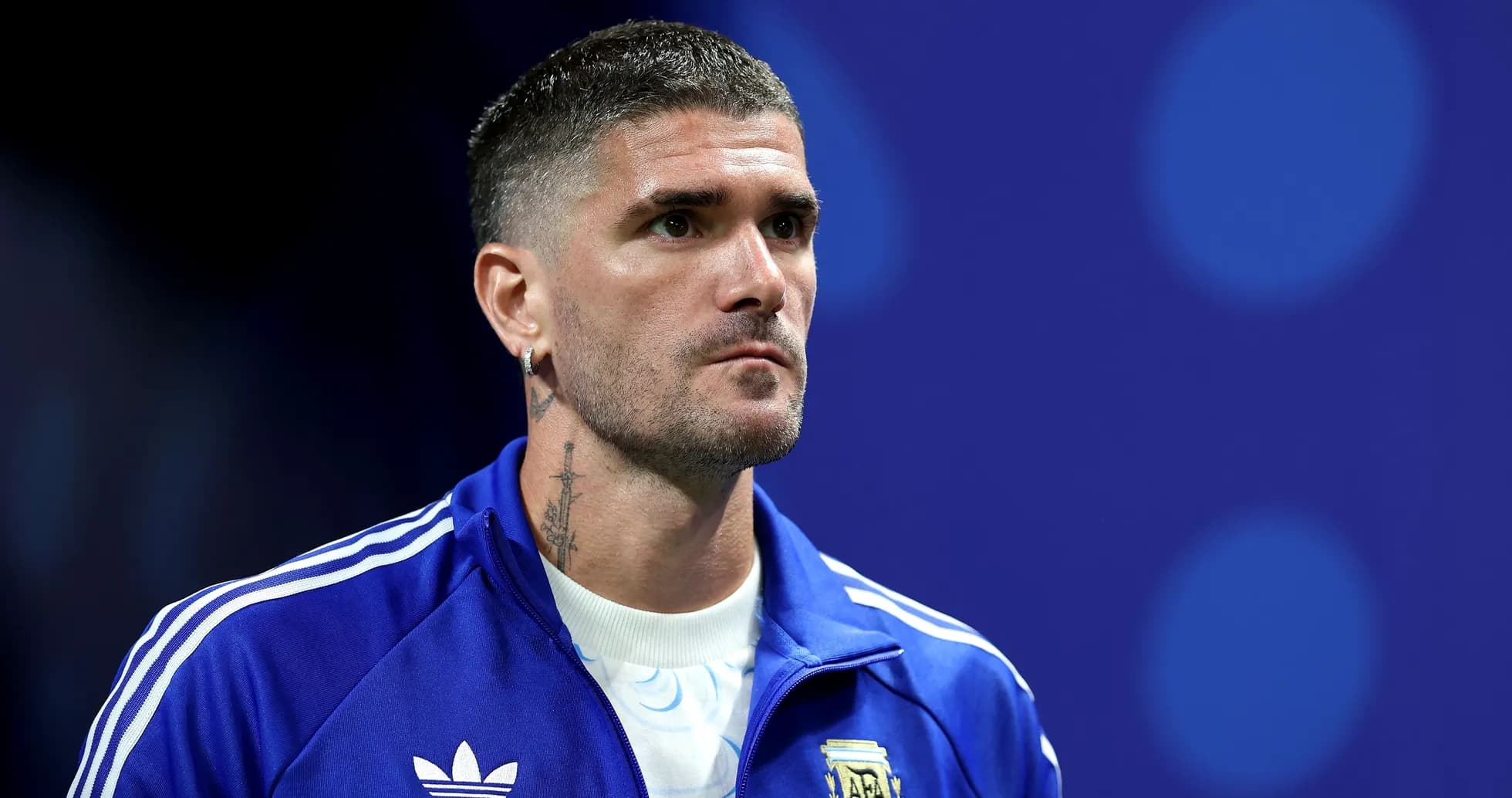
Rodrigo De Paul Defends Argentina's Identity After World Cup Loss
Rodrigo De Paul has never been one to hide in the background. Not when Argentina were on top of the world, and certainly not now, with the crown gone and the knives out.
Days after Lionel Scaloni’s side fell 1-0 to Spain in extra time in the World Cup final at MetLife Stadium, the midfielder has stepped forward as the loudest voice in the dressing room, launching a fierce defence of his team and their identity.
A champion’s reign broken, not erased
Argentina were chasing history. No team had retained the World Cup for 64 years, and this group – defined by its edge as much as its elegance – stood on the brink of doing just that. They fought back to reach the showpiece, pushed Spain deep into extra time, then watched the trophy slip away by the slimmest of margins.
The defeat has triggered more than tactical post-mortems. The debate has turned ugly, centring on Argentina’s behaviour, their gamesmanship, their discipline in the final. For some, the loss has become a convenient hook on which to hang every grievance they held against the world champions.
De Paul has seen enough.
De Paul hits back at critics
From his Instagram account, the midfielder delivered an emotional, unfiltered message. He accused rival fans of lying in wait, eager for Argentina to stumble so they could pounce.
He wrote that “many people were waiting for this fall,” and he took aim at those who, during the tournament, pushed “baseless conspiracy theories” to ease their own frustration at not living what Argentines were experiencing. In his words, Argentina’s “smiles bother them” and “our ways get under their skin.”
This was not a plea for sympathy. It was a line in the sand.
De Paul rejected the idea that the team’s identity – the combative edge, the swagger, the constant emotional charge – should be repackaged as something shameful now that they have lost. The same traits that were celebrated when they lifted trophies are, in his view, simply being weaponised against them in defeat.
The pain behind the defiance
Strip away the fire, and what remains is a raw admission: this one hurts.
De Paul conceded that missing out on a second consecutive World Cup is a wound that will not close quickly. “The biggest pain,” he wrote, is not personal disappointment, but the feeling of having let down a country that was ready to live the dream again.
He spoke directly to the supporters, saying Argentina’s fans were the ones who most deserved to feel that explosion of joy once more. Yet as the hours passed after the final, he sensed something else emerging – that the bond between the team and the people had grown beyond the shine of a trophy.
According to De Paul, that connection, that identification with this group, “goes beyond the trophy.” It is what he is clinging to as he tries to process the defeat and move through what he openly calls a difficult moment.
A team that refuses to apologise for who they are
The message is clear: Argentina will not apologise for being Argentina.
The criticism of their conduct in the final, of their gamesmanship and emotional volatility, has only hardened the midfielder’s stance. To him, those traits are not a stain on their legacy but part of the same fabric that carried them to the summit of world football in the first place.
They did not become villains overnight. They simply stopped winning.
De Paul’s words echo a wider sentiment in that dressing room: this cycle may have lost its perfect ending, but it has not lost its identity. The trophy is gone. The edge remains.
What comes next for this group – and for Scaloni’s Argentina – will be shaped not just by tactics or selections, but by how fiercely they hold on to that sense of who they are in a world that seems all too eager to see them fall.





