Rodri: From Injury Doubts to World Cup Stardom
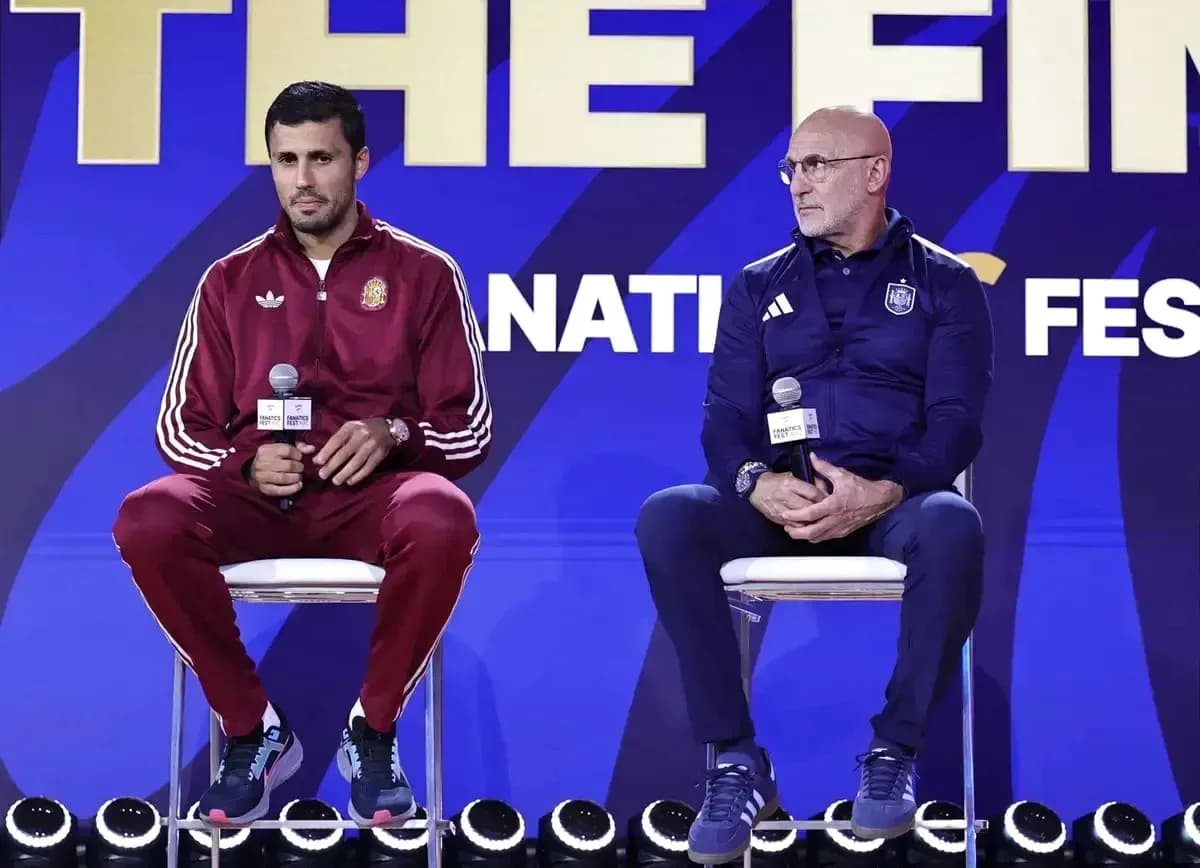
Luis de la Fuente didn’t just defend Rodri. He drew a line in the sand.
To question the Manchester City midfielder, the Spain coach said, was “an insult to one’s footballing intelligence” – a withering verdict delivered after a World Cup in which Rodri didn’t just answer doubts about his fitness, he dominated the tournament.
From injury doubts to World Cup conductor
Rodri arrived in North America for the 2026 FIFA World Cup under a cloud. His recent injury problems, on the back of a gruelling club schedule, had raised legitimate fears in Spain: was he fully fit, and was his place in the squad blocking a more explosive, more “dynamic” option?
Those arguments evaporated over seven immaculate games.
Spain went all the way and conceded just one goal. At the heart of it all, Rodri dictated everything. He finished the tournament with a staggering 93.4% passing accuracy, a number that only hints at the control he exerted. Spain did not just keep the ball; they bent matches to his rhythm.
The reward was inevitable. Rodri took home the Golden Ball as the World Cup’s outstanding player, adding it to the 2024 Ballon d'Or and a Champions League crown on an already glittering CV. At 30, he is no longer just the metronome of Manchester City and Spain. He is building a case as one of the most complete midfielders the game has seen.
De la Fuente’s uncompromising verdict
De la Fuente had bristled at the early criticism during the tournament. He used press conference after press conference to push back. After Spain’s triumph, he went even stronger.
Speaking to Spanish TVE, and as relayed by ESPN, he doubled down: doubting Rodri, he said, clearly insulted “one’s footballing intelligence”. No caveats. No softening.
Then came the hierarchy.
“He is the best player in the world in his position,” De la Fuente stated, before namechecking Martín Zubimendi as “surely the second best in the world”. It was not just praise for Rodri’s technical gifts – his “clarity, vision, balance” – but a declaration of how Spain see their midfield axis for years to come. Rodri, the coach said, is “an inspiration” for the national team.
For Spain, the debate is over. For Manchester City, the conversation is only getting louder.
A World Cup that complicates everything at club level
Rodri’s summer on the global stage has not just burnished his reputation; it has intensified the pressure around his future at the Etihad.
Real Madrid are understood to have reached a personal agreement with the midfielder, with the clubs now locked in negotiations over a fee. City have made their valuation clear. Madrid, as ever, believe they can bend the market. The gap between the two numbers is currently the fault line under one of the defining transfer sagas of the summer.
Every performance in North America widened that gap in City’s eyes. Every touch, every angle he found under pressure, every passage of play he calmed or accelerated, reinforced his status as the reference point in modern midfield play. You don’t easily price that. You certainly don’t easily replace it.
De la Fuente’s comments serve as a stark reminder of the stakes. Lose Rodri, and City are not just parting with a holding midfielder. They are handing over the player widely acclaimed as the best in the world in his role, fresh from being named the standout performer at the sport’s biggest tournament.
For whichever club ends up building around him next, the equation is simpler: you are not just signing a World Cup Golden Ball winner. You are importing the standard by which every other midfielder in that position is now judged.