Rodri's Transfer: Barcelona Triumphs Over Real Madrid
There are transfer battles, and then there are moments that tilt an era. Rodri choosing Barcelona over Real Madrid belongs firmly in the second category.
When the best defensive midfielder in the world, fresh from lifting the 2024 Ballon d'Or and the Golden Ball at the World Cup, suddenly becomes available for around £60 million with a year left on his deal, every superclub is supposed to move with ruthless clarity. Madrid thought they had. Barcelona actually did.
Guardiola gone, the door opens
Manchester City’s grip on Rodri always looked strongest while Pep Guardiola remained the architect of their dynasty. Once Guardiola walked away, the foundations shook. John Stones has pondered his future, Bernardo Silva the same. For Rodri, 30 years old and entering the final 12 months of his contract, the timing felt almost scripted.
He has hinted for months that a return to Spain tempted him. Not out of nostalgia, but because elite careers have windows, not doors. Two, maybe three more years at the absolute summit if his body holds and his brain — the sharpest in his position — continues to dictate games at its usual metronomic tempo.
City, aware of the contract clock and the player’s restlessness, have reportedly accepted reality. A fee in the region of £60m is on the table. For a reigning Ballon d'Or winner who still controls matches like a conductor, that is not just a discount. It is a once-in-a-decade opening.
Madrid in pole, then parked
Real Madrid saw it coming. Their long-standing admiration for Rodri reignited during Spain’s World Cup triumph, where he glided through the tournament, anchored the midfield, and walked away with the Golden Ball. He looked like a Real Madrid player in waiting: authoritative, elegant, decisive on the biggest stage.
For a while, the story wrote itself. Madrid, in need of a defensive midfielder who could surpass Aurelien Tchouameni and Eduardo Camavinga in pure orchestration, moved to the front of the queue. The expectation inside Spain was simple: when Rodri returned home, he would wear white.
The club’s position seemed strong. Then the details started to fray. Reports out of Spain claim Madrid either could not, or would not, close the gap with City on the fee and with Rodri on personal terms. Some insist they had an agreement with City, only to try to shave the price at the last minute. Others say Rodri grew tired of waiting for Madrid to formalise their interest and simply walked away.
Numbers tell their own story. One version suggests Madrid were unwilling to go beyond £34m. For a player of Rodri’s calibre and status, that figure does not just sound low. It sounds timid.
Barcelona sense weakness – and strike
Just as Madrid hesitated, Barcelona pounced.
The Catalan club’s interest began as opportunism. Frenkie de Jong returned from the World Cup with a torn medial collateral ligament, a serious knee injury that could keep him out for around four months and may yet require surgery. Suddenly, a midfield already central to Barcelona’s identity looked vulnerable.
Rodri’s unexpected availability changed everything. The fit was obvious. A ball-playing, positionally flawless pivot with Busquets’ brain and City-hardened steel, stepping into a system under Hansi Flick that demands exactly that profile. Add the presence of his Spain team-mates — Pedri, Gavi and De Jong himself when fit — and the Camp Nou project sold itself.
It did not take long for word to leak that Rodri preferred Barcelona. The Athletic reported his enthusiasm for Flick’s possession-heavy style and the familiarity of the dressing room. It sounded logical. It also sounded ominous for Madrid.
Then came the confirmation that turned a rumour into a fault line. Speaking to Cadena SER, Rodri’s agent Pablo Barquero revealed: “Out of respect for Madrid, as they have been class, Rodri informed them that his decision is to join Barca.” Respect acknowledged. Door closed.
Barcelona, sources say, have already spoken with the player and opened lines with City. Their first bid has been rejected, but the direction of travel is clear. One club is negotiating. The other is nursing a bruise.
Chaos, conspiracy and a capital meltdown
The Spanish media did what it always does when the Clasico axis tilts: it erupted.
Within hours, competing narratives jostled for space. One claimed Madrid tried to lowball City after an initial agreement, stalling the move. Another insisted Rodri never truly wanted the Bernabeu, instead using Madrid’s name to flush out a serious offer from Barcelona. Some reports suggested he had identical proposals from both clubs. Others floated the idea — almost fantastical — that City and Barca were working in tandem to force Madrid into a bidding war.
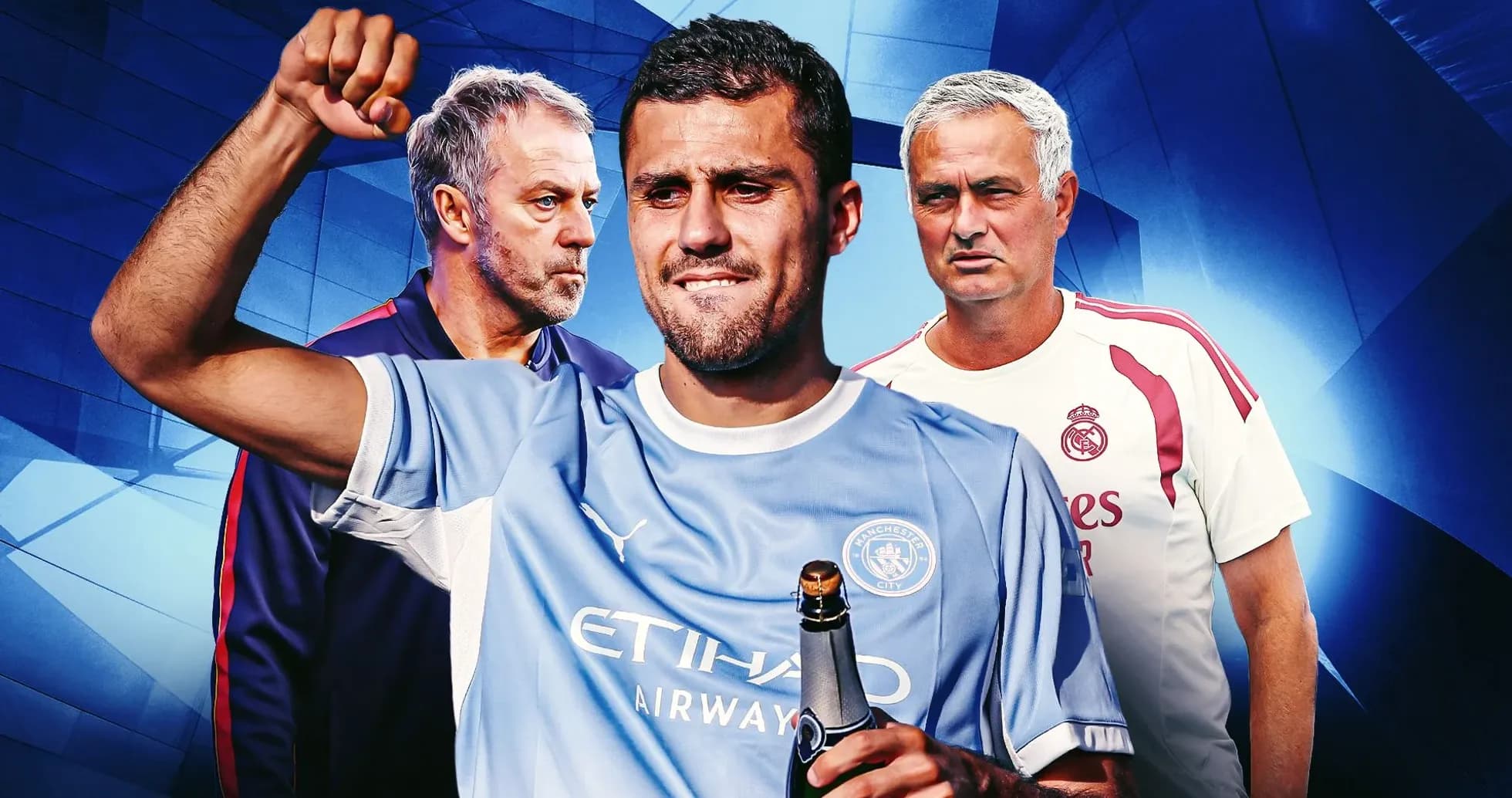
Behind the noise sits a more human reaction. José Mourinho, according to reports, has been left furious. The coach, who believed Rodri would anchor his new Madrid midfield, is said to have unleashed a blistering phone tirade at chief scout Juni Calafat after the deal slipped away. Calafat, the architect of so many successful Madrid signings, has reportedly told Mourinho he must now make do with what he has.
For a club that prides itself on closing when it matters, this feels like something worse than a routine miss. It feels like a self-inflicted wound.
From “dream signing” to nightmare scenario
The sting for Madrid is sharpened by Rodri’s own words earlier this year. During the March international break, he spoke openly about returning to Spain and the appeal of the capital.
“Would I like to play in Spain again, in La Liga, in Madrid? I would like to return, yes, obviously,” he told reporters. On the prospect of Real specifically, he added: “You can't turn down one of the world's best clubs.”
He was ready. The door was open. Somehow, Madrid let Barcelona walk through it first.
The footballing cost could be enormous. Rodri is not just an upgrade on Tchouameni or Camavinga. He is a different category of midfielder — one who can single-handedly control the rhythm of a title race. He has done it for years at City, dictating the tempo of a team that churned out domestic titles and conquered Europe.
At Barcelona, he will sit at the base of a midfield that, when fully fit, includes Pedri, De Jong and Gavi. On paper, that is a unit built to dominate La Liga and go deep in the Champions League. On grass, Rodri’s presence could be the detail that turns control into trophies.
A bargain that cuts deep
City’s willingness to sell at around £60m, driven by contract realities and the player’s desire for a new chapter, makes this even more painful for Madrid. This is not losing a generational midfielder to a state-backed bid they could never match. This is losing him to their greatest rival, for a fee that will be described — for years — as a bargain.
Barcelona still have to finalise terms with City, and nothing is signed. But the direction is unmistakable. The best defensive midfielder in the world has chosen Catalonia over the capital. The club that almost never loses a transfer it truly wants has been outmanoeuvred.
For Barcelona, Rodri’s arrival would not just strengthen a position. It would send a message: after back-to-back league titles and a renewed sense of identity, they are ready to tighten their grip on Spain and re-enter Europe’s elite conversation.
For Real Madrid, still smarting from a feeble Clasico defeat in May that handed Barca the league, this is something darker — a psychological blow, a reminder that their aura in the market is not untouchable.
They will move on. They always do. But if Rodri spends the next few seasons orchestrating Barcelona’s dominance from the base of midfield, Madrid will know exactly where the shift began — in a summer when the best midfielder on the planet was there for the taking, and they let him slip into the wrong shirt.