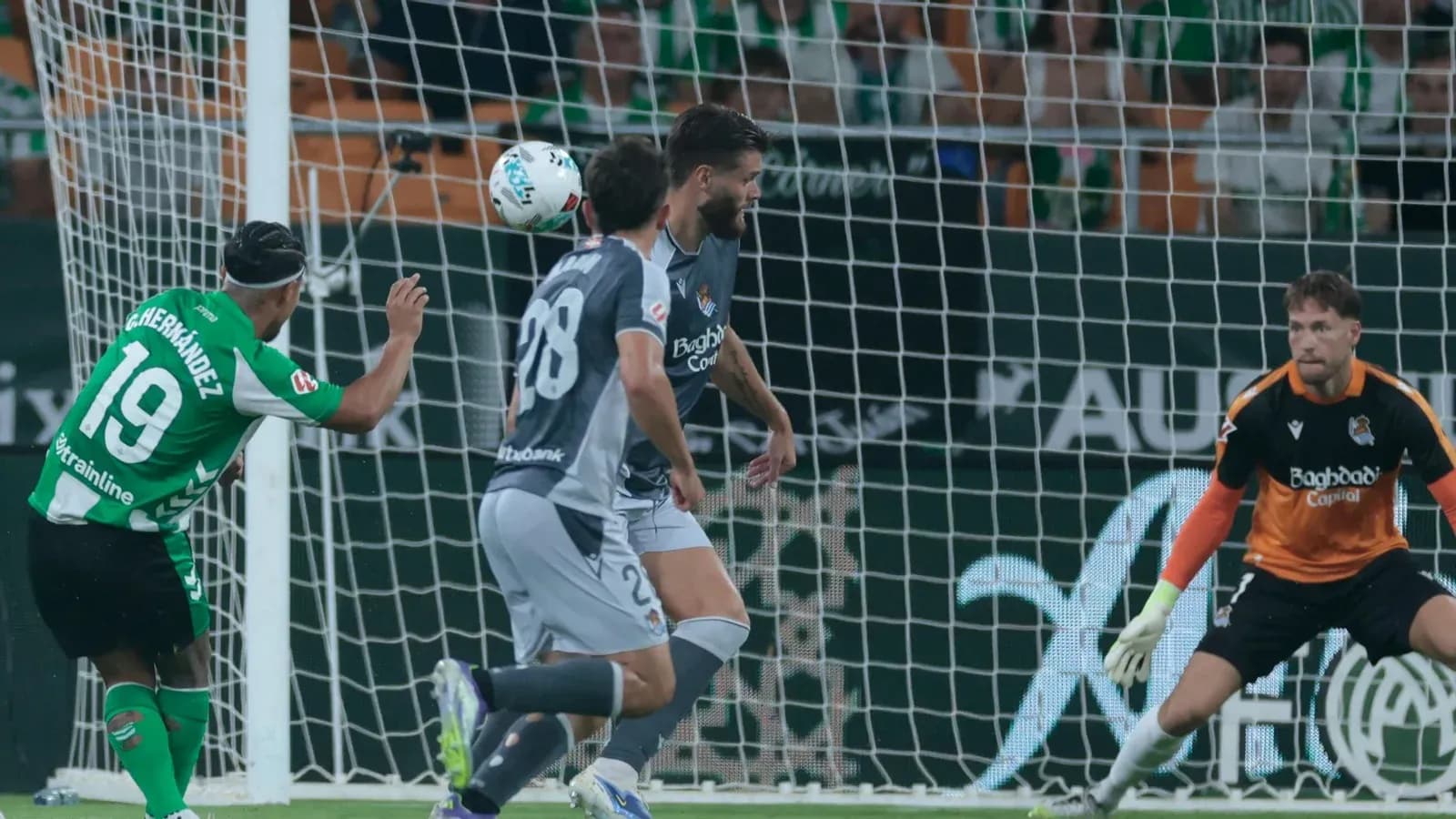
Real Sociedad and Real Betis: A Clash of Contrasting Footballing Identities
Under the Basque night at Reale Arena, this was a meeting of European aspirants that told a story of contrasting footballing identities converging on the same objective. Real Sociedad, 8th in La Liga with 44 points and a goal difference of -1 (54 scored, 55 conceded overall), hosted a Real Betis side sitting 5th on 54 points with a far healthier goal difference of 11 (54 scored, 43 conceded overall). Heading into this game, both carried the statistical profile of top-half teams, but with very different temperaments: Sociedad volatile and high-event, Betis controlled and resilient.
The 2-2 draw that followed regular time felt like a fair reflection of their seasons. Real Sociedad’s campaign has been defined by imbalance. At home they average 1.9 goals for and 1.5 against, a profile of a side that leans into chaos at Reale Arena. Their overall record of 11 wins, 11 draws and 13 defeats in 35 matches underlines that volatility: they can hurt anyone, but they can be hurt by anyone too.
Real Betis arrived with a more measured statistical DNA. Overall they concede just 1.2 goals per game, and on their travels they allow 1.4 while scoring 1.3. Their 13 wins and 15 draws in 35 matches show a team that is hard to beat and often happy to manage games rather than blow them open. Away from home, five wins and nine draws in 18 outings paint the picture of a side that knows how to survive hostile venues.
Mauricio Pellegrino Matarazzo leaned into his most used structure, rolling out a 4-4-2 that has been Real Sociedad’s primary shape this season (12 league uses). Álex Remiro anchored the side behind a back four of Andoni Elustondo, J. Martin, Duje Ćaleta‑Car and S. Gomez. The wide midfield roles went to Takefusa Kubo and Ander Barrenetxea, with J. Gorrotxategi and Carlos Soler forming a central pairing asked to both build and shield. Up front, Mikel Oyarzabal and O. Oskarsson offered a classic split-striker dynamic: Oyarzabal drifting into pockets, Oskarsson threatening depth.
The absences framed the selection. Real Sociedad were without J. Aramburu (suspended for yellow cards) and a string of injured defenders and forwards: G. Guedes (toe), J. Karrikaburu (ankle), A. Odriozola and I. Ruperez (both knee), plus I. Zubeldia (muscle). The loss of Aramburu was particularly significant. He is one of La Liga’s most combative defenders this season, with 96 tackles, 9 blocked shots and 43 interceptions. His 10 yellow cards show the edge he plays with, but also how often he disrupts opposition attacks. Without him, Sociedad’s right flank lost its natural enforcer and aggressive first duelist.
On the bench, Brais Méndez loomed as a game-shaping option. Across the season he has delivered 6 goals and 2 assists, with 25 shots (16 on target) and 24 key passes. His profile — 840 passes at 81% accuracy, 34 tackles and 3 blocked shots — makes him a hybrid between creator and presser, and his presence among the substitutes hinted at a possible second-half shift towards a more possession-dominant, line-breaking approach. Wesley, J. Ochieng and G. Carrera provided varied forward options, while A. Zakharyan and B. Turrientes offered technical control from midfield.
On their travels, Real Betis remained faithful to Manuel Pellegrini’s 4-2-3-1, a shape they have used 25 times this league season. A. Valles started in goal behind a back four of Aitor Ruibal, D. Llorente, V. Gomez and R. Rodriguez. In front of them, S. Altimira and Marc Roca formed the double pivot, with a high-technical three of Antony, Pablo Fornals and A. Ezzalzouli supporting Cucho Hernandez as the lone striker.
Betis also had to absorb key absences at the back. M. Bartra (heel) and A. Ortiz (hamstring) were both unavailable, depriving Pellegrini of depth and experience in central defence. That increased the responsibility on V. Gomez and D. Llorente to manage aerial duels and step out to confront Oyarzabal between the lines without Bartra’s organisational presence.
Higher up the pitch, Betis brought some of La Liga’s most productive attackers. Oyarzabal entered this fixture as one of the division’s leading scorers, with 15 goals and 3 assists from 31 appearances. His 61 shots (36 on target) and 40 key passes underline his dual threat as both finisher and facilitator. Opposite him, Cucho Hernandez had produced 10 goals and 3 assists in 30 games, with 58 shots and 22 on target, a profile of a relentless shooter who tests goalkeepers frequently.
Yet the most intriguing creative axis belonged to Betis. A. Ezzalzouli combined 9 goals with 8 assists and 731 passes at 79% accuracy, winning 179 of 345 duels and attempting 80 dribbles, succeeding in 38. He is both Betis’ chaos agent and their progressor. Alongside him, Antony had 8 goals and 6 assists, with 60 shots (33 on target) and 50 key passes. His 5 yellow cards and 1 red card this season emphasise a combustible edge; he pushes the line in duels and protests, and his disciplinary profile demanded careful emotional management in a heated away environment.
Fornals, with 7 goals and 5 assists and a remarkable 1,675 passes at 86% accuracy, was the quiet conductor between the lines. His 82 key passes and 34 interceptions show a player who both creates and anticipates, making him the central figure in Betis’ “engine room”.
Discipline was always going to be a hidden battleground. Heading into this game, Real Sociedad showed a tendency to collect yellow cards in the 46-60 minute window (21.62% of their yellows) and again from 76-90 (17.57%), suggesting a side that can become stretched and reactive after half-time and in the closing stages. Their red-card profile was even more telling: 50.00% of their reds came between 76-90 and 25.00% between 91-105, pointing to late-game emotional spikes. Betis, by contrast, concentrated 24.64% of their yellows in the 76-90 window and 17.39% between 91-105, with all of their reds arriving between 91-105. This is a team that tends to lose composure in stoppage-time drama rather than in the main body of the match.
The “Hunter vs Shield” duel was written across those numbers. Real Sociedad at home score 34 and concede 27 in 18 matches, while Betis away have allowed 26 in 18. Betis’ defensive structure on their travels is solid but not impermeable, and Oyarzabal’s 7 penalties scored from 8 taken this season (with no misses) meant any Betis mistake in the box would be ruthlessly punished. On the other side, Betis’ away attack of 24 goals faced a Sociedad defence that concedes 1.5 per game at home, and without Aramburu and Zubeldia, that back line was always likely to bend under sustained pressure from Ezzalzouli and Antony.
In midfield, the “engine room” confrontation between Fornals and the Sociedad double pivot of Soler and Gorrotxategi was decisive. Fornals’ ability to receive between lines and thread passes into Cucho Hernandez and Ezzalzouli threatened to pull Ćaleta‑Car and J. Martin out of their shape. For Sociedad, Soler’s 731 passes this season and his role as a right-footed distributor from deep were vital in bypassing Betis’ first press and finding Kubo and Barrenetxea early in transitions.
From the bench, Betis could reshape games with Isco, C. Bakambu, Chimy Avila, G. Lo Celso and R. Riquelme. This depth allowed Pellegrini to morph his 4-2-3-1 into more of a 4-3-3 or a double-striker look late on, especially as Sociedad’s card profile suggested late fatigue and fouls.
Following this result, the statistical prognosis remains that both sides are on a European trajectory, but by different paths. Real Sociedad’s overall averages of 1.5 goals scored and 1.6 conceded per match confirm that they live on a knife-edge; their three clean sheets at home all season underline how rarely they lock games down. Betis, with 10 clean sheets overall and just 7 defeats in 35, project as the more stable contender. Their away numbers — 5 wins, 9 draws, 4 losses, with 24 scored and 26 conceded — suggest that even when they do not dominate xG, their defensive structure and game management keep them in contests.
Tactically, the draw in San Sebastian felt like the natural intersection of those profiles: Sociedad’s attacking verve at Reale Arena meeting Betis’ controlled resistance and late-game creativity. On another night, with sharper finishing or a different refereeing call from Alejandro Muñiz Ruiz, the balance might have tipped. But as the final whistle went, this 2-2 served as a snapshot of two squads whose strengths and flaws are now fully declared, and whose run-in will hinge less on talent than on discipline, control of transitions, and how often their respective hunters can pierce the opposing shield.