
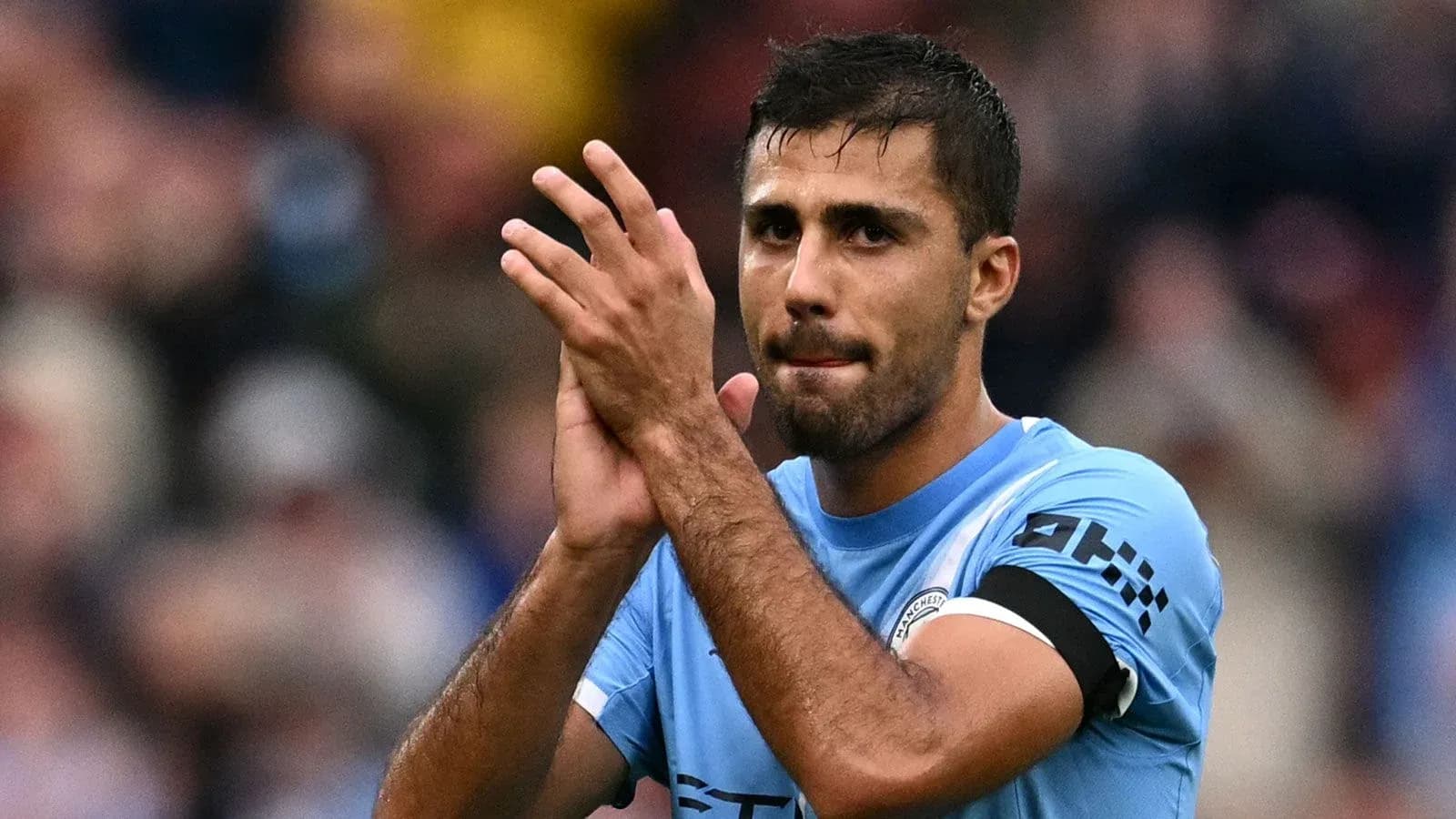
Real Madrid's Transfer Dilemma: Rodri Rejects Pérez's Ambitions
Florentino Pérez promised fireworks. He has delivered smoke.
A little over two months ago, in the heat of the Real Madrid presidential race, Pérez stood in front of the cameras and teased a monster signing – a “player of the calibre of Cristiano Ronaldo or Kaká”. A statement of intent, a warning to the rest of Europe, and of course a message to the socios: the empire would strike back.
The cheque book did open. Just not where logic, or the squad list, screamed it should.
Money in attack, a hole in midfield
The €150 million Pérez vowed to spend has not gone on a galáctico in the traditional sense. Michael Olise never arrived from Bayern Munich. The heavily trailed, officially confirmed €150m offer for Atlético Madrid striker Julián Álvarez went nowhere, rejected across the city. Instead, the headline move was Yan Diomande from RB Leipzig for a base fee of €125m.
Olise. Álvarez. Diomande. Three attacking names, one clear pattern.
While Real Madrid keep feeding the front line, the real problem sits just behind it. Since the break-up of the legendary Toni Kroos–Luka Modric–Casemiro trio, the club have lacked a true holding midfielder of global class. Two years of patchwork solutions have not changed that. The gap remains glaring. And Rodri was supposed to be the answer.
Rodri turns his back on Madrid
The plan looked neat on paper. Rodri, born in Madrid, raised at Atlético, had already opened the door in public. In the spring he calmly stated that his past at the Metropolitano would not prevent him from pulling on the white shirt. Others had crossed that divide, he reminded everyone. It sounded like a player preparing the ground.
Inside Valdebebas, optimism grew. The best player at the World Cup, the metronome of Manchester City, a midfielder who could both shield and build – this was the cornerstone José Mourinho wanted for his new era after a titleless season. The belief was simple: sign Rodri and the spine is fixed.
Then came the twist. Rodri said no.
His agent, Pablo Barquero, has now made it clear: the offer from Real Madrid was rejected. All signs point to Rodri leaving Manchester City not for the Bernabéu, but for Barcelona. For Pérez and Madrid’s hierarchy, that is not just a transfer setback. It is a humiliation.
Barcelona land a coup in the middle of the storm
While Madrid search again, Barcelona move into position. Hansi Flick’s side, already buoyed by back‑to‑back league thrashings of Real, look set to land the most complete holding midfielder in the game. Not only that – they are dropping him into a dressing room stacked with the same Spanish core that just became world champions alongside him.
For Barça, Rodri is more than a replacement for the perpetually injured Frenkie de Jong. He is a structural signing. A player to organise, dictate and protect, allowing the Catalans to push even harder on the front foot. In sporting terms alone, it is a coup.
But this is Spain. Nothing is ever just sporting.
Rodri’s expected move to Barcelona adds another flashpoint to a rivalry already overloaded with grievance. The echoes of Luís Figo’s infamous switch in 2000 still hang over every big deal between the two giants. That saga split a generation. This one fuels a new era of bitterness.
A feud that refuses to cool
The relationship between the clubs has been rotting in public for years. The Negreira scandal, which exploded in early 2023, dragged referees, institutions and conspiracy into every Clasico. Real Madrid did not just criticise from the sidelines; they joined the criminal proceedings against Barcelona as a private prosecutor.
From that moment, every tight offside, every penalty shout, every yellow card in the Clasico has been viewed through the prism of Negreira. Each decision is another brick in the wall of suspicion.
The mud-slinging escalated. Joan Laporta, stung by Madrid’s legal stance, hit back and branded Real the “club of the regime”, historically favoured by referees and, in his view, still benefiting today. The insult went to the heart of Madrid’s identity and history. The institutional relationship never recovered.
Once, Pérez and Laporta worked hand in hand behind the scenes on the doomed Super League project. That alliance is dead. The traditional joint presidents’ lunch before the Clasico? Gone. Real have repeatedly refused to offer Barcelona’s leadership the usual place of honour in the VIP box. Every protocol has become a battleground.
Transfer tricks and Ballon d’Or bitterness
Then came the Julián Álvarez episode, a move that felt as political as it was sporting. After Pérez’s public promise of a record transfer, Real Madrid released an official statement confirming they had bid €150m for the Atlético striker, only for their neighbours to turn it down. Barcelona had been long-term admirers of Álvarez and suddenly looked flat‑footed and powerless.
By making the offer public, Real did more than show ambition. They likely inflated the market for a player Barça had tracked, complicating any future move. Álvarez remains at Atlético, but the message was clear: Madrid could hurt Barcelona without even signing the player.
The tension bled into the awards circuit. The 2024 Ballon d’Or ceremony took on an entirely different tone when Real Madrid chose to boycott the gala in protest at Rodri beating Vinícius Júnior to the prize. The midfielder became a symbol, a red rag for Madridistas who felt their star winger had been denied.
Now that same Rodri, the player they snubbed the gala over, is heading for Camp Nou. The irony will not be lost on anyone in Madrid.
Mourinho’s puzzle without a pivot
On the pitch, the problem remains brutally simple. As things stand, Real Madrid will start the season without a natural organiser behind their glittering front line of Kylian Mbappé, Vinícius Júnior and Diomande. Once again, Aurelien Tchouameni and Fede Valverde are being asked to do a job that does not suit their strengths.
Both are elite players. Neither is Rodri.
Tchouameni can destroy, Valverde can surge, but neither has shown the ability to control the tempo, to live in the passing lanes, to dictate a game the way Casemiro once did and Rodri now does for club and country. Madrid know this. La Liga has shown it. Europe has exposed it.
Every new attacking signing only throws the imbalance into sharper relief. The squad looks top-heavy, thrilling going forward, fragile when asked to absorb and reset. Mourinho, a coach who builds from structure and control, is walking into a dressing room still missing its anchor.
A rivalry with no ceiling
Rodri’s rejection lands in Madrid like a slap. Not just because they have missed out on a player who fits them perfectly, but because he is walking straight into the arms of their fiercest enemy. The poisonous intensity between Real and Barcelona has rarely felt higher, and there is no sign of a truce.
The legal battles rumble on. The presidents glare from opposite sides of the divide. The transfer market has become another front in an endless war.
Rodri has chosen his side. The question now is simple: how will Real Madrid answer – with another forward, or with the midfielder they have been crying out for since their dynasty in the middle of the park finally broke apart?





