
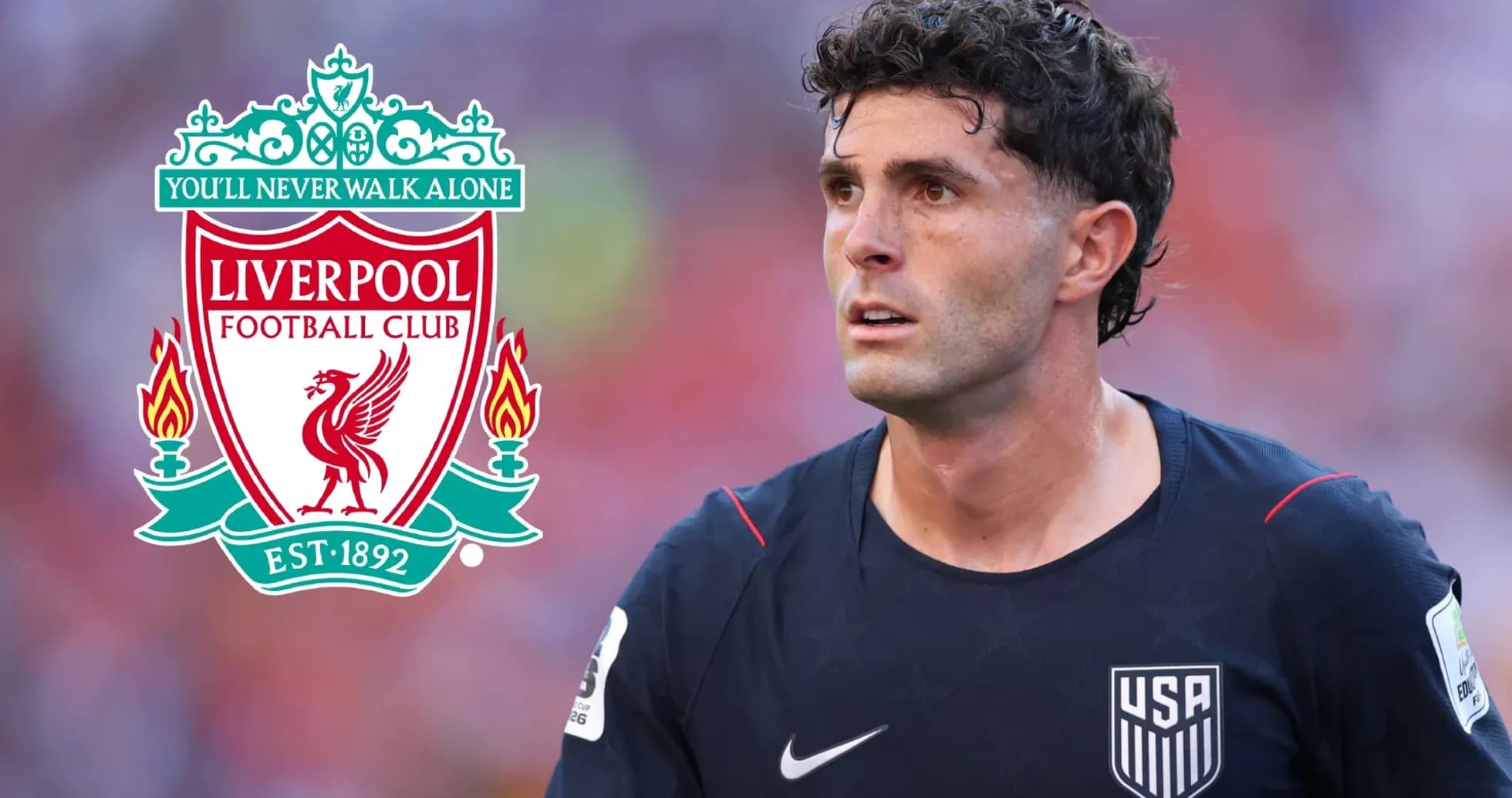
Christian Pulisic's Future: A Crucial Decision After Milan Success
Christian Pulisic left Stamford Bridge with a Champions League winner’s medal in his luggage but also with a nagging sense of unfinished business in England. He never quite became the player Chelsea thought they were signing, never fully trusted, never fully central. So he crossed the continent in 2023, took on the pressure cooker of San Siro and a league that can be unforgiving to flair players who don’t deliver.
Italy has suited him.
At Milan, Pulisic has produced the most prolific season of his club career, his numbers up, his influence obvious. Coaches have moved him across the frontline, asked him to press, to drive, to tuck inside and to stretch the pitch. The 27-year-old has responded with the kind of relentless, direct football that made him “Captain America” in the first place. San Siro warmed to him quickly; Serie A defenders, much less.
Yet just as he has reasserted himself, the questions have started again.
A new contract has been on the table for months. It remains unsigned. That single detail changes everything. It keeps the possibility of an exit alive and invites Europe’s elite to start running the numbers and weighing the risk.
Liverpool are among those doing the maths.
With Mohamed Salah gone, the right side of Liverpool’s attack has a gaping hole where a modern legend used to be. Replacing his goals is one problem; replacing his gravity, the way he bent games to his will from that flank, is another. The recruitment debate at Anfield is not just about output. It is about identity.
Pulisic, with his hard running, direct dribbling and appetite for responsibility, fits a lot of what Liverpool demand from their wide forwards. Former USMNT defender Jonathan Spector, speaking to GOAL in association with UFL on mobile, can see the logic.
“I see that as well,” Spector said when asked about a potential move. “I think in that sort of, I don't know if counterattacking style is the right way of putting it because that's not just what Liverpool is, but certainly when you see them go forward, they go at pace, and that is something that he does extremely well.
“He’s confident, he's running at players. As a defender, it's a nightmare. It's worst-case scenario, when you have a player who is dynamic, and he's quick, shifty. That's the worst, last thing you want as a defender.”
Those words cut to the heart of why Liverpool are even in this conversation. Their best sides of the last decade have thrived on forwards who terrify defenders in transition, who commit people, who turn a half-chance into a full-blown crisis with one touch and a burst of acceleration. Pulisic, at his best, lives in that space.
England, though, remembers a different version.
At Chelsea, the flashes never became a constant. There were runs of form, big Champions League nights, crucial goals. There were also injuries, tactical reshuffles, managerial changes and the sense that the club always had one more winger, one more expensive option, ready to jump the queue.
“He didn't produce to the level that the expectations were at Chelsea,” Spector admitted. “At a club like Chelsea, you have to. You could name a number of players, whether it's at Chelsea, Man United, Man City, who just didn't quite produce or didn't match the expectations. Those clubs have the ability to move on from players that are just not the right fit.”
That phrase – “the right fit at the right time” – is where Spector lingers.
“For me, so much of it is about having the right fit at the right time, and that is the biggest question mark in all of this. You know, anyone who knows the game can pick a good player, anyone who is a casual fan can pick out a good player, but it's determining whether or not that player is going to be the right fit at the right time, and that's the really difficult piece of this.
“For me, Pulisic just wasn't the right fit at the right time at Chelsea. I think that's why he struggled and I don't know if that style of play suits him particularly well.”
It is a pointed assessment, but not an unfair one. Chelsea’s churn, their constant tactical reinvention, rarely offered Pulisic a stable platform. Milan have done the opposite: a defined role, a clear plan, a dressing room that needed his spark. The result has been a player reborn.
Yet his club future is being debated in the shadow of a bruising international summer.
The 2026 World Cup, staged on home soil and sold as a coming-of-age moment for the USMNT, ended in the last 16 and with Pulisic’s performances under the microscope. The talisman did not dominate the tournament in the way many expected. The criticism followed quickly.
Spector, though, urged perspective.
“He for sure has one, maybe two World Cups in him, I would say. I think maybe he didn't have his best World Cup, and I think that's a fair argument to make.
“He wasn't able to play in every match either, not in a rhythm like some of the other players. You play a game, you come out, and you're not in that same sort of rhythm, and you see each team, each game, they've gotten better and better.
“The individuals have gotten better and better, and you really see the top, the elite players, really just showing the quality that they have each and every game and getting better in each and every match. He didn't have that sort of consistency and continuity.”
The point is simple: tournaments reward rhythm and repetition. Pulisic never quite found either.
“I think some of the criticism he's had has been a bit harsh,” Spector added. “I don't think it's quite fair to judge him to some of the other U.S. players that we've had in the past, just based on this small sample of matches. At the World Cup is when you expect your main players to do it.
“I still think he was really effective, he looked dangerous in moments. But I'm sure he would be the first to admit he wasn't at his best. I'm sure he's just as frustrated, if not more so, than anyone else.”
So where does that leave him?
A 27-year-old in his prime, carrying the weight of a national team, thriving in Serie A, yet with a contract decision looming and Liverpool among the clubs assessing whether he might be the answer to a very specific, very demanding vacancy.
Pulisic has already shown he can handle the spotlight, the scrutiny, the expectation. The next move, if he chooses to make one, will define how his European story is ultimately told. Is he the man to help reshape Liverpool’s attack after Salah, or does he double down on his renaissance in Milan and build a legacy there?
The fit, as Spector says, is everything.





