Portugal Confronts the Cristiano Ronaldo Question
Is it finally time for Portugal to confront the Cristiano Ronaldo question?
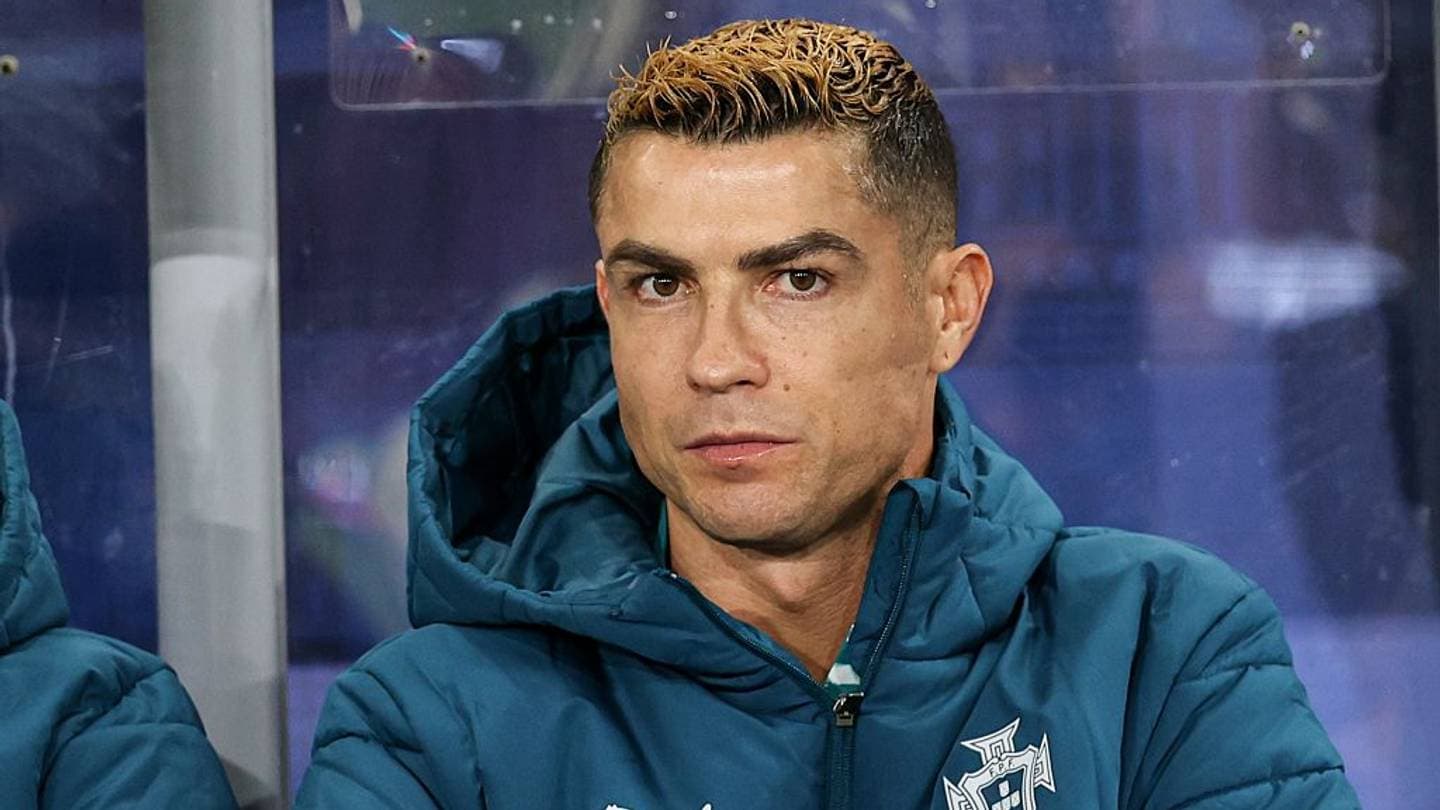
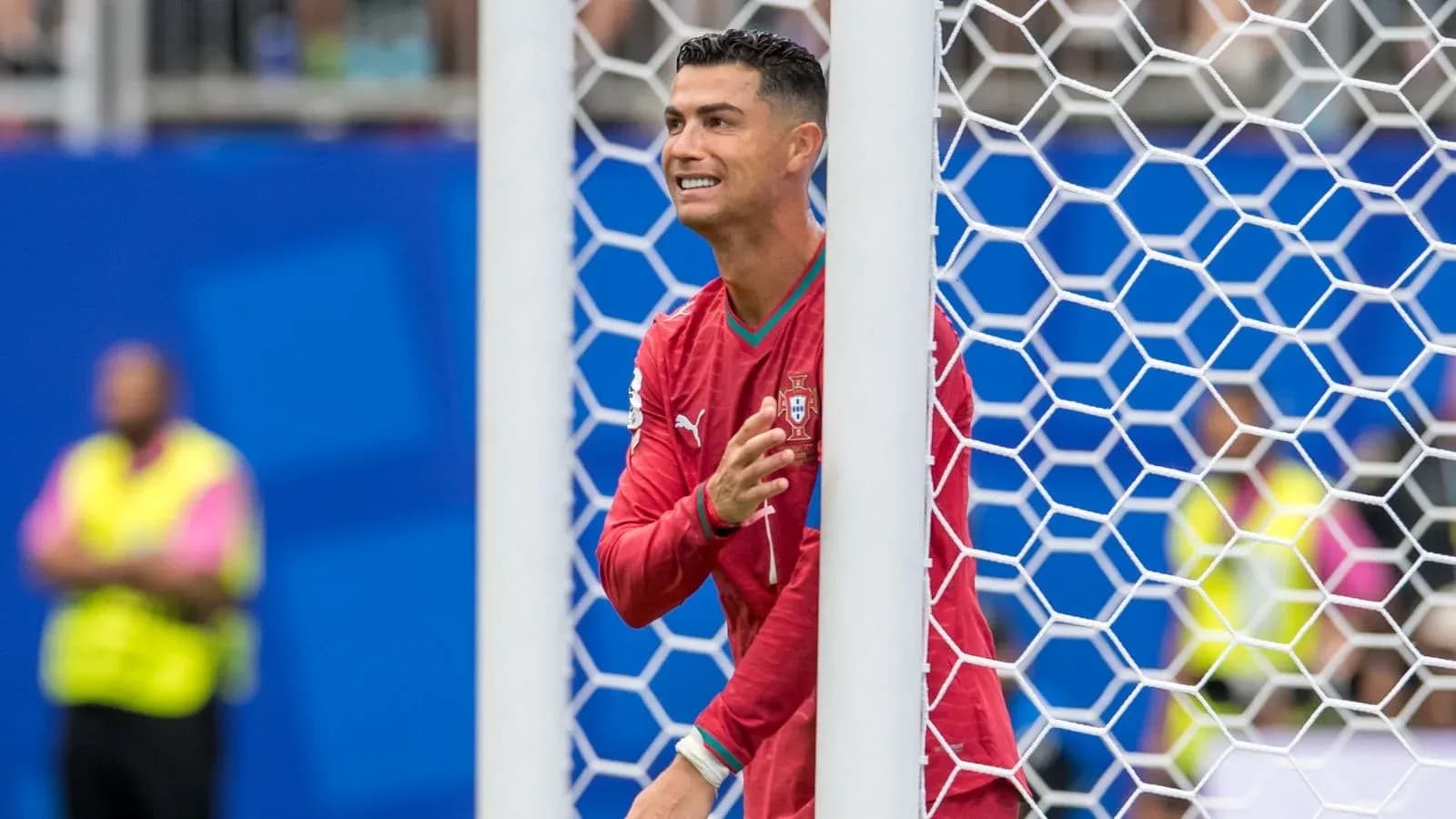
In Houston, on the night that should have belonged to a captain chasing one last World Cup miracle, it felt instead like a reckoning. Ronaldo, 41 years old and stretching his own record with a sixth appearance at the tournament, wandered through a 1-1 draw with DR Congo like a man trapped between his legend and his legs.
The backdrop could hardly have been harsher. Kylian Mbappe had scored twice the previous day. Erling Haaland too. Lionel Messi, the eternal measuring stick, had gone one better with a hat-trick. The stage was set for Ronaldo to respond.
He didn’t.
He took 29 touches. He had as many shots as Messi had goals. No goals, no decisive moment, no surge of inevitability that used to accompany his every run into the box. Just the familiar scowl and a performance that left Portugal flat and frustrated.
Once again, Ronaldo was the story. Just not the one he wants to headline.
A drought that won’t go away
His goalless run in major international tournaments now stands at 10 games. Messi, over his last 10 in such competitions, has scored nine. That contrast hangs over every minute Ronaldo spends on the pitch in this World Cup.
Against DR Congo, his involvement was startlingly limited. Of Portugal’s starting XI, only Bernardo Silva – withdrawn at half-time – had fewer touches. For a player whose presence has always demanded the ball, the numbers scream a different truth: he is no longer the centre of everything. At least not in the way that wins games.
Yet Roberto Martinez will not hear of dropping him.
"It makes no sense to get the best goalscorer in world football out in a game that you need goals," the Portugal head coach insisted. He talked about Ronaldo’s experience in the box, the way he attracts defenders, the spaces that open up around him. In Martinez’s mind, if you are chasing a goal, you need Cristiano on the pitch.
That loyalty shapes everything Portugal do. It also raises a brutal question: is the team failing Ronaldo, or is Ronaldo now failing the team?
Are Portugal really starving him of service?
On the surface, Martinez can point to the numbers and argue his case. When you stack Ronaldo’s recent data against Messi, Mbappe and Harry Kane, a pattern emerges that hints at a lack of supply.
Across each player’s last 10 competitive international matches, only Kane has taken fewer shots than Ronaldo’s total of 30. Ronaldo’s expected goals (xG) over those games stands at 5.36. The figures for Kane (7.15) and Mbappe (8.76) are comfortably higher. Messi’s xG isn’t available, but his output speaks for itself.
Those numbers suggest Ronaldo is not getting the same volume or quality of chances as his rivals. That is not solely on him.
Look at the teams around them. With Ronaldo on the pitch, Portugal have generated a combined xG of 12.76 in his last 10 competitive internationals. England, with Kane, have built 16.39. France, with Mbappe, a huge 21.99.
Broken down per 90 minutes, the gap is clear. Portugal sit at 1.32 xG, England at 1.34, France at 1.72. Mbappe, in particular, plays in a side that lays chance upon chance at his feet.
Dig deeper and the picture sharpens. Ronaldo’s xG from chances assisted by team-mates during this barren run is just 2.55. Kane’s is 3.2. Mbappe’s is a staggering 5.78.
So yes, Ronaldo is living off less. For a striker who once gorged on a conveyor belt of crosses and cut-backs, this feels like a diet.
Which makes the supporting cast worth examining. Martinez has Bernardo Silva, Bruno Fernandes, Pedro Neto, Vitinha, Joao Neves, Joao Cancelo, Nuno Mendes. Elite technicians, elite creators. Players who, at club level, slice defences open for fun.
To suggest they are the problem, collectively, is bold. To suggest they bear no responsibility at all would be naïve.
Where the blame lands on Ronaldo
The numbers, though, do not let Ronaldo walk away clean.
Portugal’s creators can rightly argue they have done enough for him to have broken this drought. Not as much as Mbappe or Kane receive, perhaps, but enough for at least a couple of goals. Had he taken those chances, the debate around his starting role would be nowhere near as fierce.
Instead, the coldest statistic of all cuts through the nostalgia: his post-shot xG.
Post-shot xG measures the quality of the shot after it leaves the boot – placement, power, how difficult it is for the goalkeeper. Kane and Mbappe are thriving here. Kane is overperforming by 2.05 goals, Mbappe by 2.25. They are turning decent chances into goals, and half-chances into something more.
Ronaldo is doing the opposite. His post-shot xG sits at -2.8. That means he has scored nearly three goals fewer than expected given the shots he has taken. For a man once defined by ruthless efficiency, that is a brutal indictment.
The edge has dulled. The killer has started to miss.
And that is only half the issue.
Unlike Messi, Kane and Mbappe, Ronaldo offers almost nothing outside the penalty area. His touch map and heatmap against DR Congo underline how little he contributed to Portugal’s build-up. Most of his involvement came in isolated pockets on the left, often in areas where Neto and Mendes would expect to thrive.
He does not drop deep to link play like Kane. He does not drift into midfield and dictate like Messi. He does not roam across the front line with the same relentlessness as Mbappe. He stays high, he stays central or slightly left, and he waits.
When he was scoring at will, teams built around that. Now, his lack of positional versatility is beginning to feel like a tactical straightjacket.
Martinez’s dilemma, Portugal’s risk
Martinez cannot rip out his entire creative structure to accommodate one man. He knows it. The squad knows it. Yet he also refuses to remove Ronaldo from the equation, convinced that the aura, the gravity, the mere presence of his captain still tilts games.
So Portugal live in this uneasy compromise.
A golden generation of talent, stretched around a legend whose numbers no longer match his name. A front line that bends to his needs, and a coaching staff that cannot quite bring themselves to imagine a knockout tie without him.
The conversation Portugal have avoided for years is now unavoidable. Not about what Ronaldo has been – that story is written in goals and trophies and nights no one will forget – but about what he is now, in this moment, at this World Cup.
Because if nothing changes, they know how this ends: another tournament of what-ifs, another group of world-class players wondering whether they were chasing glory or clinging to a memory.