Portland Thorns and Angel City Battle to a Goalless Draw
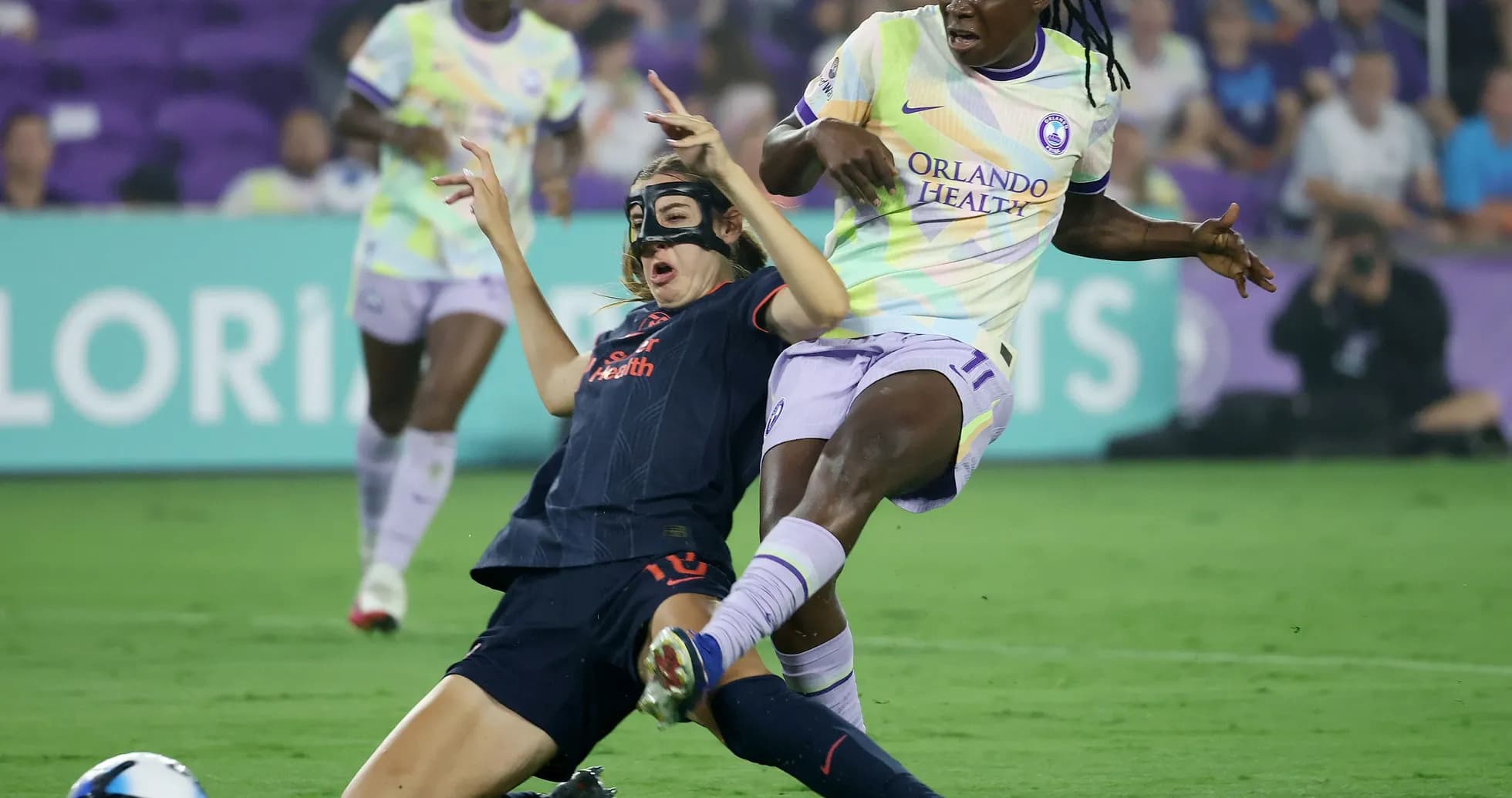
Under the Providence Park lights, this Group Stage meeting in the NWSL Women between Portland Thorns W and Angel City W ended goalless, but the 0–0 only tells part of the story of two sides whose seasonal identities are moving in opposite directions.
I. The Big Picture – contrasting trajectories
Following this result, Portland remain every inch a contender. They sit 3rd with 20 points from 10 matches, underpinned by a robust goal difference of 6 (15 scored and 9 conceded in total). Their season has been built on control and defensive authority, especially at home. On their own turf, they have played 4, winning 3 and drawing 1, with 6 goals for and, remarkably, 0 against. A home average of 1.5 goals scored and 0.0 conceded per game paints a picture of a side that usually suffocates visitors.
Angel City arrive from a different reality. They are 12th with 10 points from 8 matches, their total goal difference at 3 (12 for, 9 against overall). The early-season surge of three straight wins has given way to a harsh run – their form line “DLLLL” heading into this game told of a team searching for stability. Yet their away record is not disastrous: on their travels they have played 3, winning 1, drawing 1, losing 1, scoring 4 and conceding 3, for away averages of 1.3 goals for and 1.0 against.
This 0–0, then, is a clash between Portland’s fortress form and an Angel City side trying to arrest a slide, and it largely confirms the Thorns’ defensive reputation while offering the visitors a platform to rebuild.
II. Tactical Voids and Discipline – risk at the edges
There were no listed absentees in the data, so both coaches essentially had their full squads. That made the tactical choices even more revealing.
Robert Vilahamn doubled down on Portland’s season-long blueprint, returning to the 4-2-3-1 that has been used in 7 of their 10 league fixtures. The double pivot of C. Bogere and J. Fleming sat beneath a line of three – M. Muller, P. Tordin, and R. Turner – supporting S. Wilson up front. It is a structure built to dominate central spaces and protect the back four of R. Reyes, I. Obaze, S. Hiatt, and M. Vignola.
Angel City’s Alexander Straus answered with a 4-3-3, leaning into mobility and vertical threat. The midfield trio of C. Lageyre, N. Martin, and Ary Borges was tasked with disrupting Portland’s rhythm, while the front line of J. Endo, R. Tiernan, and T. Suarez looked to stretch the Thorns’ back line.
Disciplinary tendencies for both sides hinted at an edge. Heading into this game, Portland’s yellow cards were spread evenly, but with a late-game spike: 20.00% of their cautions arriving between 61–75 minutes and another 20.00% between 76–90. They also carried a red-card warning: one dismissal in the 0–15 window and another between 46–60. Angel City, by contrast, showed a different pattern – 22.22% of their yellows came early (0–15), but they also had a notable late-game cluster with 22.22% in 76–90 and 22.22% in 91–105, plus a single red card between 46–60. This is a team that can lose control in transition phases, especially around the hour mark and into stoppage time.
III. Key Matchups – Hunter vs Shield, and the Engine Room
Hunter vs Shield: Portland attack vs Angel City defence
The most intriguing attacking axis on paper belonged to Portland. Across the season, they average 1.5 goals in total per game, with a balanced split of 6 at home and 9 away. The creative and finishing burden has been shared by R. Turner, O. Moultrie, P. Tordin, and S. Smith.
Turner, starting as the right-sided midfielder in the 4-2-3-1, has 4 goals in total from 10 appearances, with 15 shots and 6 on target. Her duel volume (90 total, 55 won) and 20 dribble attempts (10 successful) make her a constant one-v-one threat, especially when she can isolate a full-back. Tordin, also in the XI, adds 3 goals and 3 assists in total, plus 11 shots and 14 key passes – a hybrid creator-finisher capable of drifting between lines. Smith, despite being listed in the top scorers data, did not start here; instead, Wilson led the line, asking different questions of Angel City’s centre-backs.
Angel City’s defence, however, has not been porous. In total this campaign they have conceded 9 goals in 8 matches, an average of 1.1 per game overall and only 1.0 away. The back four of G. Thompson, E. Sams, S. Gorden, and E. Shores, screened by a hard-working midfield, has generally kept games tight. That compactness, allied to a disciplined away shape, went a long way toward blunting Portland’s multi-headed attacking threat.
Engine Room: Portland’s creators vs Angel City’s disruptors
The midfield duel shaped the narrative. For Portland, Fleming and Bogere formed the “shield and launchpad.” Bogere’s season numbers underline her defensive value: 25 tackles, 1 blocked shot, and 8 interceptions in total, plus a combative 66 duels with 32 won. Her card profile – 1 yellow and 1 second-yellow dismissal – shows how fine the line is between aggression and overreach. Fleming, more of a connector, helped progress play into the feet of Muller, Tordin, and Turner.
On the creative side, Moultrie was the notable absentee from the starting XI despite being the league’s standout playmaker in the data: 4 goals and 4 assists in total, 22 key passes, and 18 dribble attempts with 6 successes. Her 77% pass accuracy and 285 total passes make her the Thorns’ metronome. Without her from the start, Portland’s possession had less incision between the lines, placing more creative responsibility on Turner and Tordin.
Angel City’s midfield, with Ary Borges and N. Martin at its core, focused on breaking up patterns and launching counters. While not as statistically dominant as Portland’s creative unit, they were effective in compressing central zones and forcing the Thorns wide, where Angel City’s full-backs could double up.
IV. Statistical Prognosis – xG balance and defensive solidity
Even without explicit xG figures, the season data points to a match that was always likely to be tight. Portland’s overall profile – 1.5 goals for and 0.9 against per game in total – is that of a side that wins by margins rather than blowouts, especially at home where they had not conceded before this fixture. Angel City, averaging 1.5 goals for and 1.1 against in total, are similarly built on narrow scorelines, particularly away where they both score and concede at modest rates.
The goalless draw fits the underlying trends: Portland’s defensive solidity, especially in front of their own fans, met an Angel City side that, despite poor recent form, still carries enough structure to avoid collapse. The Thorns’ attack, slightly blunted by the absence of Moultrie from the XI and marshalled by a disciplined Angel City back line, could not quite tilt the expected-goals balance decisively.
Following this result, the prognosis for both is clear. Portland remain a defensively elite, playoff-calibre side whose ceiling will be defined by how consistently they can translate territorial dominance into goals, especially when their primary creator is not on the pitch from the first whistle. Angel City, meanwhile, have shown that even amid a bad run they can go to one of the league’s most secure venues and emerge unbroken. If they can pair that defensive discipline with the attacking punch of players like S. Jónsdóttir in future lineups, their underlying numbers suggest they are capable of climbing away from 12th and turning narrow margins into points.