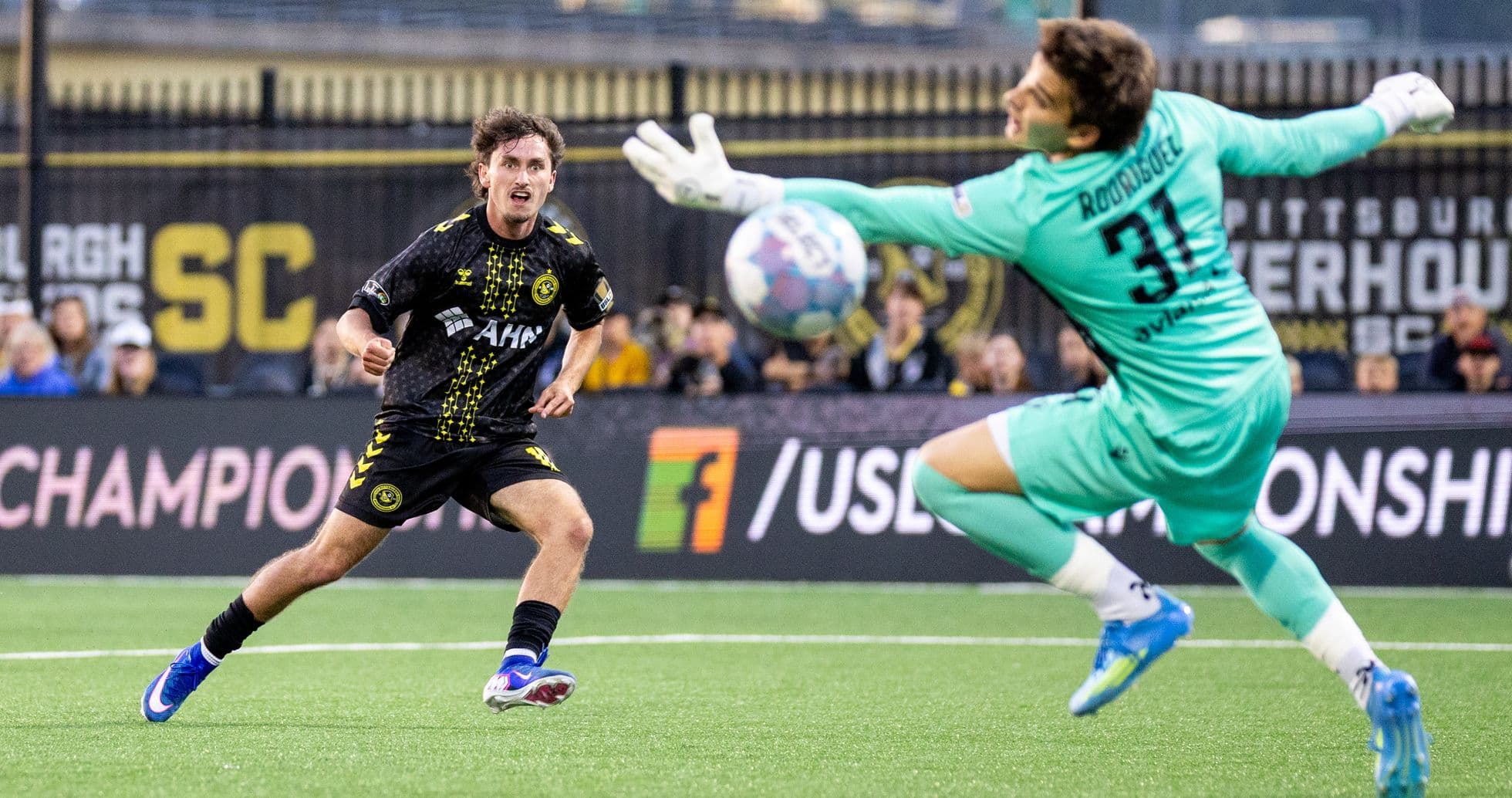
Pittsburgh Riverhounds Defeat Miami FC 2-0: A Statement Win
Under the lights at Highmark Stadium, with the Allegheny wind whipping in from the river, Pittsburgh Riverhounds and Miami FC walked out as two sides whose seasons have been defined by fine margins. Heading into this game, both sat on 16 points in USL 1, Pittsburgh in 5th and Miami in 7th, each carrying the label “Promotion – USL Championship (Play Offs: 1/8-finals)” beside their name. The 2-0 full-time scoreline in favor of the hosts felt like more than three points; it was a statement about identity, structure, and where these squads are heading as the group stage hardens into a playoff race.
Pittsburgh’s seasonal DNA has been efficiency and edge. Overall this campaign, they had played 10 matches, winning 5, drawing 1, and losing 4, with 14 goals for and 13 against. That goal difference of 1 tells the story of a team living on tight scorelines. At home, though, the Riverhounds have been a different animal: 3 wins from 4, with 7 goals scored and only 4 conceded, an average of 1.8 goals for and 1.0 against at Highmark. They are not rampant, but they are ruthless.
Miami arrived with a more volatile profile. Overall, they had played 12 matches, winning 4, drawing 4, and losing 4, scoring 15 and conceding 19 for a goal difference of -4. On their travels, they were fragile: 1 win, 3 draws, 3 defeats, with 6 goals for and 10 against, averaging 0.9 goals scored and 1.4 conceded away from home. They are capable of chaos – a 4-3 home win and a 2-4 away victory among their biggest results – but lack the defensive stability to control games.
Rob Vincent’s starting XI for Pittsburgh was built around a spine that explains their home strength. N. Campuzano in goal anchors a back line of P. Barnes, V. Souza, O. Mikoy and L. Kelp, a unit that has helped deliver 1 clean sheet at home and 1 away, 2 in total. In front of them, D. Griffin and E. Goldthorp form the connective tissue, with R. Mertz and C. Ahl offering guile between the lines. Up front, A. Dikwa and S. Bassett provide vertical threat and pressing energy.
Across from them, Gaston Maddoni’s Miami side leaned on F. Rodriguez in goal, shielded by B. Ndiaye, D. Knutson, A. Calfo and A. Milesi. The midfield blend of G. Diaz, R. Tori and R. Da Costa supported a front line featuring J. Sonora, M. Ndongo and A. Rocha. On paper, this is a technically gifted group, but the numbers heading into this game told a harsher truth: overall they concede 1.6 goals per match, and away from home they average 1.4 goals against.
The tactical voids here are less about absences – there is no injury or suspension data listed – and more about discipline and emotional control. Pittsburgh’s yellow-card distribution this season is spread but spikes in the 31-45 and 76-90 minute ranges, each with 25.00% of their cautions. They are a side that rides the line in high-tension phases: just before the break and late on. Miami’s profile is even more combustible. They carry a pronounced late-game surge of indiscipline, with 25.71% of their yellows in 61-75 minutes and another 25.71% in 76-90. Their only recorded red card this season has come in the 61-75 window, a warning about how they can unravel when chasing.
In that context, the Riverhounds’ 2-0 win felt like a textbook execution of their home blueprint. With no penalties missed this season (2 taken, 2 scored, 100.00%), they are clinical when the margins narrow. Miami, for their part, have also been perfect from the spot (1 from 1, 100.00%), but their larger problem is generating those high-value chances, especially away. Overall, they fail to score in 6 matches this campaign, 4 of those on their travels. Against a Pittsburgh side that concedes only 1.0 goal per game at home, that attacking frailty was always likely to be exposed.
The “Hunter vs Shield” matchup here is conceptual rather than individual, given the absence of top-scorer data. Pittsburgh’s collective attack at Highmark – 1.8 goals per home game – pressed into Miami’s away defense conceding 1.4 per match. The result, 2 goals to none, landed almost exactly in that statistical corridor. Conversely, Miami’s away attack, averaging 0.9, ran into a Riverhounds rearguard that allows just 1.0 at home; the shutout sits only a shade tighter than expected, but hardly an outlier.
In the “Engine Room,” the balance tilted toward Pittsburgh’s structure. Griffin and Goldthorp, supported by Mertz and Ahl, operated within a team that, overall, allows only 1.3 goals per match and has failed to score in just 3 of 10 fixtures. Miami’s midfield, marshalled by Diaz and Tori, had to protect a defense that has already conceded 19 times overall and has only 3 away clean sheets in 7. When the game stretched, the numbers said they were more likely to break than bend.
From an xG and defensive-solidity standpoint, the final verdict aligns with the season arc. A home side averaging 1.4 goals overall and 1.8 at home, facing an away defense that leaks 1.4, will typically generate a favorable xG platform, especially with territorial advantage and a settled XI. Miami’s inconsistency – 4 away failures to score, a negative goal difference of -4 overall – suggested their xG floor would be low in a match like this.
Following this result, Pittsburgh look every inch a playoff-calibre unit: compact, disciplined enough despite their late-card spikes, and efficient in both boxes at Highmark Stadium. Miami remain enigmatic – capable of surges, but undermined by structural fragility and late-game discipline issues. Over a two-legged 1/8 final, the Riverhounds’ statistical profile and this 2-0 performance hint at a side built for knockout football, while Miami still feel like a team searching for a stable identity before the margins get even thinner.