Egypt Celebrates Historic World Cup Knockout Victory
ARLINGTON, Texas — Mohamed Salah walked slowly toward midfield, the noise folding over him from all sides of the cavernous stadium. Hamstring strapped, 34 years old, captain’s armband tight on his sleeve. Whatever comes next in his international story, this night is already carved in Egyptian football history.
Egypt are finally World Cup knockout winners.
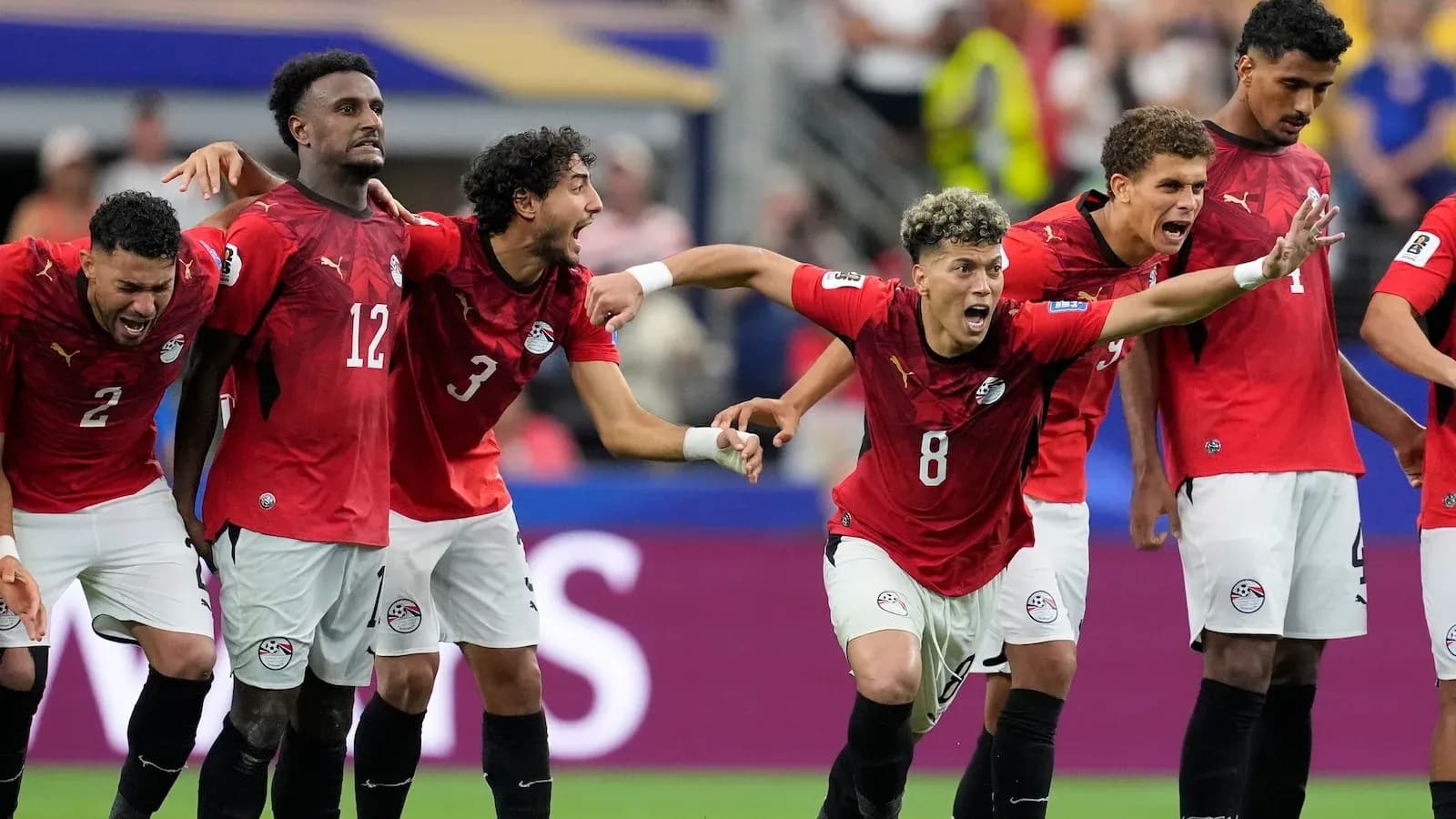
Hossam Abdelmaguid, a defender without a single international goal to his name, buried the decisive penalty as Egypt beat Australia 4-2 in a shootout after a 1-1 draw, sealing the country’s first-ever victory in the elimination rounds on Friday night.
Seventy thousand voices, most of them in Egyptian red, exploded inside the home of the Dallas Cowboys. For a football nation that has waited generations to matter on this stage, it felt like a dam breaking.
Salah’s night, Egypt’s moment
Salah played every second of regulation and extra time, carrying the weight of expectation and a recent hamstring injury. He got his penalty in the shootout, stroked it home, then watched the drama unfold from the center circle.
“Me feeling today is that it's incredible,” he said, still processing what it meant to captain Egypt to this milestone. One goal behind head coach Hossam Hassan’s national record of 69, he sounded less like a man chasing numbers and more like one living off the joy around him. “I always like seeing the boys happy and enjoying the moment. Nothing can match that. So today was one of the best days of my life.”
The history books will list Abdelmaguid as the hero, but this was a collective release. Egypt had never won a World Cup match before this tournament. Now they have two in the space of less than two weeks, after their group-stage win over New Zealand. And this one came on the biggest stage they’ve ever known.
Next up: a round-of-16 tie in Atlanta on Tuesday, against either defending champions Argentina or Cape Verde. Suddenly, the ceiling looks a little higher.
A shootout that rewrote the script
Penalty shootouts reveal character as much as technique. Australia blinked first.
Harry Souttar stepped up to open the shootout and smashed his kick over the bar. It set an uneasy tone for the Socceroos. Egypt, by contrast, looked like a team that had already decided the outcome in their heads.
Mahmoud Saber scored. Ramy Rabia scored. Salah scored.
Australia clung on through Jackson Irvine and Awer Mabil, who both converted, but the pressure kept creeping closer. When 18-year-old Lucas Herrington rattled the crossbar with Australia’s fourth attempt, the door swung wide for Egypt.
Abdelmaguid walked forward with the calm of a veteran, not a 25-year-old defender still waiting for his first international goal in open play. He went low to the left. Mathew Ryan, brought on late in extra time for his 105th cap, dived the wrong way.
Ball in. Game over. Pharaohs through.
Ryan, who replaced Patrick Beach despite the 22-year-old’s excellent display, never laid a glove on any of Egypt’s four penalties.
On the touchline, Hossam Hassan’s emotions spilled over. This was the man who once scored the goals Salah is now chasing, now living every kick as coach.
“I was only thinking about the Egyptian fans,” Hassan said through a translator. “During the entire time and during the penalty shootout, I was just praying, ‘God, please make the Egyptian people happy.’ Even before the penalty shootout, to be honest.”
He tried to strip the tension from his players in the huddle before the kicks.
“When I went to the players and talked to them, I wanted to take some pressure off,” he explained. “Do not look at the pressure. Just let everything out, don’t think about anything. Think about your penalty kick. Don’t even think about the goalkeeper. Just think about your kick.”
They listened.
Early control, then chaos
The night had started so smoothly for Egypt.
On 13 minutes, Emam Ashour rose at the near post and glanced a header just inside Beach’s upright. A clean, decisive finish, and a goal that seemed to confirm Egypt’s growing authority in this expanded 48-team World Cup.
Omar Marmoush could have made it 2-0 seconds after the restart, racing through only to drag his shot wide. That miss would haunt Egypt for a while.
Australia, quiet and second-best for long spells, found a way back through a cruel twist for Mohamed Hany.
The Egyptian defender, already carrying the burden of one own-goal from the group-stage draw with Belgium, saw history turn on him again. In the 55th minute, Aiden O’Neill swung in a free kick from the left. Hany rose to clear, only to glance the ball past his own goalkeeper, Mostafa Shoubir.
Two own-goals in the same World Cup. A lonely kind of infamy.
The moment was even more jarring given what had happened minutes earlier. Hany had gone down heavily near the same spot after colliding with Connor Metcalfe on a header attempt, medical staff rushing on with a stretcher at the ready. After what appeared to be a concussion check, he stayed on. Soon after, he watched the ball fly off his forehead and into his own net.
For Australia, it was a lifeline. For Egypt, a test of nerve.
Australia’s recurring pain
The Socceroos know knockout heartbreak well. They came into this match 0-2 in World Cup elimination games, both defeats laced with frustration.
In 2006, they fell 1-0 to Italy. In 2022, they pushed Argentina before losing 2-1 in Qatar, their only goal that night coming via an own-goal. Now, in their third knockout appearance, their only scoring again arrived via the opposition — Hany’s misfortune, nothing of their own.
“It hurts when you get that close,” said coach Tony Popovic. “Unfortunately, we bow out in a penalty shootout, so it’s difficult to take right now.”
They had their moments. Souttar, who missed the opening penalty, produced a vital block late in regulation, deflecting a shot from Haissem Hassan with his knee when Egypt seemed poised to steal it before extra time.
Beach, too, played his part. In just his sixth international appearance, the young goalkeeper made a superb sprawling save from a Rabia header near the end of regulation, then denied Salah moments later with a more routine stop. His late substitution for Ryan, a nod to experience over form, will be debated.
But the harsh line on the scoreboard remains: Australia are now 0-3 in World Cup knockout matches, and their only goals in those games are two own-goals scored by opponents.
Egypt step into a new world
For all the drama, the bigger story is what this means for Egypt.
This is their fourth World Cup, but the first in an expanded format. Until they beat New Zealand 3-1 in the group stage, they had never won a match at the tournament. Now they stand in the last 16, with a captain who has dragged them through a decade of near-misses and heartbreak.
Salah’s future with the national team will be a constant talking point from here. More World Cups? Or is this the last dance on the biggest stage?
On nights like this, he looked less like a fading star and more like a man determined to leave something permanent behind. Records can fall later. This was about giving Egypt a place in the knockout rounds that felt earned, not imagined.
The noise in Arlington told its own story. This was not just a win. It was a statement that Egypt, finally, are not just visitors to the World Cup’s main event.
Now comes Argentina or Cape Verde in Atlanta. A defending champion, or a rising outsider. Either way, the question shifts from whether Egypt belong here to how far this team, and this captain, can actually go.