Andrea Pirlo's Candidacy for Italy Coach Ends Over Sponsorship Controversy
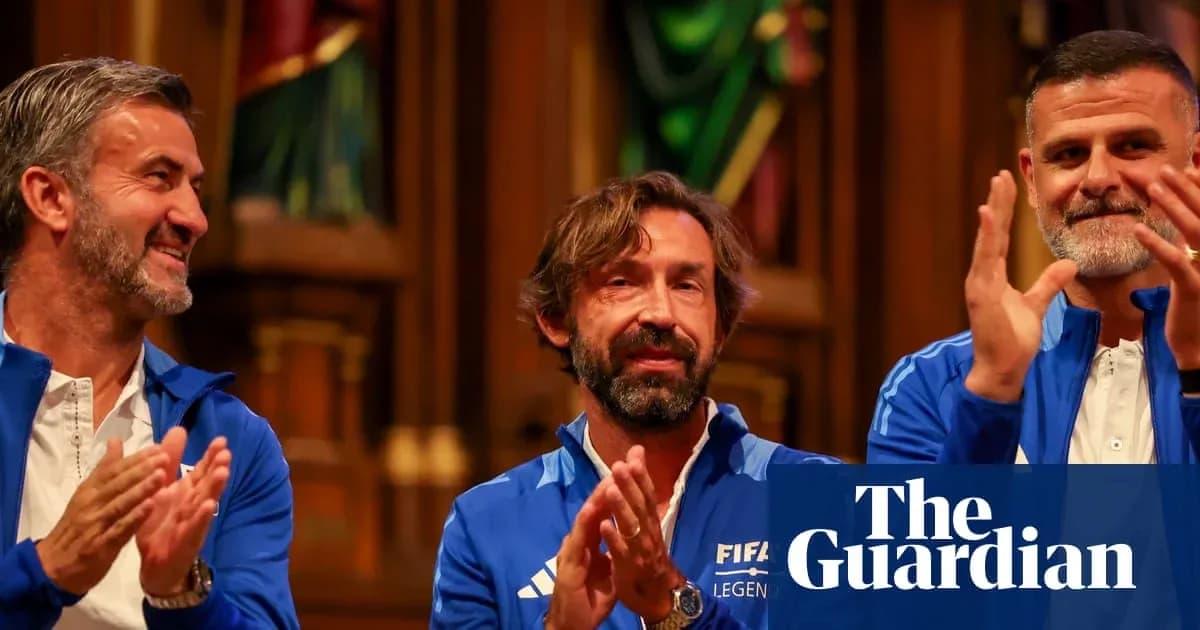
Andrea Pirlo’s Italy dream is over before it even began. And it has not been ended by a bad result, a tactical misstep or a dressing-room revolt – but by a sponsorship deal.
The former Azzurri playmaker confirmed on Monday that he is no longer in contention to become Italy’s head coach, with his role as an ambassador for Russian betting company Fonbet at the heart of the storm that pushed him out of the frame.
“I heard last night that I’m no longer the candidate for the Italy national team job,” Pirlo wrote on Instagram, drawing a line under a candidacy that had already divided the country’s political class before it could unite the dressing room.
Politics, war and a sponsorship deal
Pirlo’s agreement with Fonbet, signed while he has been coaching in the United Arab Emirates, quickly became a lightning rod. Several Italian politicians questioned how the national team’s coach could front a Russian brand at a time when Italy backs Ukraine in its war with Russia.
Pirlo has tried to ring‑fence that partnership. He has stressed that the Fonbet deal is tied to his work in the UAE and “exclusively for commercial and sports purposes”, insisting that giving it political meaning “means attributing beliefs to me that I have never expressed and don’t belong to me.”
The nuance did not cut through. The shirt, the bench and the tricolore carry a different weight. For a growing number of figures in Rome, the idea of the Italy manager promoting a Russian company after the invasion of Ukraine was simply untenable.
Political backlash overwhelms Maldini’s backing
Inside Italian football’s corridors of power, Pirlo had a powerful ally. Paolo Maldini, newly installed as technical director of the FIGC, had thrown his support behind his former Milan and Italy teammate. The vision was clear: a young coach with a storied past, a fresh face to front a reset after years of disappointment.
Outside those walls, the backlash grew louder.
Pina Picierno, vice-president of the European Parliament, did not just question the appointment – she framed it as a betrayal of the moment. “After yet another defeat and another missed World Cup qualification, Italian football desperately needed a cultural, ethical and managerial revolution. The choice of Andrea Pirlo goes in the exact opposite direction,” she wrote on social media.
Ignazio La Russa, president of the Senate and a senior figure in Giorgia Meloni’s party, struck a different but equally damning note. Speaking to Ansa, he said: “I am speaking only because you called me: God help us. Of course I am an Italy fan and Pirlo was a great champion, but as a coach, it is a leap in the dark.”
Carlo Calenda, leader of the Azione party, removed any ambiguity about his stance. “Anyone who is or has been promoting Russia after 2022 should not hold national office,” he said, a line that cut straight to the heart of the Fonbet issue and, by extension, Pirlo’s candidacy.
The pressure told. What began as a footballing debate over whether a relatively inexperienced coach should lead a fallen giant turned into a test case for Italy’s political and ethical red lines.
A search already scarred by rejection
Pirlo’s emergence as a serious contender said plenty about the FIGC’s situation. The federation had already been rebuffed in its attempts to lure Pep Guardiola and Carlo Ancelotti, their two preferred candidates, as they looked for a successor to Gennaro Gattuso.
Gattuso left by mutual consent in April, after Italy failed to qualify for a third consecutive World Cup – an unthinkable run for a four-time world champion. The need for a reset was obvious. The path to it has been anything but.
Pirlo, currently in charge of Dubai United and willing to walk away from that role for the chance to lead his country, briefly looked like the bold, romantic solution: a world champion returning to rescue the shirt he once graced in midfield. Instead, his candidacy has become a case study in how modern football cannot escape geopolitics.
Old names back in the frame
With Pirlo out, the FIGC finds itself back where it so often seems to land: looking again at familiar faces. Roberto Mancini and Antonio Conte – both former Italy coaches, both deeply associated with different eras of the national team – are once more being discussed for the job.
Mancini, who delivered the Euro 2020 title but then oversaw the failure to reach the 2022 World Cup, and Conte, the fiery tactician who squeezed every drop from his squads at club and international level, represent radically different routes from Pirlo’s.
What they share is history – and baggage. Italy’s search for a new leader has already been marked by high-profile refusals, political skirmishes and a candidate forced out by a commercial tie on the wrong side of a war.
The question now is not just who takes the bench, but what kind of Italy that appointment is meant to represent.