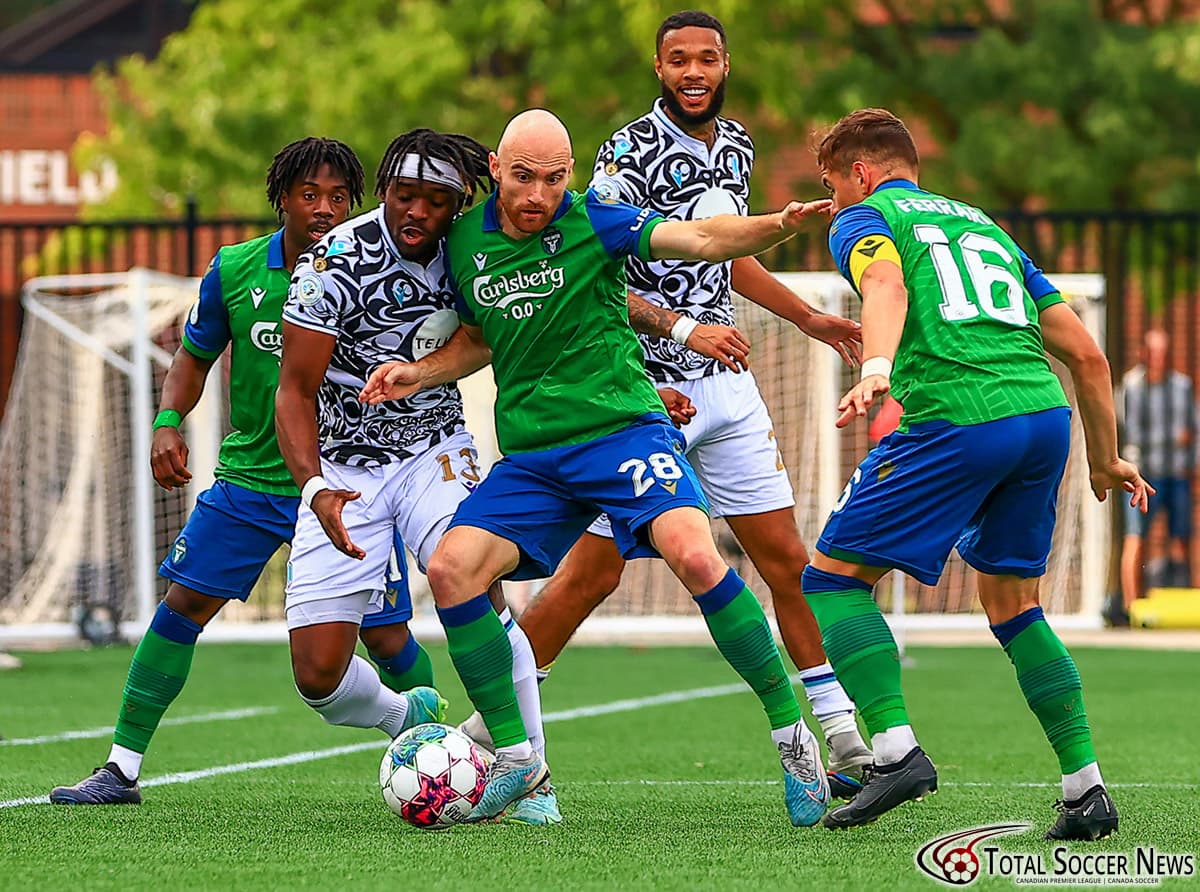
Pacific FC vs York United: A Tale of Two Teams
The lights at Starlight Stadium had barely cooled when the numbers began to tell the story. Pacific FC, rooted to 8th in the Canadian Premier League with just 1 point and a goal difference of -6 (6 scored, 12 conceded in total), had been edged 1–0 at home by a York United side whose season so far has been defined by control and composure. For York, now sitting 3rd with 11 points and a goal difference of 5 (9 scored, 4 conceded in total), this felt less like a smash-and-grab and more like the latest chapter in a quietly efficient campaign.
I. The Big Picture – contrasting identities
Heading into this game, the trends were stark. Pacific had played 6 matches in total without a single win, their record a bruising 0–1–5. At home they had been particularly fragile: 5 matches, 5 defeats, 4 goals scored and 10 conceded, an average of just 0.8 goals for and 2.0 against at Starlight Stadium. York, by contrast, arrived unbeaten in 5 in total (3 wins, 2 draws), with an away profile that underlined their growing maturity: 2 matches on their travels, 1 win, 1 draw, 2 goals scored and just 1 conceded, an away defensive average of 0.5 goals against.
The lineups reflected those identities. James Merriman trusted a core that blends experience and emerging talent: E. Himaras in goal, a back line featuring the aerial presence of J. Belluz and the composed D. Konincks, with the dynamic C. Greco-Taylor wide. In midfield, M. Baldisimo and T. Gomulka offered the base for creators like M. Bustos and the direct running of A. Daniels, all feeding A. Díaz at centre-forward, supported by the wide threat of R. Kratt.
For York, Mauro Eustaquio’s selection hinted at tactical flexibility even without explicit formation data in the lineup block. D. Urtiaga anchored a defence including R. Lopez, C. Guzman, O. Leon and M. Ferrari, with L. Accettola adding balance. Ahead of them, S. Yeates, J. Córdova and the teenage livewire Shola Jimoh provided energy and progression, while S. Gonzales and J. Altobelli led the line and attacked the spaces between Pacific’s centre-backs.
II. Tactical voids and discipline – where Pacific are bleeding
There were no explicit absentees listed, but Pacific’s season-long data reveals the real missing piece: control in chaotic phases. Their card distribution is telling. In total, 42.86% of their yellow cards arrive in the 91–105 minute range, with another 28.57% between 61–75. Red cards spike late too: 66.67% of their reds fall between 76–90, and 33.33% between 91–105. This is a team that unravels when matches stretch and emotions spike.
On the individual level, that volatility has faces. J. Belluz has already combined robust defending with a dangerous disciplinary profile: 1 yellow and 1 yellow-red in just 5 appearances, alongside 4 fouls committed. C. Greco-Taylor, who started here, sits on 3 yellow cards in 204 minutes, an aggressive full-back whose 10 tackles and 6 interceptions show his value but also his risk. In midfield, R. Juhmi’s 2 yellows in 6 appearances add another combustible element.
York, by contrast, are card-heavy but controlled. Their yellow-card distribution is spread across the match: 21.05% between 31–45, 21.05% between 61–75, 15.79% in both the 16–30 and 46–60 windows. Only 10.53% come in the closing 76–90 minutes, suggesting a side that can manage tempo and pressure late on. No red cards in total underline that discipline.
III. Key matchups – Hunter vs Shield, Engine Room
The headline duel in this fixture was always going to be York’s attacking edge against Pacific’s porous home defence.
Hunter vs Shield: York attack vs Pacific back line
York’s offensive spear is built around T. Skublak, the league’s top scorer with 3 goals in 4 appearances, even though he did not start this particular match. His profile – 6 shots in total, 5 on target, 3 goals, plus 3 key passes – defines York’s threat: efficient, penalty-box sharp, and technically clean. Around him, the supporting cast is growing in influence. J. Altobelli has 1 goal from 5 shots on target in 5 appearances, while Jimoh, nominally listed as a defender, has become a creative outlet with 1 assist, 3 key passes and 7 dribble attempts.
Against that, Pacific’s defensive leaders had to be perfect. D. Konincks, one of the league’s standout defenders, brought 173 passes at 90% accuracy, 4 tackles, 1 blocked shot and 5 interceptions into the game, plus 1 goal and 1 assist in total – a rare two-way defender. Alongside him, Belluz contributes 122 passes at 77% accuracy and 4 interceptions, while Greco-Taylor’s 10 tackles and 22 duels won out of 30 show a full-back who relishes contact.
Yet the macro pattern is damning: in total this campaign, Pacific concede 2.0 goals per match, both at home and away. Their structure may have individual quality, but the collective shield leaks.
The Engine Room: creativity vs disruptors
In midfield, the duel was more nuanced. Pacific’s creative fulcrum, M. Bustos, does not appear in the seasonal stat leaders, but his role between the lines is to connect with A. Díaz, who has 1 goal in total, 2 shots and 63 passes at 79% accuracy. Baldisimo and Gomulka were tasked with giving him the platform.
York’s response came through a cluster of intelligent, workmanlike profiles. S. Yeates, with 119 passes at 91% accuracy, 7 tackles, 2 blocks and 3 interceptions, is a metronome and enforcer rolled into one. J. Córdova adds 75 passes at 80% accuracy and 6 interceptions, while B. Badibanga offers verticality from the bench with 30 passes at 80% accuracy and 3 tackles, plus 1 assist in total. Together, they form an engine room that can both suffocate Pacific’s build-up and spring counters.
IV. Statistical prognosis – why York’s edge was no accident
Following this result, the broader statistical picture only hardens the narrative. Pacific’s total attacking output sits at 1.0 goals per game, with a higher away average (2.0) than at home (0.8), a paradox for a side supposedly built around Starlight Stadium. They have yet to keep a single clean sheet in total, and have failed to score in 2 matches. Their biggest home defeat, 1–3, mirrors a pattern: they can punch, but they cannot take a punch.
York, conversely, operate like a playoff-bound machine. In total they average 1.8 goals for per match and only 0.8 against. At home they are more explosive (2.3 goals for), but away they are ruthless in another way: 1.0 goal scored on their travels and just 0.5 conceded. Two clean sheets in total and zero failures to score mark them as a side with both defensive and attacking floors set high.
Even without explicit xG data, the underlying indicators are clear. York’s shot efficiency through Skublak, the passing security of Yeates and Córdova, and the disciplined distribution of their cards suggest a team that controls where and how chances are created. Pacific, by contrast, rely on isolated quality – Konincks stepping out, Díaz finishing half-chances, Bustos’ craft – but their structural weaknesses, especially late-game discipline and home defensive record, continually drag them under.
This 1–0 at Starlight Stadium, then, was less an upset and more a crystallisation of trajectories. York United look every inch a side calibrated for the upper reaches and the playoff semi-finals their current description promises. Pacific FC, for all the individual talent scattered through their XI, remain a team in search of a stable platform – and until that arrives, nights like this will keep repeating under the Starlight.