Nigeria’s Super Falcons Target World Cup Qualification First, WAFCON Title Second
The names are familiar. The ambition is not new. But the stakes for Nigeria’s Super Falcons in Morocco feel higher than ever.
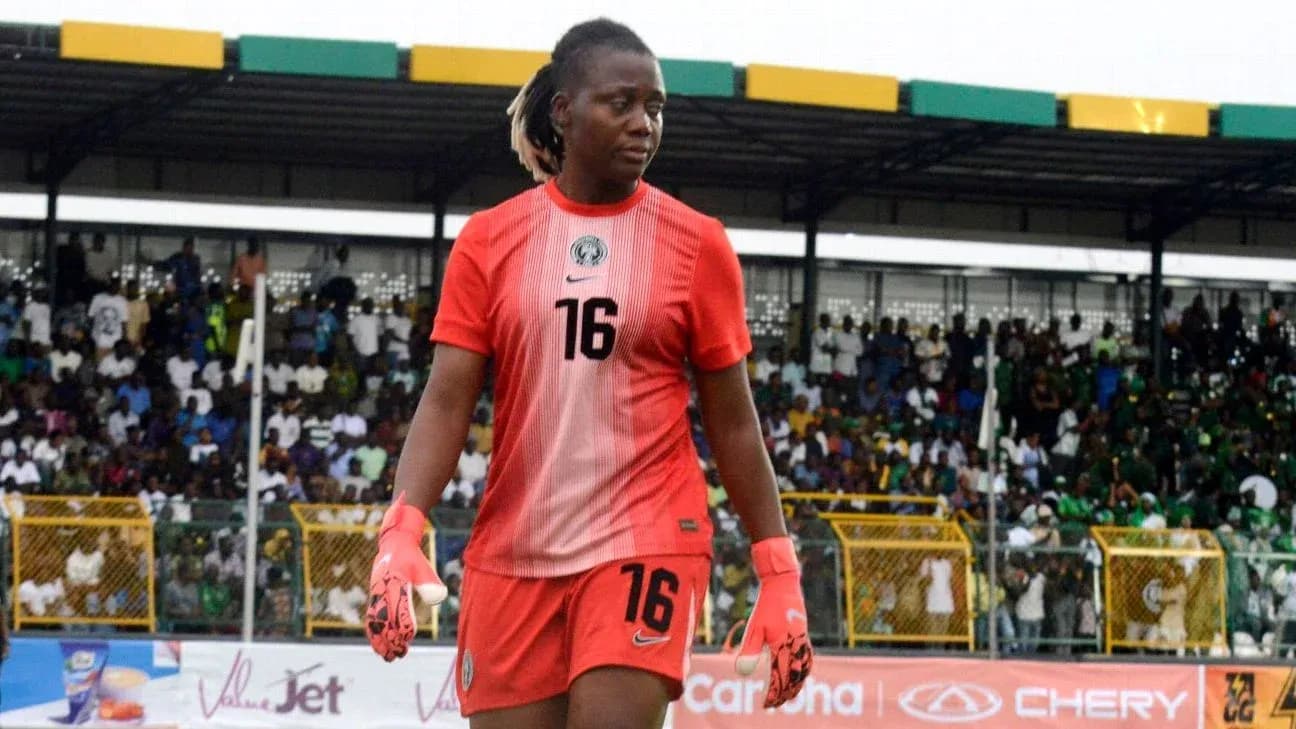
Head coach Justine Madugu has doubled down on experience for the defence of Nigeria’s Women’s Africa Cup of Nations crown, retaining the spine of the side that lifted a record 10th title last year. Captain Rasheedat Ajibade, star goalkeeper Chiamaka Nnadozie and talismanic forward Asisat Oshoala headline a 25-player list that looks built for pressure nights and long tournaments.
This is not just about another African title. Not this time.
World Cup first, trophy later
WAFCON 2024 will do double duty. From July 26 to August 16 in Morocco, the continent’s best will fight for the trophy and, just as fiercely, for tickets to the 2027 FIFA Women’s World Cup in Brazil.
Nigeria, the only African country to have played at every Women’s World Cup since 1991, know exactly what is on the line. A place in the semifinals would seal automatic qualification and stretch that proud streak to nine straight tournaments.
Madugu has been blunt about the hierarchy of targets. First, get to Brazil. Then, keep the crown.
“The next WAFCON will also serve as qualification for the 2027 FIFA Women’s World Cup, so our priority will first be to ensure that we make it to the World Cup,” he told CAFonline, before making it clear the Falcons will still chase the double: “The second goal will be to defend the trophy and bring it back to Nigeria. We know it won't be easy because as champions everybody will now be looking at us.”
They are the team with the target on their backs. And they know it.
Plumptre missing, message clear
One key figure will watch this campaign from afar. Defender Ashleigh Plumptre, a standout at recent tournaments, has not recovered from the injury she suffered in March and misses out.
Her absence is a blow, but her voice still carries in the dressing room. On social media, she explained her decision and sent a message that cuts to the heart of elite sport.
“The body is asking for more time and I'm listening,” she wrote. “Sad to be missing this WAFCON yet hopeful in the prospect of getting to fight alongside these women again with the support of Nigerians everywhere when the body is ready to compete again.
“So, in the meantime, back these women, back them on their quest for victory once more. Go easy on them, they need you. I am with you ladies.”
No drama, no excuses. Just honesty, and a rallying cry.
Old guard, new edge
Even without Plumptre, this is a squad heavy on know-how. Madugu has leaned on a core that has been through World Cups, Olympic qualifiers and brutal away days across the continent.
Ajibade returns to marshal the midfield and lead the group, while Nnadozie, widely regarded as Africa’s best goalkeeper, anchors the back line with her usual authority. Around them, the names read like a roll call of hardened internationals: Osinachi Ohale, Michelle Alozie, Christy Ucheibe, Halimatu Ayinde, Oshoala.
These are players who understand tournament rhythm, who know how to manage a one-goal lead in the heat, or drag a game into their own tempo when legs start to go.
But this is not a closed shop. The next wave is already pushing its way into the spotlight.
Jennifer Echegini and Deborah Abiodun bring drive and invention from midfield, while forwards Gift Monday, Esther Okoronkwo and Omorinsola Babajide are being asked to do more than just make up the numbers. They are expected to carry responsibility now, not later.
The balance is clear: veterans to steady the ship, younger legs to raise the ceiling.
One home-based player, global footprint
Only one player in Madugu’s squad plies her trade in the Nigerian league: Abia Angels goalkeeper Fatima Oloko. The other 24 come from clubs scattered across Europe, North America, Asia and the Middle East.
It underlines the Falcons’ status as a truly global group. From England to Israel, Turkey to Mexico, they arrive in camp with different tactical educations and daily standards. Madugu’s job is to weld that into a single, ruthless unit over a short window.
If the blend clicks, Nigeria will be a problem for anyone.
Group C: traps everywhere
Nigeria’s path begins in Rabat, where all three of their Group C matches will be played. On paper, they are favourites to top a pool that includes Egypt, Zambia and debutants Malawi.
On grass, it is more complicated.
Zambia’s rise in the women’s game has been one of Africa’s sharpest storylines in recent years. Egypt bring technical quality and a point to prove. Malawi, new to this stage, will throw everything at their first taste of the big time.
Nigeria, though, carry something none of them have: a decade-spanning habit of winning this competition. Ten titles already, and a shot at an 11th that would extend their record and make them the first champions to successfully defend the trophy in the expanded 16-team format.
The pressure is obvious. So is the opportunity.
The standard-bearers again
The tournament format is ruthless. Four semifinalists go straight to the World Cup. The fifth-place finisher must survive an intercontinental playoff to join them.
Madugu has framed the challenge in simple terms: protect the World Cup streak, then chase history. The players know the expectations that come with the green jersey. They also know that, for all the tradition and all the medals, nothing is guaranteed.
Nigeria remain Africa’s benchmark in women’s football. In Morocco, they must prove it all over again.
One slip, and that perfect World Cup record suddenly hangs by a thread. One more run to the latter stages, and the Super Falcons write another chapter in a story that has already stretched across generations.