Manchester United's Summer Transfer Strategy: Challenges and Adaptations
Manchester United’s summer never needed a shredder. But the neat transfer blueprint pinned to the wall at Carrington is now covered in scribbles, crossings-out and hurried rewrites.
The headline targets have gone. The strategy has not.
A window of near-misses
The first big blow landed early. Elliot Anderson, the England midfielder United had earmarked as the cornerstone of their rebuild, headed across town instead. Manchester City paid £116 million to prise him away, a fee Nottingham Forest had always pushed towards £120m. United read the room and stepped back.
They had been here before. In January, they thought they were well placed for Bournemouth winger Antoine Semenyo after encouraging talks with his camp. Then City walked into the negotiations. The tone changed. So did the numbers. Wage demands rose to a level United simply refused to meet, and Semenyo ended up at the Etihad for £64m. A warning had been delivered: matching a bid is one thing, winning the financial arms race with City is another.
United didn’t want a repeat with Anderson. Once it became clear his salary expectations would follow the Semenyo pattern, they cooled interest early and watched City close the deal.
If Anderson was the first plan abandoned, Mateus Fernandes was the second. United had budgeted between £80m and £90m for a marquee midfielder and could have gone toe-to-toe with Tottenham’s £85m move. They chose not to. During talks, Fernandes never gave a firm signal that Old Trafford was his preferred destination. When the moment came to decide whether to meet West Ham United’s price, doubts lingered about his commitment. Spurs sensed an opening and took it.
Inside United, that lack of clarity jarred with memories of last summer. Bryan Mbeumo and Matheus Cunha, courted by clubs across Europe, both made it plain they only wanted United. Staff still point to that single-mindedness as a key reason they settled so quickly. There are those at Carrington who remain convinced Jadon Sancho’s struggles trace back, in part, to his hesitation over leaving Borussia Dortmund in 2021.
So when Fernandes hesitated, United walked away.
Santos and Tielemans: the pivot
The pressure to find solutions did not ease. CEO Omar Berrada had spoken before the window about the need to be “flexible.” The word has become the soundtrack of the summer.
With Anderson at City and Fernandes at Spurs, United pivoted. The midfield rebuild now carries two different names: Andrey Santos and Youri Tielemans.
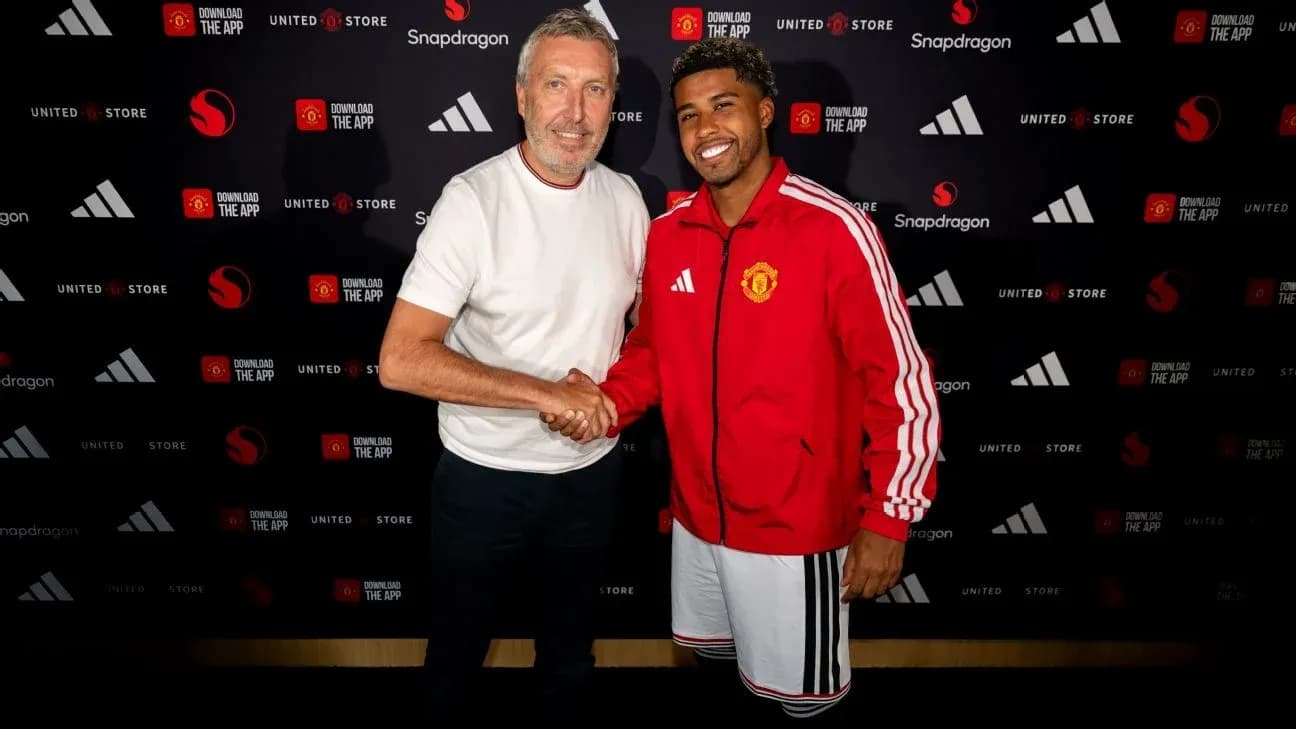
Santos arrived from Chelsea for £48m, with another £2m in add-ons. Internally, that fee felt sensible in a market threatening to spiral. United had initially placed Fernandes in a £40m-£50m bracket, especially if West Ham slipped towards relegation. When his price almost doubled, alarm bells rang that it could drag the entire market upwards. Santos represented a way to strengthen without fuelling that inflation.
Tielemans, meanwhile, ticked every box they value. Premier League experience. Tactical intelligence. And, crucially, a clear desire to play for Manchester United. The Belgium international, signed from Aston Villa for £35m, also came with a release clause. That matters at Old Trafford.
Berrada has long favoured deals involving release clauses because they blunt what insiders call the “United tax” – the premium selling clubs try to add the moment United appear at the table. Tielemans’ fixed price made the decision easier. The player wanted the move, the numbers were clean, the risk was controlled.
Éderson deal stalls
Not every carefully laid plan survived medical scrutiny. United had agreed a £35m deal with Atalanta for Éderson before the World Cup, seeing the Brazilian as a key piece of the new-look midfield. Medical tests raised an issue serious enough that the club decided they could not proceed.
The door has not been bolted shut. Sources insist the deal might be revisited later in the summer. For now, though, it sits on the shelf, another reminder that this window has rarely followed the script.
Budgets, missed exits and shifting ground
Champions League qualification has helped. The extra revenue has swollen the transfer budget, but not to the point where United can afford expensive mistakes. Every setback has a financial echo.
The initial plan was simple enough: fund the main midfield arrival with around £90m raised from departures. Rasmus Højlund’s £40m move to Napoli was expected to lead that list. Permanent exits for Marcus Rashford, Manuel Ugarte, Joshua Zirkzee and Altay Bayindir were also on the table.
Then the market pushed back.
Barcelona decided against turning Rashford’s loan into a £25m permanent transfer. Ugarte, so often mentioned as a potential sale, suffered a serious knee injury playing for Uruguay at the World Cup and now faces up to a year out. The projected income dropped. The margin for error shrank.
Inside the recruitment department, the budget is treated as a living thing, changing week to week as deals develop or collapse. It has forced Berrada and director of football Jason Wilcox to lean into that flexibility they spoke about so publicly. This time, they are determined not to panic.
Sources close to the pair say they have tried to project calm in a window that has invited chaos. United have been accused too often in recent years of chasing names, overpaying, and then scrambling to fix the consequences. This summer, the emphasis has been as much on avoiding those missteps as it has on landing statement signings.
Tottenham’s surprise surge
If United thought they had a decent handle on the market, Tottenham blew up the model.
Few at Old Trafford expected Spurs to drop £185m on two central midfielders, Fernandes and Sandro Tonali, the latter another player United had monitored closely. United’s recruitment team spend as much time trying to anticipate rivals’ moves as they do planning their own. Even so, Tottenham’s early, aggressive push caught them off guard.
The ripple effect was obvious. Fees rose, options narrowed, and United’s original shortlist needed surgery.
A third midfielder still on the table
Despite the arrivals of Santos and Tielemans, the door to another midfield signing remains ajar, especially after Ugarte’s injury. United have looked closely at Bournemouth pair Alex Scott and Tyler Adams, and at Fulham’s Sander Berge. Crystal Palace’s Adam Wharton has been tracked extensively. Wolves’ João Gomes, AS Roma’s Manu Koné and Lille’s Ayyoub Bouaddi, the 18-year-old who lit up the World Cup for Morocco, are all on the radar.
Real Madrid’s Eduardo Camavinga has been offered to several Premier League clubs, including United. Brighton’s Carlos Baleba has also been discussed again after an enquiry last summer, but Brighton made it brutally clear: any initial fee would sit in the same stratosphere as the £100m Chelsea paid for Moisés Caicedo in 2023. That kind of number tests even a club of United’s size.
More than just the midfield
Midfield is only part of the puzzle. The squad needs breadth as much as it needs stardust.
United want a left-sided player – either a full-back or a winger – and a second striker to ease the burden up front. In goal, Wales international Karl Darlow, 25, is expected to join from Leeds United as experienced cover for first-choice Senne Lammens.
The demands of next season will be unforgiving. A third-placed finish last year and a return to the Champions League have raised the bar. So has the physical load. United know they must not only improve the starting XI but also build a bench capable of sustaining a campaign that will stretch into every corner of the calendar.
Calm amid the noise
Outside the club, impatience is growing. Supporters look at the missed chances – Anderson, Fernandes, Éderson – and wonder where the marquee name is, the signing that announces United as serious contenders again.
Inside, the message is different. Sources insist there is no sense of panic, only a recognition that this window will be judged on Sept. 1, not in mid-July. There are six weeks until the Premier League kicks off on Aug. 22 and seven until the market shuts. In that time, the picture can change dramatically.
For now, the story of United’s summer is not one of a plan torn up, but of a plan rewritten under pressure. The targets have moved, the budget has shifted, and the market has bitten back. Yet the work goes on, reshaping a squad that has to be stronger, deeper, and smarter than the one that finished third.
The best-laid plans have been bent out of shape. The question is whether this version – patched, adapted, and battle-tested by setbacks – ends up building a team finally ready to live up to the badge.