Myles Lewis-Skelly: From Setbacks to Arsenal's Midfield Star
Myles Lewis-Skelly has never taken the easy road into Arsenal’s first team. He’s had to squeeze through gaps, not stroll through open doors.
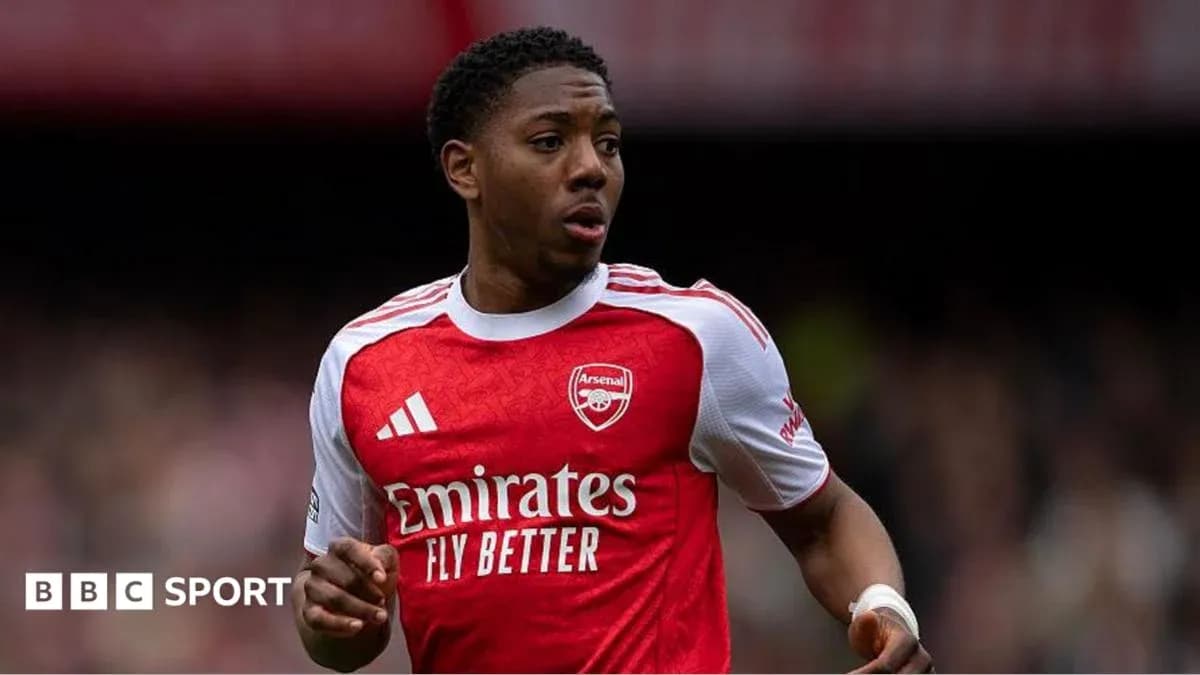
At 19, he already feels like a player forged by setbacks as much as by talent. His breakthrough in the 2024-25 season came in the most modern of Arsenal ways: an injury crisis, a tactical tweak, and a teenager asked to solve a problem that wasn’t really his. A midfielder by trade, a Hale End product who has always insisted the centre of the pitch is his home, Lewis-Skelly was pushed out to left-back and told to swim.
He didn’t just swim. He flew.
Thrown in when the squad was stretched, he quickly became one of the standout young full-backs in the Premier League. The numbers told one story, the eye test another: the way he slipped into midfield, received under pressure, rolled opponents and surged away with the ball made him look like a natural in two positions at once.
England noticed. By March 2025, he was not only in the squad but rewriting a line in the record books. At Wembley, against Albania, Lewis-Skelly became the youngest man to score on his England debut, opening the scoring in a 2-0 win and announcing himself on the international stage with the same calm he showed at club level.
A few months later, Arsenal moved to lock him in. A new five-year contract for the academy graduate, a clear message that this was not a fleeting cameo but the start of something serious.
And yet, the story didn’t simply rise in a straight line.
From full-back to the firing line
What made his emergence so striking was the context. Left-back is not his position. It never has been. At Hale End he grew as a midfielder, one of those rare profiles who can both protect and progress the ball, who can play in tight spaces and still find a way to accelerate past people. Arsenal’s staff saw it early. Supporters saw it when he finally got his chance.
Even as part of the back four, those midfield traits were obvious. He inverted naturally, stepped into central areas with the confidence of someone who had grown up there. He could shield the ball under pressure, ride challenges, then explode away from markers. For a spell, he looked like one of the best in the division at doing exactly what modern full-backs are asked to do.
Then last season arrived and the test changed.
Riccardo Calafiori, signed for £42m in 2024, regained full fitness. The Italy international’s ability to roam forward, his unpredictability and his own comfort in multiple roles made him a central pillar of Mikel Arteta’s attacking structure. Arsenal doubled down on defensive versatility by bringing in Piero Hincapie from Bayer Leverkusen, initially on loan with an option to buy. That option has now been exercised, giving Arteta another left-sided defender with experience and pedigree.
For Lewis-Skelly, the equation shifted. Two older players, both trusted, both more seasoned. Minutes dried up. Arteta admitted he had been “tough” on the teenager, and it showed in the team sheets.
The turning point came not at left-back, but where Lewis-Skelly always believed he belonged.
As Martin Zubimendi’s form dipped towards the end of the campaign, the door cracked open in central midfield. With four Premier League games to go, away to Fulham, Arteta finally handed Lewis-Skelly the role he had been waiting for: in the middle, at the heart of the game, not on its fringes.
He grabbed it.
The performance at Craven Cottage did more than justify the selection. It changed the manager’s plans for the run-in. From that point, Lewis-Skelly started all but one of Arsenal’s remaining fixtures as they surged to the Premier League title and pushed Paris St-Germain all the way in the Champions League final.
He didn’t just fill a gap. He became part of the engine that got them over the line.
“Pure profit” and a brutal reality
This is modern football, though. Romance shares the room with spreadsheets.
As an academy graduate, Lewis-Skelly represents something powerful on two fronts. On the pitch, he is “one of their own”, a Hale End kid now lifting trophies in red and white. Off it, he is what the accountants call “pure profit”: any transfer fee received for him would go straight onto the balance sheet as clean gain.
Supporters hate that phrase. They understand it, but they hate it. It reduces a player they feel they’ve grown up with to a line in a financial report.
Lewis-Skelly hears it too. When Arsenal celebrated their title at Selhurst Park on the final day, he posted a picture of himself with the Premier League trophy and captioned it, pointedly, “pure profit”. A joke, a jab, and a reminder that players are not blind to the business that swirls around them.
Arsenal, for their part, want to operate as a sustainable club. Trading is not a luxury; it’s part of the model, especially after a summer in which they spent around £250m on new signings. Even with room in their financial planning, sales have to be considered. Lewis-Skelly’s name inevitably entered those internal conversations.
Then came that late-season surge in midfield. Performances that forced a rethink. When a homegrown player shows he can start in a title-winning side in his preferred role, the calculus changes.
Selling him might make sense on a spreadsheet. On the pitch, it starts to look like self-sabotage.
A crowded midfield, a clear opportunity
There is another layer to this, and it sits in the middle of the park. Arsenal are closing in on a deal for Newcastle captain Bruno Guimaraes, with a fee that could rise to £80m. A player of that stature doesn’t arrive to sit on the bench. His signing would add yet another elite name to a midfield already stacked with quality.
On paper, it looks like a barrier in front of Lewis-Skelly. Declan Rice, Martin Odegaard, Eberechi Eze, Zubimendi, Mikel Merino, and potentially Guimaraes: that is a collection of midfielders that would intimidate almost any young player.
But timing matters.
The World Cup’s late finish has left a significant chunk of Arsenal’s core behind schedule. Odegaard, Rice, Eze, Zubimendi and Merino, fresh from winning the tournament with Spain, have yet to fully rejoin the squad. Their match fitness will lag. Their rhythm will take time.
Lewis-Skelly does not have that problem. He has already banked minutes in pre-season, starting and impressing in friendlies against Girona and Real Betis. While others rest and recover, he is sharpening.
Against Betis, Arteta stationed him at the base of midfield, the deepest-lying midfielder, the pivot. It was a responsibility role, the kind that exposes any uncertainty. Instead, he looked assured. He took the ball off his centre-backs, dictated tempo, and when Arsenal needed someone to carry the game up the pitch, he stepped forward, literally, dragging the team into attacking zones.
The relationship with Calafiori, once a positional rivalry, now looks like a partnership. The Italian spoke about a connection that barely needs words. You could see why. When Calafiori charged forward on one of his adventurous runs, Lewis-Skelly instinctively dropped into the vacant left-back space, locking the structure behind him. When the ball turned over, he was there to snuff out danger.
“We just speak in the last few days about this connection that we have - we don’t need to speak,” Calafiori said. “I really like to play with him, a really good player.”
Those are the kinds of on-pitch relationships managers build teams around.
Nine days to stake a claim
The clock is ticking towards the first piece of domestic silverware. The Community Shield against Manchester City is only nine days away, and the shape of Arsenal’s midfield for that game is far from guaranteed.
What does seem clear is that Lewis-Skelly has played himself into the conversation, not as a stop-gap, but as a genuine contender to start. With several of his rivals short of fitness and a manager who has already trusted him in the highest-pressure moments of a title race, the opening weeks of the season could belong to him.
Arsenal once looked at Myles Lewis-Skelly and saw “pure profit”. Right now, they might be staring at something far more valuable: a homegrown midfielder ready to claim a permanent place at the heart of a team that expects to compete for everything.