The Impact of Mourinho's 2013 Decision on Manchester United
In the long story of Manchester United’s decline from the summit, there is a moment many inside the club still replay in their minds.
A phone call. A pause. Then Jose Mourinho in tears.
“Sliding doors,” is how more than one figure at Old Trafford has described it. The night in 2013 when the man earmarked to succeed Sir Alex Ferguson turned back towards Chelsea and closed a door United thought they had already walked through.
The deal that was done – until it wasn’t
The new Netflix documentary on Mourinho, released on 11 August, finally drags into the open what had been whispered for years. United had him. Not in theory, not in vague conversations, but in concrete terms.
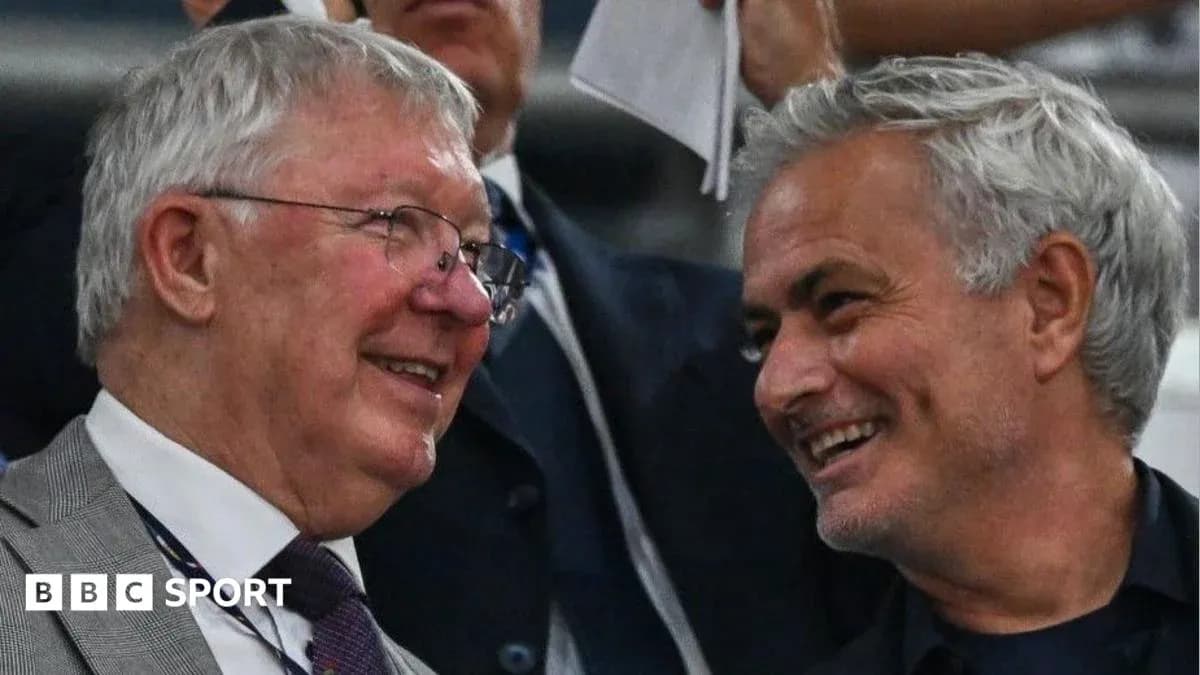
The courtship had gone on for weeks. Senior United figures flew to Madrid and London. Ferguson, still the reigning champion of England, sat down with a manager he admired and liked. In those meetings, the Scot stunned Mourinho by revealing he would stand down at the end of the 2012-13 season.
From there, talks accelerated. Terms were discussed. Agreement, one source says, was reached. For a brief period, Manchester United believed the succession plan was secure: Ferguson out, Mourinho in.
Then came the reversal.
Ferguson recalls the call with typical clarity. “One night, he phoned me and he was crying and he says: ‘Alex, I can't take it. I've given my word to Chelsea and I'm not going to break my word’.”
In that moment, United’s future bent in a different direction.
London, family and Abramovich
Mourinho told Ferguson and United it was about family. His home was in London. When he had been sacked by Chelsea in 2007, he had promised to return. That promise, he insisted, still mattered.
He also had something else in his corner: a strong relationship with Roman Abramovich. The Chelsea owner wanted his old manager back. Mourinho, still only in his early 50s then, saw the chance to step back into a familiar kingdom with a powerful ally above him and a settled life off the pitch.
Some inside United never fully bought the family explanation. They accept the London base was real, the promise genuine. But the sense lingers that something more – loyalty to Abramovich, a comfort with Chelsea’s environment – tipped the balance.
Whatever the blend of reasons, the outcome was brutal for United. For a short time they thought they had their man. Then, suddenly, they did not.
A club at a crossroads
The timing could hardly have been more delicate. Ferguson was leaving. So was David Gill, the chief executive who had quietly underpinned United’s era of dominance.
Those at the top of the club knew they were not just replacing a manager. They were dismantling and rebuilding an entire structure that had revolved around one extraordinary figure. Ferguson had controlled almost everything on the football side. Recruitment, culture, standards, strategy – all ran through his office.
The belief at the time was that Mourinho, more than anyone else available, had the shoulders to carry that weight. He was used to big clubs, big egos, big pressure. He would not have flinched at the comparison with Ferguson; he would have attacked it.
They also knew something else: the structure had to change while United kept winning. There was no appetite for a long, gentle reset. The machine had to be rebuilt at full speed, with the engine still running.
That is where Mourinho, in the minds of many inside Old Trafford, fit perfectly. When he slipped away, the plan disintegrated.
From Mourinho to Moyes
With Mourinho gone and Pep Guardiola already committed to Bayern Munich, United pivoted to a very different profile: David Moyes.
Moyes shared some of Ferguson’s traits – work ethic, discipline, an eye for detail – and came with the Scot’s public endorsement. But he had never operated at the elite level United now inhabited. His work at Everton had been admirable, occasionally outstanding, but it was a world away from the demands of a global giant.
United framed him as “The Chosen One”. The banner went up. The slogan stuck. The reality did not.
The transfer market exposed the gap instantly. Where Mourinho is decisive, sometimes ruthless, Moyes hesitated. Deals drifted. Thiago Alcantara, whose move from Barcelona had been agreed in principle, slipped away. Internally, there is no doubt: under Mourinho, that signing would have been completed.
Instead, United stumbled into the Marouane Fellaini saga. They paid £27.5m on deadline day, having failed to trigger a lower release clause earlier in the summer. It was an episode that screamed uncertainty. Those who were close to the 2013 talks insist on one point: Fellaini, under Mourinho, simply would not have been signed.
The Mourinho who finally arrived
Mourinho did walk through the doors of Old Trafford eventually, in 2016, after Louis van Gaal was sacked just 48 hours after lifting the FA Cup against Crystal Palace.
But by then, everything had changed.
The dressing room was different. Of the 18 players who started 10 or more Premier League games in Ferguson’s final title-winning season, only six – David de Gea, Phil Jones, Wayne Rooney, Chris Smalling, Michael Carrick and Antonio Valencia – did so in Mourinho’s first campaign.
The squad he inherited in 2016 was not the hardened, battle-scarred group that had dragged Ferguson to one last title. It was a team reshaped, confidence dented, identity blurred.
Mourinho himself was no longer the same force. He had returned to Chelsea and won the title again, but his second spell ended in acrimony in December 2015, the club languishing 16th, one point above the relegation zone. The old magic was still there in flashes, but the volatility had sharpened.
At United, the record splits opinion. On paper, he brought success: Europa League, EFL Cup, two Champions League qualifications. He delivered 81 points in the league in 2017-18 – still United’s highest total in the post-Ferguson era – and described finishing second, 19 points behind Manchester City, as one of the “best achievements” of his career.
Yet the internal damage was real. He clashed with players, most notably record signing Paul Pogba. He publicly questioned the club’s ambition, criticising the hierarchy for not backing his wish to sell Anthony Martial. By the time he left, many felt he had left chaos in his wake.
What if he had come in 2013?
Inside Old Trafford, the belief has hardened over time: Mourinho would have had a far greater impact if he had walked straight into Ferguson’s office in 2013.
The logic is simple. That version of Mourinho was still near his peak. That squad, while overperforming under Ferguson, was full of experience and edge. The feeling is he would have squeezed more from them, driven them harder, refused to accept the dramatic drop-off that followed.
United’s collapse to seventh in 2013-14 stunned even the players. Many have struggled to explain it. They knew they had overachieved under Ferguson, but not to that extent. The sense remains that Mourinho’s presence – his confrontational energy, his refusal to tolerate standards slipping – would have jolted them into a different response.
He had already given United his views on potential signings back in 2013, including a strong admiration for Italy midfielder Daniele de Rossi. Those around the talks are certain of one thing: Mourinho would have signed players early, decisively, and reshaped the squad on his terms.
Instead, United drifted. The structure they knew needed changing never quite settled. The manager they thought they had never arrived.
The night that still haunts Old Trafford
In the documentary, Ferguson recounts Mourinho’s tearful call with a mix of regret and understanding. The words are simple. The implications were anything but.
For United, it was not just a lost manager. It was a lost direction at a moment when the club stood on a knife-edge.
They have changed coaches, changed executives, changed strategies. They have spent heavily and lurched between philosophies. The question still hangs over Old Trafford, unspoken but ever-present:
What if Jose Mourinho had never made that call?