Michael Edwards' Liverpool Return: Promises Unfulfilled
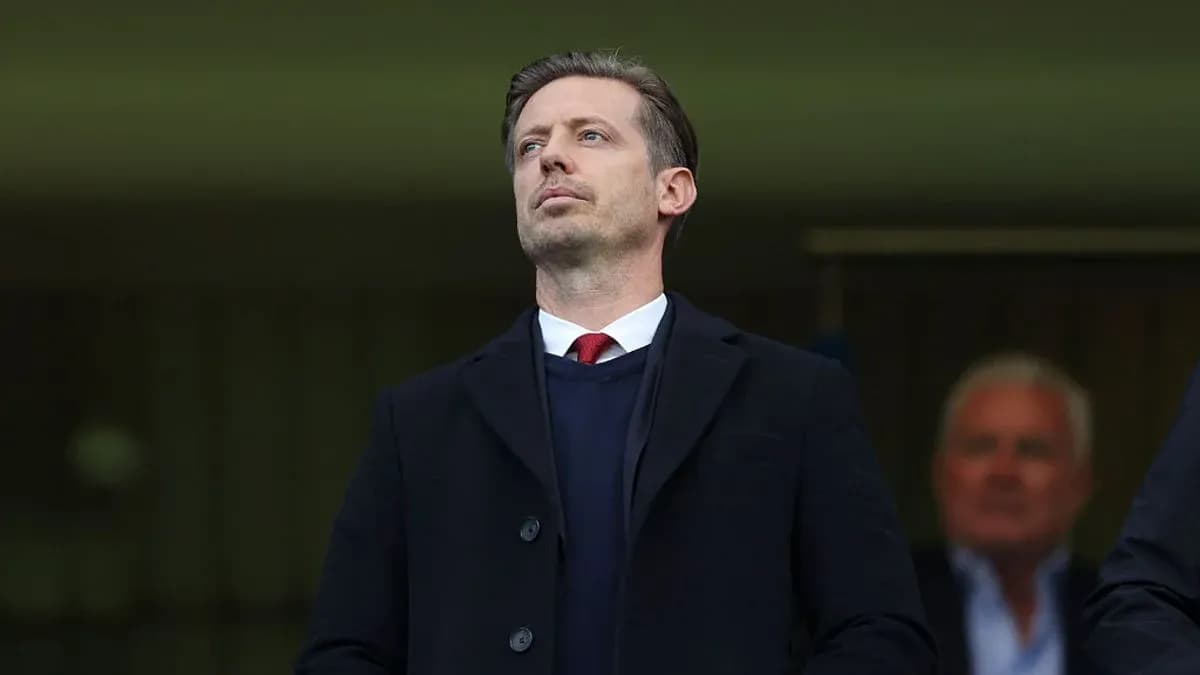
Michael Edwards’ second act at Liverpool was never meant to end like this.
The architect of the club’s modern recruitment era returned in 2024 with a grand brief and a bigger canvas: not just Liverpool, but a wider football empire under Fenway Sports Group. A multi-club model. A second European team. A new structure to carry the post-Jurgen Klopp era.
That project never arrived.
Big promises, thin delivery
When Edwards agreed to come back as FSG’s CEO of football, the role was framed around one key idea: expansion. The group wanted a second club in Europe, a move that would place Liverpool in the same strategic bracket as Manchester City’s City Football Group or the Red Bull network.
Two years on, there is no second club. No multi-club network. No grand new platform for Edwards to build from.
According to The Athletic, that gap between promise and reality cut deep. Edwards, described as “frustrated” by FSG’s failure to land another team, has now walked away a year before his contract was due to end, having already signalled last year that he would not see the full term out.
The pressure finally told, not on the pitch, but in the boardroom.
The man who built a contender
Edwards is not just another executive passing through Anfield. During Klopp’s peak years, he became one of the most influential figures at the club, the quiet force behind a string of transformative signings.
- Mohamed Salah.
- Sadio Mané.
- Andy Robertson.
Deals that reshaped Liverpool’s trajectory and helped turn them into Premier League and Champions League winners.
He left in 2022, his stock sky-high, and promptly attracted interest from Manchester United and Chelsea. Both clubs saw in him the same thing Liverpool had enjoyed for years: a sharp, data-driven operator who understood both the market and the manager.
He turned those offers down. When he came back to FSG in 2024, it was on his terms and in a new capacity, with a remit that stretched beyond Liverpool alone.
That remit never fully materialised.
A project that changed shape
Edwards’ new job placed him closer to FSG than to the day-to-day grind at Kirkby or Anfield. He was not just overseeing Liverpool’s transition away from Klopp; he was meant to help design the group’s entire football strategy.
In his parting statement, Edwards chose his words carefully. He called it “a privilege” to return at such an important moment and said he leaves believing Liverpool are “in a strong position, with outstanding people, a clear direction and the foundations in place for continued success.”
Then came the line that told the story.
“When I returned, I was excited not only by the opportunity to help guide Liverpool through an important period of transition, but also by the chance to help shape FSG’s wider football ambitions,” he said.
“While that broader project ultimately evolved differently to how we had originally envisaged, I am proud of the work our team undertook in presenting ownership with a broad range of thoughtful and well-developed options for the future.”
Translated, the ambition was there. The work was done. The options were on the table. The ownership did not move.
For an operator used to precision, clarity and follow-through, that was always going to grate.
Hughes in, Hughes out
One of Edwards’ first major calls on his return was to bring in Richard Hughes as Liverpool’s sporting director. The pair had worked together before, and Hughes arrived with a strong reputation from Bournemouth.
At Liverpool, he was meant to be the man in full control of transfers, a responsibility he did not fully hold under Andoni Iraola on the south coast. This time, the recruitment reins were his.
Now, even that piece of the puzzle looks temporary.
Hughes is reportedly set to leave Liverpool at the end of the summer to join Al-Hilal, another key figure exiting just as the club tries to steady itself after the Klopp era. It underlines the sense of flux behind the scenes: big roles filled, big roles vacated, and a long-term plan that keeps shifting shape.
Back to Gordon
With Edwards gone and Hughes expected to follow, FSG have turned again to a familiar hand.
Mike Gordon, the group’s president and a long-time powerbroker in Liverpool’s modern era, is understood to be resuming day-to-day control of football operations at the club. He has done the job before, and his influence has been central to the Klopp years and the alignment between manager, recruitment and ownership.
The circle, in some ways, closes. The progressive structure Liverpool built over the past decade now leans once more on an old constant.
Edwards, for his part, leaves with a typically understated farewell, thanking Mike Gordon, John Henry, Tom Werner, everyone at FSG and Liverpool, and, pointedly, the supporters “whose passion makes this club so special.”
“I will always be grateful to have been part of its story,” he said.
The question now is not about Edwards’ legacy. That is already written into Liverpool’s modern history. The real test lies ahead: can FSG deliver the ambitious football project they once sold to him, or will Liverpool’s future be shaped within a smaller, more cautious frame than the one that tempted him back?