
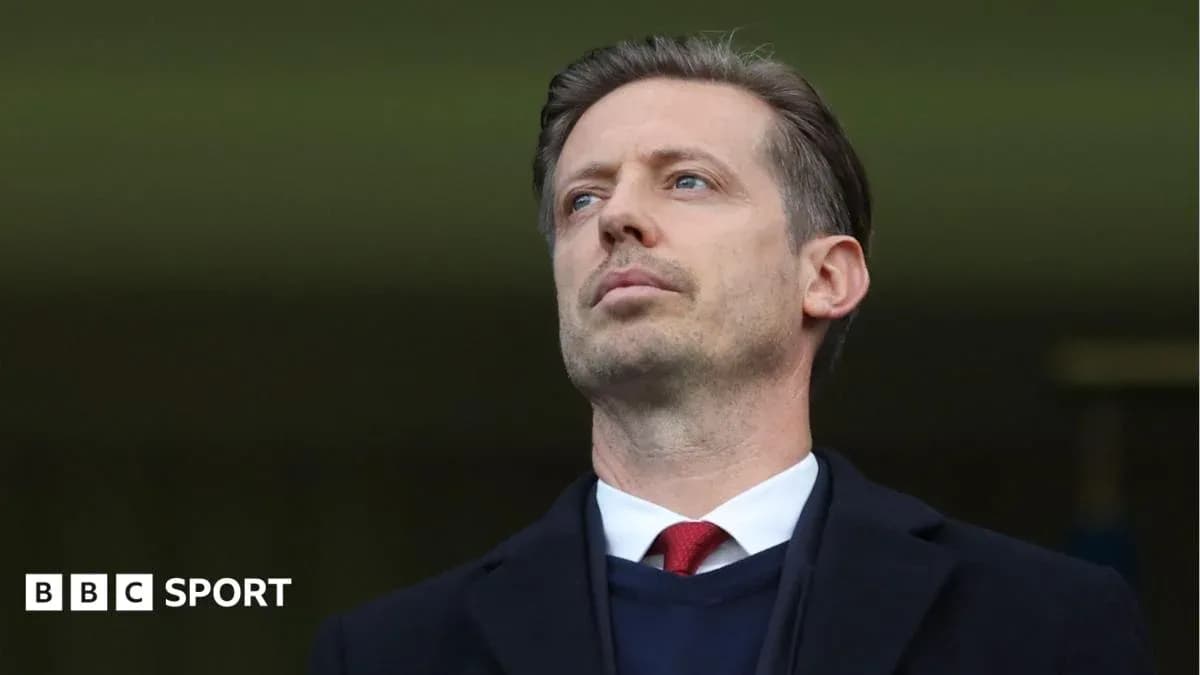
Michael Edwards Exits FSG Role as Liverpool Faces Uncertainty
Michael Edwards, the architect of so much of Liverpool’s modern-era recruitment, has stepped away once more. This time, it is from the top of Fenway Sports Group’s football operation, leaving his post as chief executive of football two years into a three-year contract.
FSG framed the move as part of a “planned transition following the completion of key strategic priorities”. Inside the ownership group, there is no attempt to hide the disappointment. Group president Mike Gordon described them as “naturally disappointed” to see him go.
The timing is striking. Edwards only returned to the Liverpool orbit in March 2024, hired directly by FSG to guide the club through the post-Jurgen Klopp landscape and to shape the owners’ broader football strategy. It was billed as a second act for one of the most influential backroom figures in the club’s recent history.
This second spell has ended far more quickly than the first.
In a statement, Edwards insisted the club is well placed to move on without him. “Liverpool is in a strong position, with outstanding people, a clear direction and the foundations in place for continued success,” he said. His words carried the calm of someone who has seen long-term projects through before.
He spoke, too, about the lure that brought him back. “When I returned, I was excited not only by the opportunity to help guide Liverpool through an important period of transition, but also by the chance to help shape FSG's wider football ambitions.”
That wider vision, though, shifted. “While that broader project ultimately evolved differently to how we had originally envisaged, I am proud of the work our team undertook in presenting ownership with a broad range of thoughtful and well-developed options for the future.”
The message is clear: the ideas were there, the direction changed.
Edwards’ departure lands at a delicate moment for Liverpool. Mohamed Salah, the defining forward of the Klopp era and the club’s long-time talisman, has left at the end of the last campaign. Replacing his goals, his presence and his aura is the central sporting challenge of the coming season.
Behind the scenes, there is more uncertainty. Speculation continues to swirl around sporting director Richard Hughes and the possibility that he, too, could be on the move. For a club that once prided itself on seamless succession planning, the churn in key positions is becoming a storyline of its own.
To understand the weight of Edwards’ exit, you have to rewind. He first joined Liverpool in 2011 and rose to sporting director in 2016. From that vantage point he built a reputation as one of the sharpest operators in the transfer market.
The roll call of signings under his watch is etched into club folklore: Salah, Roberto Firmino, Sadio Mane, Andy Robertson, Virgil van Dijk. They were not just good transfers; they were era-defining. Together, they formed the spine of the side that ended Liverpool’s 30-year wait for a top-flight title in 2020 and pushed the club back among Europe’s elite.
That history is why his presence around the project again had reassured many supporters when Klopp announced his departure. It suggested continuity, a steady hand on the wheel as the club navigated the loss of a transformational manager.
Now, with Edwards stepping away from FSG’s football helm, Klopp gone, Salah departed and Hughes’ future under scrutiny, Liverpool and their owners face a familiar question with a sharper edge: who writes the next chapter from here?





