Michael Edwards Departs Fenway Sports Group: A Definitive Exit
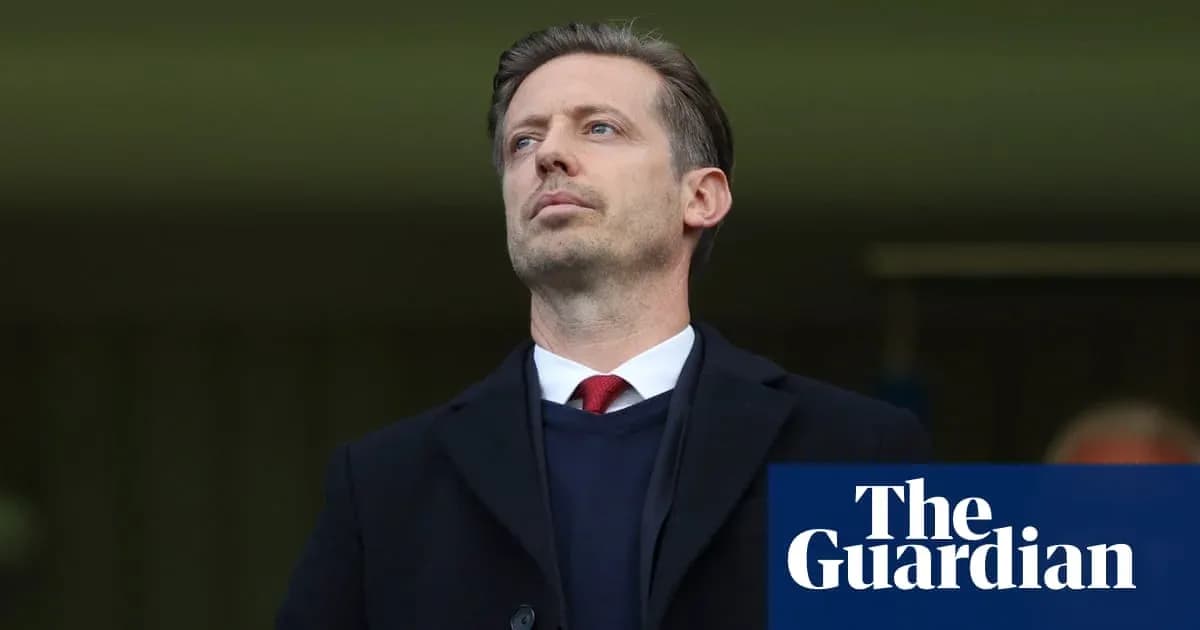
Michael Edwards has walked away from Fenway Sports Group for a second time – and this one feels definitive.
The architect of much of Liverpool’s modern success has resigned as FSG’s chief executive of football, ending a second spell that was supposed to stretch far beyond Anfield and into a multi-club empire that never materialised.
A grand plan that never got off the ground
When Edwards returned in March 2024, it was with a bigger brief and a broader canvas than the one he had as Liverpool’s first sporting director between 2016 and 2022. Then, he was the quiet power behind a recruitment model that turned Jürgen Klopp’s side into Champions League and Premier League winners.
This time, the job title told the story. He was not coming back to run only Liverpool. He was FSG’s chief executive of football, tasked with guiding the club through the post-Klopp transition and, crucially, building out a wider football portfolio.
Multi-club ownership. Strategic partnerships. A second team under the FSG umbrella. That was the attraction. That was the project.
FSG explored options. Getafe were studied. Bordeaux, too. Models were weighed, numbers crunched, structures imagined. But no deal ever crossed the line. By last year, the group had shelved the plan to buy a second club. The grand design stalled.
At that point, the logic of Edwards’ role began to fray. Without the multi-club expansion, the job he had been lured back for simply no longer existed in the same way. He informed FSG in the autumn of 2025 that he would leave once he felt Liverpool’s future was properly mapped out. On Friday, the ownership group confirmed his exit, a year before his contract was due to end.
He goes by choice, so a payoff is not expected. The role itself may go with him; it was created specifically for Edwards, and FSG are not certain to appoint a direct replacement.
Edwards leaves on his own terms
In a carefully measured statement, Edwards framed his departure as the end of a mission completed rather than a sudden break.
“It has been a privilege to return to Fenway Sports Group and Liverpool Football Club at such an important moment,” he said. “I leave believing Liverpool is in a strong position, with outstanding people, a clear direction and the foundations in place for continued success.”
That was always the immediate task: navigate the turbulence after Klopp, steady the structure, and make sure the club did not drift. Liverpool have since secured a historic 20th English league title, an achievement FSG’s president Mike Gordon was quick to tie to Edwards’ influence.
“His return to the organisation saw Liverpool successfully navigate a significant period of transition before securing the club’s historic 20th English league title, an achievement to which Michael made an important contribution,” Gordon said. “Throughout both periods he has consistently demonstrated exceptional judgment, integrity and an unwavering commitment to building a strong football organisation for the long term.”
Edwards, though, had come back for more than a single transition.
“When I returned, I was excited not only by the opportunity to help guide Liverpool through an important period of transition, but also by the chance to help shape FSG’s wider football ambitions,” he said. That second strand never fully came to life. “While that broader project ultimately evolved differently to how we had originally envisaged, I am proud of the work our team undertook in presenting ownership with a broad range of thoughtful and well-developed options for the future.”
The options are on the table. The multi-club model may yet be revived. But the man hired to build it has chosen not to wait around.
Transfer machine keeps turning – for now
On the pitch and in the market, Liverpool’s summer plans remain intact. The club’s transfer operations sit under sporting director Richard Hughes, and the current window has been long mapped out. Edwards’ departure is not expected to disrupt those deals.
Yet his exit strips away another layer of certainty at the top of the club. Hughes, whose contract runs to 2027, has already been strongly linked with a lucrative move to Al-Hilal in the Saudi Pro League. The timing is delicate.
Hughes has not been a passive figurehead. Working in tandem with Edwards, he made the bold call to sack Arne Slot and appoint Andoni Iraola as Liverpool’s head coach. Those are the sort of decisions that shape a dressing room and a season. They are also the sort of decisions that underline how much influence could walk out of the building if Hughes follows Edwards through the door.
The expectation is that, if Hughes does go, it would be after the summer window closes. That buys Liverpool time. It does not remove the question of what comes next.
Gordon steps back into the spotlight
In the vacuum left by Edwards, Mike Gordon is set to move closer to the day-to-day football operation again. For long stretches of the Klopp era, Gordon was the key FSG figure in Liverpool’s football decision-making, often working closely with Edwards during his first spell at the club.
Edwards originally joined Liverpool in 2011 and, across both stints, helped construct a modern football leadership structure that blended data, scouting and clear strategic planning. His fingerprints are on the framework as much as on any individual signing.
Now, that structure faces another test. Liverpool have their 20th title in the bank, a respected sporting director in place, and a new head coach installed. The immediate transfer strategy is set. The ownership group has options for future expansion if it chooses to pursue them.
But the quiet constant who twice built and rebuilt the football department has gone. The next phase will unfold without Michael Edwards – and that, for a club so defined by its off-pitch clarity in recent years, is a very different kind of challenge.