Martin O’Neill to Remain as Celtic Manager: A New Era Begins
Martin O’Neill is set to lead Celtic into another new era, 26 years after he first walked through the doors at Parkhead and changed the club’s trajectory.
The 74-year-old has agreed a one-year contract to remain in Glasgow as permanent manager, with an option for a second season. Confirmation from the club is expected shortly, but the direction of travel is clear: Celtic have chosen continuity, experience and a familiar figure over a high-profile gamble.
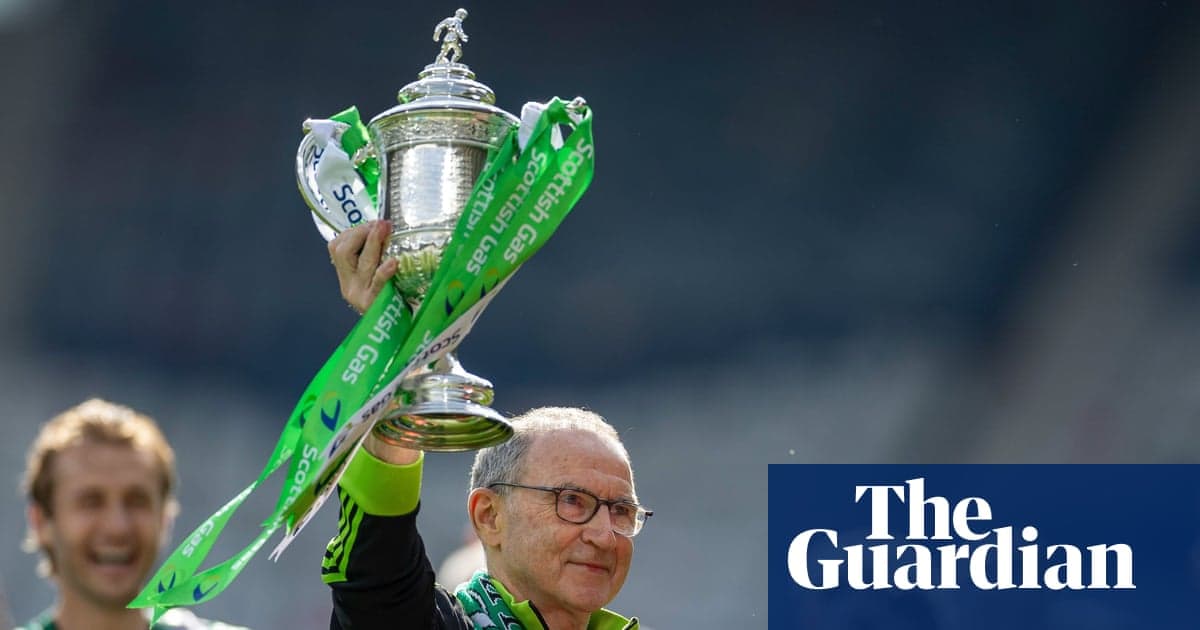
O’Neill has earned it the hard way. Twice this season he stepped in as interim manager, twice he steadied a listing ship, and in his second spell he did far more than that, driving Celtic to a domestic double and rekindling a sense of authority about the team. The Scottish Cup final win over Dunfermline gave him the perfect platform to walk away on a high. Instead, it has become the launchpad for another chapter.
After that final, O’Neill asked for time to consider his future. He took it, weighing up whether he wanted the intensity again, the scrutiny, the expectation that comes with the Celtic job at any age, never mind in his mid-70s. Inside the club, though, there was a quiet confidence that the Northern Irishman’s competitive instincts would pull him back in. That instinct has won.
The decision also closes the door, for now, on one of the more divisive managerial possibilities in recent Celtic history.
Robbie Keane had moved into pole position in the minds of some at board level. The former striker, a hero to many Celtic supporters from his playing days, held talks this week with Dermot Desmond, the club’s principal shareholder. On paper, it was a bold, modern appointment: a big name, a fresh coaching profile, a bridge between eras.
The reaction in the stands told a very different story.
News of Keane’s candidacy sparked a furious backlash from a section of the Celtic support. Their anger was not about his lack of managerial pedigree in the British game, but about where he had chosen to build that experience. Keane’s spell in charge of Maccabi Tel Aviv, and his subsequent move to Hungary with Ferencvaros, became flashpoints. He resigned from Ferencvaros at the end of May, but for many fans the damage to his candidacy was already done.
In that climate, Celtic’s hierarchy could feel the ground shifting beneath them. The club is entering a critical phase: domestic dominance under constant threat, European standards to restore, a support demanding both success and a sense of identity. Appointing a manager who arrived amid protests and boycotts would have been a brutal way to start.
So the club has turned back to the man who once rebuilt it.
Desmond first persuaded O’Neill to leave Leicester for Celtic in 2000. That decision transformed the landscape. Under O’Neill, Celtic won three Scottish titles, three Scottish Cups and two Scottish League Cups. They did not just collect trophies; they reasserted themselves as a force, dragging standards up and dragging Rangers into an arms race.
The high point came in Europe, with the run to the 2003 Uefa Cup final. Celtic fell short in Seville, beaten by José Mourinho’s Porto, but the journey itself restored a sense that the club belonged on major continental nights, not just in domestic squabbles.
Now, more than a quarter of a century after that first phone call from Desmond, O’Neill is back in the role on a more permanent footing, charged with delivering once again.
This time the task is different. He inherits a squad he already knows, a dressing room that has responded to him in two short bursts, and a fanbase that has just watched him lift a double as caretaker. The romance is obvious, but the decision is not sentimental. Celtic need stability and a proven hand at the wheel; O’Neill offers both.
A one-year deal, with an option for a second, underlines that this is a defined project rather than an open-ended return. It gives Celtic room to plan beyond him, to reassess the market without the immediate pressure that framed the Keane discussions. It gives O’Neill the freedom to attack the season without feeling tied into a long-term rebuild he may not want.
He comes back to a club that is very different from the one he first inherited, yet still wrestling with the same fundamental question: how to turn domestic power into something more meaningful in Europe.
O’Neill has answered that question once before. Celtic are about to find out how much of that old magic he can summon again.