
Marcus Rashford's World Cup Struggles and Future Uncertainty
Marcus Rashford went to the 2026 World Cup needing a shop window. He came back with the shutters half‑down.
England’s campaign in North America was supposed to be his stage. Instead, it became Anthony Gordon’s. The two men duelled for Thomas Tuchel’s left-wing berth in the build-up, but when the tournament began, Rashford never truly seized the moment.
He did score – a composed finish to seal the opening win over Croatia – yet that was as close as he came to a statement. As England laboured through flat, functional victories over Panama and DR Congo, Rashford failed to rise above the malaise. When the knockouts arrived, Tuchel turned to Gordon, Barcelona’s new £69m signing from Newcastle, and never looked back.
Gordon grew into a central attacking figure. Rashford faded to the fringes, finishing the World Cup with one goal and one assist – the latter arriving against a disinterested France in a third-place play-off that already felt like an afterthought.
A market that moved on without him
While Rashford’s tournament stalled, his options did the same.
Barcelona, where he had spent the second half of last season on loan, had already nailed their colours to Gordon before a ball was kicked at the World Cup. The Catalans’ £69m outlay effectively killed any realistic prospect of triggering the buy option in Rashford’s loan agreement with Manchester United, and that clause quietly expired on June 15, four days into the competition.
United, for their part, have refused to renegotiate the figure or entertain another loan to Camp Nou. The door that once looked wide open is now bolted.
A month later, and a day after England’s semi-final defeat to Argentina, another escape route closed. The £40m release clause in Rashford’s United contract lapsed, meaning any buyer now has to negotiate a fee. That in itself might not be fatal – United’s £26m option with Barcelona is understood to be the realistic asking price – but it removed one of the few clear mechanisms for a clean break.
Any lingering hope that Barcelona might circle back later in the window dimmed further when Karim Adeyemi completed his move to Borussia Dortmund. At the same time, Rashford is reported to have turned down interest from Fenerbahce and Galatasaray, intent on holding out for a leading Champions League club rather than chasing the biggest paycheque.
The problem? Those elite clubs are not exactly queuing.
United short of wingers, short of cash
This is not just Rashford’s problem. It is United’s too.
They had been weighing up a move for West Ham winger Crysencio Summerville, only to see the Netherlands international veer towards Al-Hilal in a £60m deal and the Saudi riches that come with it. With sales limited and a “fairly frugal” summer in progress, United are in no position to throw money around, particularly in wide areas where depth on the left is already thin.
Selling Rashford within the Premier League might have offered a solution. Tottenham showed a willingness to activate that now-expired £40m clause. United shut it down. According to The i Paper, the club have no intention of offloading their academy graduate to a domestic rival, wary of being “humiliated” if he rediscovers his scoring touch elsewhere in England – a scenario the hierarchy view as a potential “PR disaster”.
Arsenal and Xabi Alonso’s Chelsea are also monitoring the situation, but neither looks likely to firm up their interest. Chelsea have already spent £117m on Morgan Rogers from Aston Villa, a move that all but closes that door.
The wage that won’t move
Strip everything back and one number sits at the heart of this saga: £325,000 per week.
Rashford is one of United’s top earners, on a wage that now feels like a millstone. It is too big for most suitors to match, and awkward for United to carry for a player who is no longer guaranteed to start and will soon turn 29.
The Athletic reports that the remaining two years of his deal will cost United around £39m in basic wages alone. Sir Jim Ratcliffe and INEOS, deep into a cost-cutting drive, are desperate to trim that burden. Former head coach Ruben Amorim wanted Rashford gone, and the decision to move him out on loan in January 2025 had full boardroom backing.
Yet even with that pressure, there is no realistic buyer willing to get close to his current salary. Rashford is understood to have rejected even more lucrative offers, likely from less attractive clubs or leagues. If money were his only concern, he would already be elsewhere.
So United want his wages off the books. Rashford wants a top-level project. The market says neither side can have exactly what they want.
Carrick’s olive branch
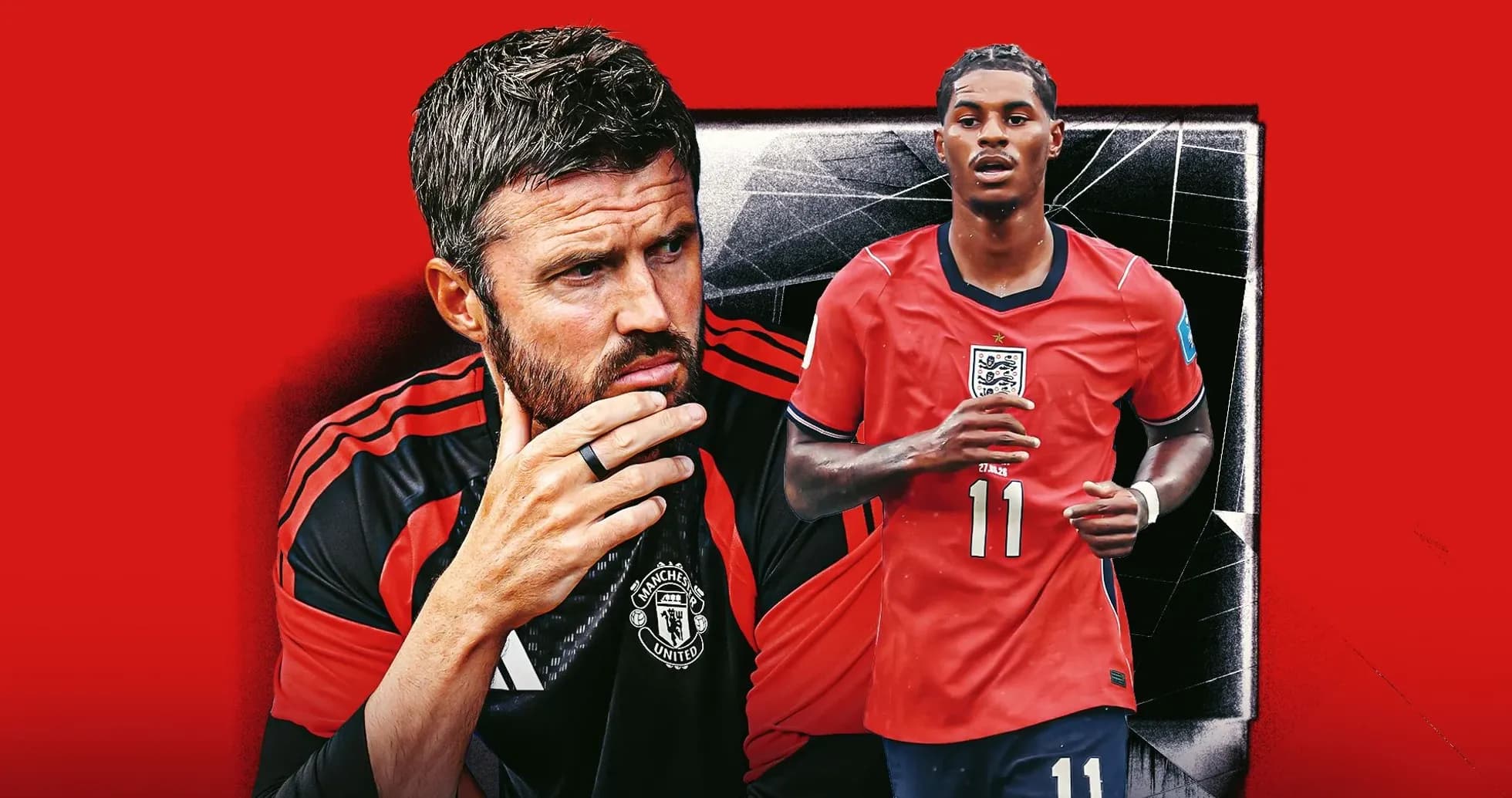
Into this standoff steps Michael Carrick.
The new manager is said to be open to Rashford’s reintegration. After a post-World Cup break, the forward is widely expected to join up with the squad in Dublin for the remainder of pre-season. Despite being ostracised under Amorim and dumped into the infamous “bomb squad”, Rashford is described as holding no resentment towards the club.
With Champions League football back on the agenda, Carrick knows he needs numbers and quality in attack. He also sees a player he believes he can repair.
“Rashford is really looking forward to the opportunity to work with Carrick,” transfer specialist Fabrizio Romano said recently. “Carrick is also looking forward to working with Rashford. I am told that Carrick is genuinely excited about the opportunity to help revive Rashford’s career at Man United.
“Rashford and the club are prepared to give each other another chance. After that, they will decide whether to continue together or whether the player will leave during the summer transfer window.”
Carrick had already hinted at that openness back in April, when asked about the loanee’s future: “There’s decisions to be made in time on certain things, and obviously Marcus is in that situation. But at this point in time, nothing’s been decided. From my perspective, whoever’s here, I want to work with, make the best out of and help them improve.”
The idea of a wage cut has been floated as a possible compromise if Rashford is to stay, but that has been widely deemed unlikely. Even so, the failure to land Summerville and the lack of credible offers have nudged the club towards a simple conclusion: keeping him and trying to reboot his United career might now be the least bad option.
A fractured bond to repair
There is a catch. It is not just executives Rashford must convince.
His relationship with sections of the fanbase had deteriorated badly before his loan exit in January 2025. He had become a lightning rod for anger – criticised for his perceived attitude and work-rate, painted by some as the symbol of a drifting side. Amorim’s United had problems far beyond one forward, but Rashford often carried the blame.
If he returns, he will not be welcomed back unconditionally. He will need visible fight, sharp early form and a clear sense of responsibility to shift the mood. A slow start, or any hint of old frustrations, and the atmosphere could sour quickly. How United perform as a team in those early weeks will shape the narrative around him as much as his own numbers.
The loan that solves everything – and nothing
For now, United are trapped in a mess of their own making.
They cannot sell Rashford easily because of his huge wages and the impression of desperation that hangs over any negotiation. No club is going to meet their £26m valuation while they look so keen to move him on. Rashford, for his part, has every right to turn down options that do not match his ambitions.
That leaves one route that might suit everyone: another loan.
If United can replicate the Barcelona model, a new club would cover his salary – or at least a large chunk of it – while potentially persuading Rashford to accept a pay cut to make the deal stack up, as the Blaugrana did. A straight 100% coverage is unlikely; something like a 40/60 split feels more realistic in the current climate, with United still desperate to reduce that £325,000 weekly hit.
Any club watching this saga unfold will sense that time is on their side. The longer the window drags on, the more leverage they gain. Rashford is being selective. United are under pressure. If they splash on a new winger, the urgency to shift him will only grow.
So where does he end up? Back on the Old Trafford touchline, sleeves rolled up under Carrick’s gaze? Or on another continent, another league, another short-term fix?
For now, one thing is certain: this Rashford story is nowhere near its final chapter, and the clock is ticking loudly on all involved.





