
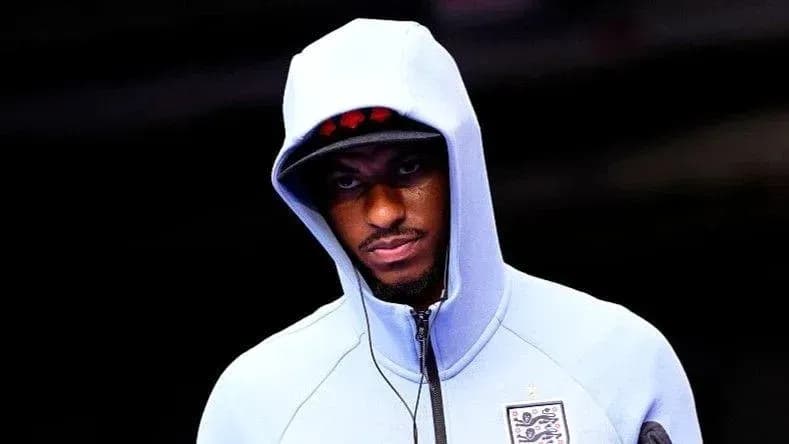
Marcus Rashford's Future: Contract Dilemmas at Manchester United
Marcus Rashford left the World Cup with a message rather than a medal.
“Keep believing in us. Our time will come,” he wrote after England’s wild 6-4 third-place play-off win over France in Miami. Then came the line that really mattered: time to “rest, reflect… and come back a better version of myself.”
That word – reflect – hangs over his summer like a cloud.
At 28, Rashford should be walking into the prime of his career. He has just lifted his first league title, winning La Liga with Barcelona. He owns 77 England caps. He played in six of Thomas Tuchel’s eight games as England produced their best World Cup run since 1966.
Yet the biggest question on his mind is not about England, Barcelona or even the World Cup. It is whether his future still runs through Old Trafford.
Contract, clauses and a cooling market
On paper, Rashford is locked in at Manchester United. His contract runs to 2028. At £325,000 a week, he is the club’s top earner at a time when minority owner Sir Jim Ratcliffe wants to drag the wage bill under control.
Barcelona had the first big decision of the summer. Their loan deal last season included an option to buy for £26m. That deadline slipped by in mid-June without a flicker of interest from the Spanish champions.
A second clause gave almost everyone else a shot. Any club – Liverpool and Manchester City excluded – could have taken Rashford for £40m up to early July. Again, no one moved. Those close to the player never believed a club would suddenly offer more than Barcelona’s cut-price option.
The window is open, the numbers are clear, and the market has shrugged.
For now, Rashford is entitled to a three-week break after the World Cup. If nothing changes, he will report back to United just as they head to the Republic of Ireland for a six-day training camp, built around an historic meeting with Leeds at Croke Park on 12 August.
The noise around him suggests he is calm about that prospect.
From the ‘bomb squad’ to Carrick’s court
A year ago, the idea of Rashford quietly slotting back into United training would have sounded fanciful.
Ruben Amorim arrived from Sporting Lisbon and clashed with him within weeks. The relationship deteriorated quickly. Rashford was exiled, then shunted out on loan to Aston Villa. When pre-season began last summer, Amorim pushed him into the notorious “bomb squad” alongside Alejandro Garnacho, Antony, Tyrell Malacia and Jadon Sancho.
The other four have all gone. Rashford is the one left circling the runway.
Amorim has since been replaced by Michael Carrick, a very different figure and a very different dynamic for Rashford. Carrick is a former team-mate, has already coached him, and even managed him briefly in the short spell between Ole Gunnar Solskjaer and Ralf Rangnick in 2021. The two are understood to get on well.
Carrick’s only public comment on Rashford late last season was notably soft-edged, in keeping with his temperament. He has not yet been pressed on how he intends to handle the forward now.
Inside the club, the stance is firmer. United are refusing to reopen talks with Barcelona over a cheaper permanent deal or to entertain another loan to Camp Nou. The Catalan club’s own plans hardly scream urgency. They have already signed England winger Anthony Gordon and are on the verge of bringing in Karim Adeyemi from Borussia Dortmund.
United’s message is consistent: they will not be pushed around in this market.
That approach has already cost them potential signings. Elliot Anderson ended up at Manchester City for £116m, a fee United would not go near. Mateus Fernandes moved from West Ham to Tottenham for £85m, another number Old Trafford executives were not prepared to match.
United, powered by director Michael Sansoni and an expanded data department, believe they can find better-value alternatives. The principle is clear. The consequences are still unfolding.
Limited buyers, fewer options
United need sellers as much as they need signings. They need clubs willing to take on big contracts. They need players prepared to move.
Rashford sits at the sharp end of that equation. There are only a handful of clubs worldwide who can match his current salary. Of those, even fewer fit his ambitions or his personal preferences.
One thing seems non-negotiable: he will not risk his England place lightly. His recent post carried the tone of a player who knows what the national team means to him. BBC Sport has also been told there are certain Premier League clubs he simply would not consider.
So when the window closes on 1 September, the most realistic outcome, by some distance, is that Rashford is still a Manchester United player.
Beyond that, the picture blurs. “Any Spanish club, any Turkish club, any German club” is the vague outline of a market that has yet to truly materialise for the 15th-highest scorer in United’s history. His 138 goals leave him just 17 short of breaking into the club’s all-time top 10. That record should command a queue. It has not.
Old Trafford split: time to go, or time to rebuild?
Opinion around Rashford at United is sharply divided.
Plenty, including former captain Gary Neville, believe his time at Old Trafford is done and that both sides need a clean break. After years of inconsistency, scrutiny and shifting roles, they see a player who needs a fresh start and a club that must move on.
Yet the story may not allow for a neat ending. The lack of a serious market, the size of his contract and United’s new financial hard line all point towards an outcome some thought impossible: a reconciliation.
Not everyone would dread that prospect.
“A fit and focused Marcus Rashford has the ability to be one of the best players,” said his friend Sam Smith, the Wrexham forward who scored the winner against Carrick’s United in a pre-season game in Helsinki on Saturday, speaking to the United We Stand podcast.
“He has everything. He has had a difficult time at United and getting away from it all was a good thing.
“I don’t know what is going to happen but as his friend, I hope he comes back and proves how good a player he was, how good he can be and starts scoring goals again.”
The next move now rests with Rashford and Carrick. One is heading into his prime, the other into his first full season in the Old Trafford dugout. Between them lies a simple, brutal question: is there still a version of Marcus Rashford that Manchester United can build around, or has that time already passed?





