Marc Cucurella: The Transfer That Strengthened Real Madrid
Real Madrid signed Marc Cucurella to strengthen the left flank. They may have accidentally hit a small jackpot.
The move has already paid off on several fronts: on the pitch, in the market, and even in the club’s relationship with the Spanish national team.
From zero Spain call-ups to a world champion
Before Cucurella walked through the door, Luis de la Fuente’s Spain squad for the 2026 World Cup did not include a single Real Madrid player. For a club that has long seen La Roja as part of its natural habitat, that absence was striking.
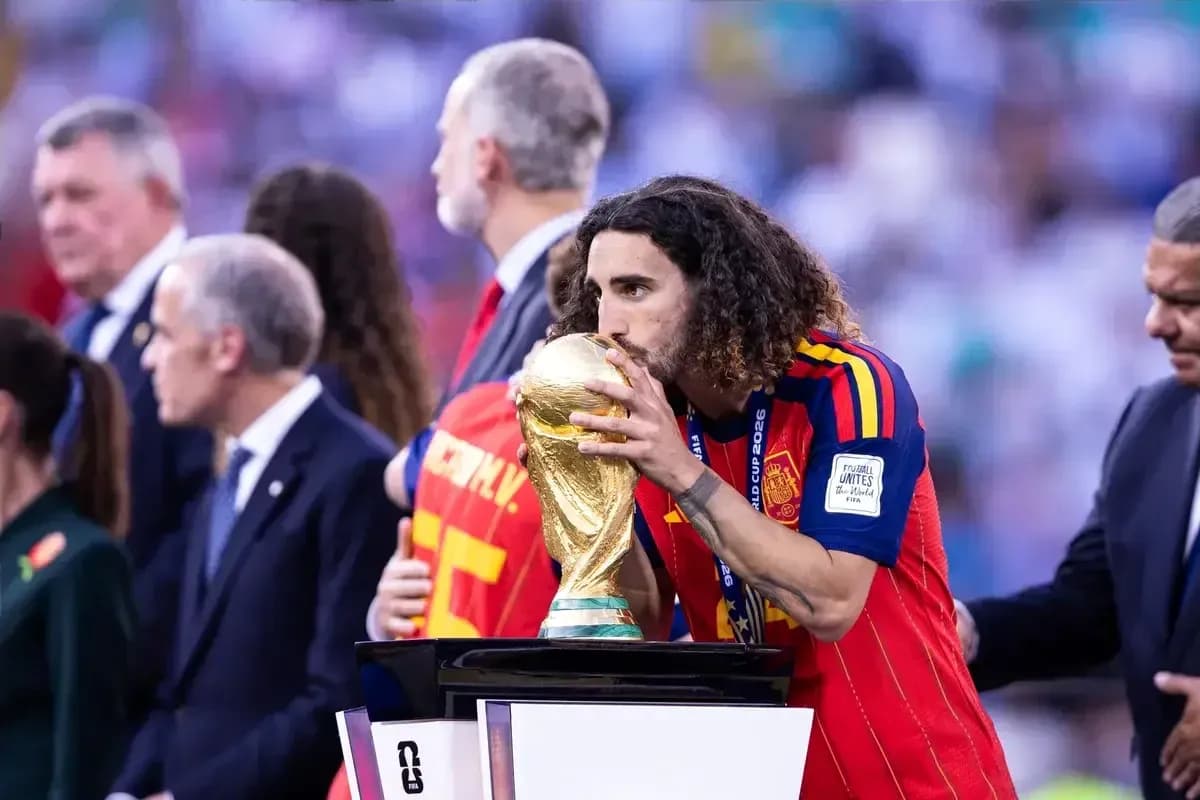
Cucurella changed the picture overnight. His signing meant Madrid suddenly had representation in a Spain team that went on to win the World Cup. When Spain lifted the trophy, a slice of that glory inevitably flowed back to the Bernabéu. The new fullback arrived just in time to carry the club’s crest into the biggest tournament of all — and came back as a world champion.
The impact did not stop at symbolism. Cucurella’s performances in the tournament were strong enough to earn him a place in the FIFA World Cup Best XI as voted by fans, one of three Real Madrid players to make that list. His reputation surged with every game.
An asset that grew in value in days
The market reacted quickly. After the World Cup, Transfermarkt raised Cucurella’s valuation to €60 million. For Real Madrid, who had only just secured his signature, it meant the value of their new asset had climbed within days of his arrival.
This is the kind of deal elite clubs crave: a player signed primarily for sporting reasons whose financial value also spikes almost immediately. Madrid did not just buy a left-back. They bought an appreciating asset who has already justified the investment in both prestige and price.
More than a fullback: a regulatory solution
There is another, quieter benefit that matters a great deal in modern squad building.
UEFA rules state that from a 25-man squad, at least eight players must be locally trained to be eligible for the Champions League and other European competitions. For Real Madrid, “locally trained” means players who spent their formative years — between 15 and 21 — at their own academy or at any other club in Spain.
Cucurella ticks that box perfectly.
He came through Barcelona’s youth system, continued his development at Eibar and Getafe, and only then left for Chelsea. His footballing education is entirely Spanish, and that history now works in Madrid’s favour.
His arrival helps Los Blancos meet the locally trained quota without compromising on quality. Instead of filling a regulatory slot with a peripheral squad member, they have done it with a world-class left-back who has just starred on the biggest stage.
In one move, Real Madrid secured a starter, regained a presence in a World Cup-winning Spain side, boosted the value of their squad, and eased a Champions League registration headache. For a club that measures itself in fine margins, Cucurella is already looking like one of the sharpest of this summer’s deals.