Manchester United Impress in Trondheim with 5-0 Victory
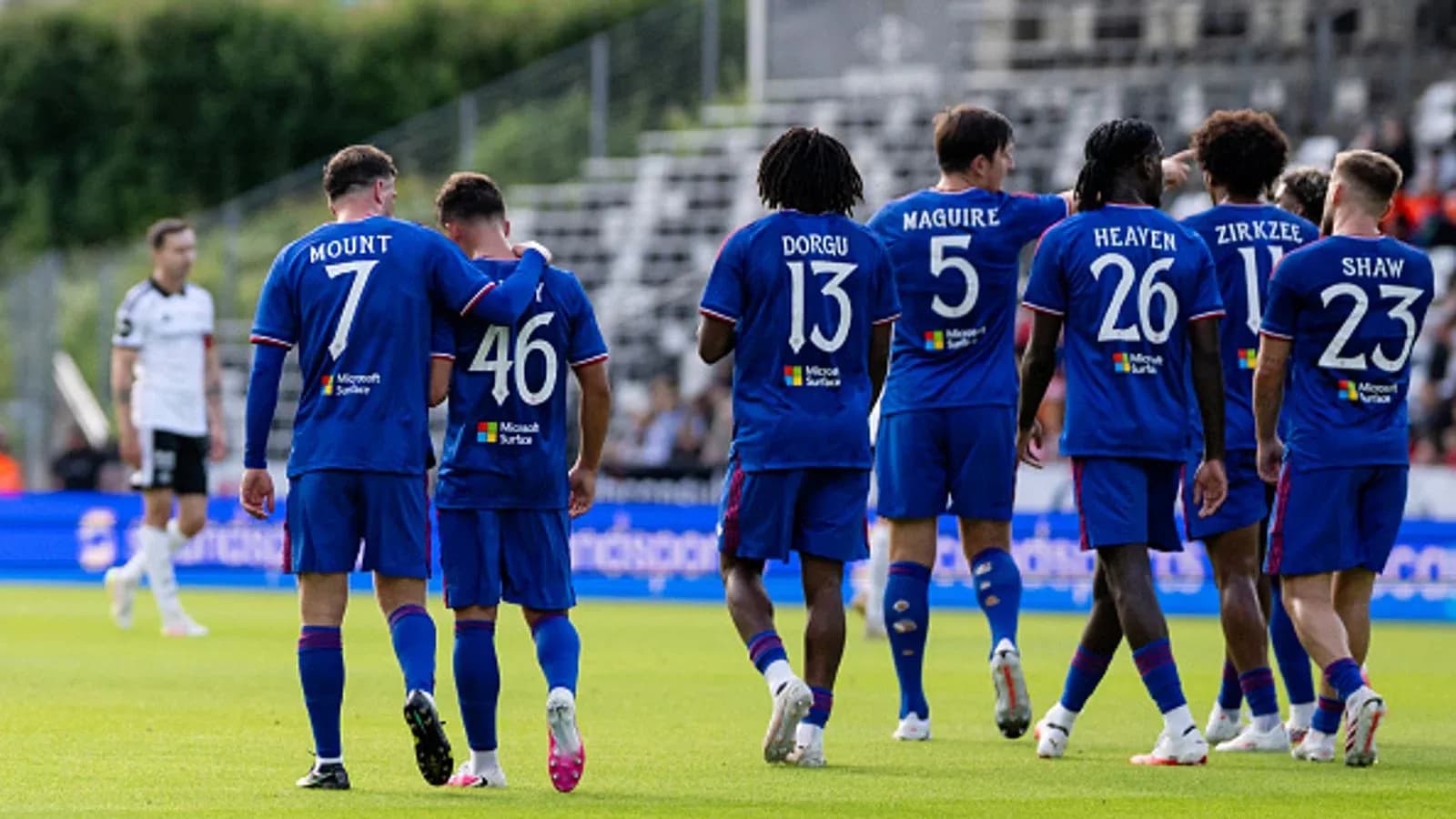
Manchester United hit their stride in Trondheim, brushing aside Rosenborg 5-0 to claim their first win of pre-season and offer a sharper glimpse of what Michael Carrick’s United might look like when the real stuff starts.
Six days after losing to Wrexham, this was a very different performance: cleaner on the ball, more controlled, still ruthless in transition. It felt less like a one-off friendly and more like a blueprint.
A new face to ‘Carrick-ball’
Carrick’s early impact as interim boss was built on chaos. United ran games in transition, breaking at speed through Bryan Mbeumo and Patrick Dorgu, with Bruno Fernandes and Matheus Cunha threading the passes that turned counters into goals.
The numbers backed it up. From that first 2-0 win over Manchester City to the end of the season, United ranked third in fast breaks per game. They sat joint-top for goals from fast breaks per 90 and second for expected goals from those situations. They were a side that thrived when the game was stretched.
On the ball, though, they were still a throwback to United’s post-Sir Alex struggles. Thirteenth in overall possession, 11th in average possession duration. When opponents sat deep, United often ran out of ideas.
Rosenborg, 13 league games into their season and theoretically fitter, should have been able to dictate the ball and the tempo. On paper, United were supposed to lean again on their counter-attacking edge.
They didn’t. Not this time.
Without Fernandes or Cunha, United looked surprisingly assured in possession. They moved Rosenborg around, shifted the ball with patience and then with purpose, and at times simply pulled the Norwegian side apart. Joshua Zirkzee was central to that change, acting as the pivot in attack, taking the ball under pressure and allowing United to build rather than just break.
That doesn’t mean the old weapon has been put away. United’s second and fourth goals came straight from those familiar rapid transitions, a reminder that Carrick won’t abandon what works. But there was a clear tweak: more structure with the ball, more trust in the team’s ability to probe and create.
It also cast a different light on why a player like Youri Tielemans was so attractive. If this is the direction of travel, United’s midfield will need more than legs. It will need brains and calm.
Zirkzee dazzles – but where does he fit?
On the night, there was no debate over the standout performer. Zirkzee dominated the contest in his 60 minutes on the pitch.
Since his arrival in 2024, United’s number 11 has been a puzzle. Too languid to convince as a traditional number nine, not influential enough to displace Fernandes as a 10. The talent has always been visible in flashes – the first touch, the vision, that Berbatov-like ability to slow the game to his own tempo – but it rarely knitted together into a full performance.
In Trondheim, it did.
He played as a sponge for possession, constantly available, sharp on the half-turn, knitting United’s attacks together. He assisted the first goal and scored the second, but those bare facts don’t do justice to the quality of his work.
His goal was the kind that lives long in pre-season memory. A slick give-and-go with substitute Harry Amass opened the space. Then came the artistry: tight footwork to wrong-foot two defenders, a second burst of trickery to send the Rosenborg goalkeeper the wrong way, and finally a calm finish into an empty net. It was audacious, controlled, and utterly ruthless.
Moments like that fuel calls from supporters. Some will argue this is the version of Zirkzee who must be trusted more, who deserves a bigger role when the Premier League kicks off.
The reality is harsher. The rhythm and pace of this game suited him. Rosenborg could not suffocate him with the same intensity he faces in England. Questions over whether he can cope with the speed and physicality of the Premier League remain unanswered.
Benjamin Sesko still looks the more natural fit to lead the line long term. If anything, what Zirkzee produced here may be a preview of how Carrick plans to use Sesko when he returns: a focal point who links play, not just a runner in behind.
For now, Zirkzee has bought himself time and trust. But one magical night in Norway won’t rewrite his place in the pecking order on its own.
Carrington’s kids seize their moment
For all the tactical intrigue, this was also a showcase for Carrington’s latest crop.
Shea Lacey, starting as the number 10, grew steadily into the game. United fans have seen flashes of him before – not least that almost-spectacular effort in the 2-2 draw with Burnley – but this was his most prominent role yet. He looked composed, mature, and his finish for the opener matched the stage: calm, controlled, exactly what the situation demanded. United supporters voted him player of the match, and it was hard to argue.
The noise around Lacey had cooled over the last year. Once the standout name in the youth ranks, he slipped a little from the headlines. On this evidence, there is still a serious player there, one who could yet carve out a meaningful first-team role.
Harry Amass, introduced at half-time, offered another reminder of why the club rate him. His progress stalled last season with injuries after a bright loan spell at Sheffield Wednesday, but he picked up where he left off. His goal came from classic full-back instincts, timing his arrival into a dangerous area perfectly. He defended with discipline on the left, used the ball intelligently, and looked physically ready for more.
United are still in the market for another left-back. Performances like this from Amass raise a simple question: should he be given the chance to grow as Luke Shaw’s permanent deputy instead?
Jacob Devaney and Ethan Williams also had nights they will never forget, each finding the net and etching their names into the story of this tour. These are the moments that can change careers or at least define them.
Yet the most intriguing of the lesser-known youngsters was Jaydan Kamason.
The 19-year-old right-back did not have a flawless evening. He was caught out of position at times without the ball, a reminder that this is still a learning phase. With the ball, though, he was electric. His two assists came from sharp, low crosses that showed real awareness of where the danger lay. His footwork belonged more to a winger than a full-back, and Carrick’s decision to keep him on longer than most of the other academy players said plenty about the trust being placed in him.
If pre-season is an audition, Kamason delivered something that will stick in the coaches’ minds.
The JJ Gabriel wait
One name, however, never left the bench.
JJ Gabriel, 15 years old and already the subject of breathless headlines, travelled with the squad and instantly drew attention. Supporters wanted a glimpse, even just a cameo, to see what the fuss was about.
They waited. He warmed up. He sat back down. Full-time arrived, and he had not played a single minute, watching it all unfold in a fluorescent bib.
Does that mean expectations should be dialled down? Not necessarily. Carrick had already hinted before the game that Gabriel’s time will come across the friendlies, not necessarily in this one fixture.
For now, the teenager remains an idea more than a reality, a promise rather than a product. In a summer where Carrick is reshaping United’s style and testing the depth of the academy, the real intrigue lies in how many of these kids – from Lacey and Amass to Kamason and, eventually, Gabriel – can turn nights like Trondheim into something more permanent when the season truly starts.