
Manchester United's Midfield Rebuild: Targets and Challenges
Manchester United’s midfield rebuild is armed with serious money, but money alone is not guaranteeing access to their top targets.
At the top of the wish list sits Elliot Anderson of Nottingham Forest, a player United view as a potential cornerstone of their next midfield era. Forest, aware of the demand and his growing status with England, have planted a £100 million price tag on the 23-year-old and are standing firm.
United’s hierarchy, according to The Guardian, believe they can still muscle past Manchester City in the chase. That is the internal mood. Outside Old Trafford, the picture looks different. City, the “noisy neighbours” who have turned transfer efficiency into an art form, are currently seen as favourites to land Anderson. United want him, have the budget for him, and yet may again find themselves watching their rivals move faster and cleaner in the market.
Baleba stalemate drags on
The Anderson pursuit is not the only midfield saga testing United’s resolve.
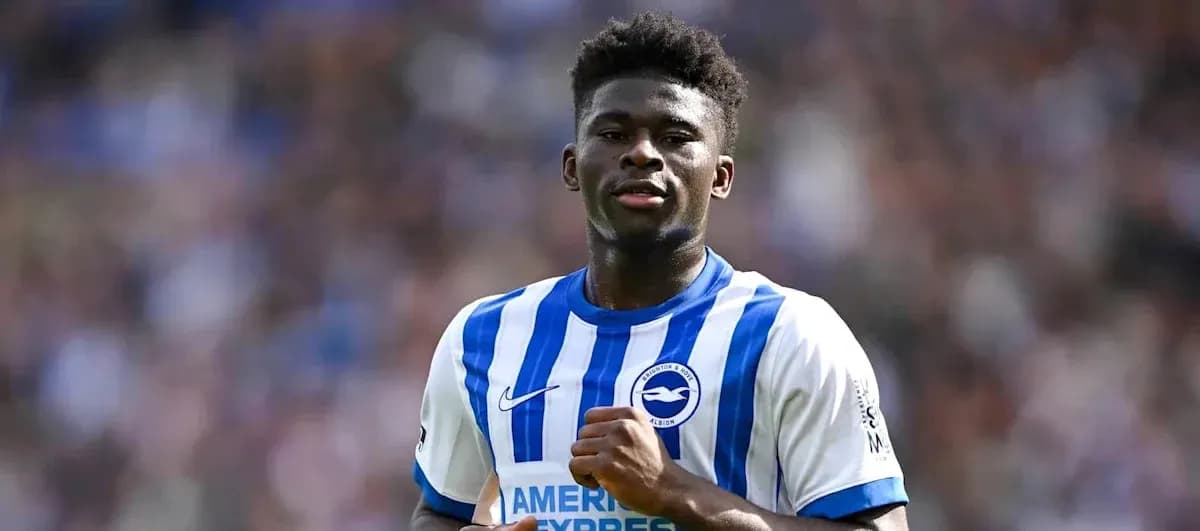
Carlos Baleba, Brighton & Hove Albion’s powerful Cameroonian midfielder, has long been viewed in Manchester as an ideal fit: athletic, aggressive, box-to-box, and still only 22. He was described as United’s “dream” midfield signing last summer, but Brighton’s valuation – also around £100m – stopped the deal before it ever truly advanced.
United were not just window-shopping. It is understood they had an agreement with Baleba on personal terms back in August. Then, in April, Fabrizio Romano reported that a verbal agreement between Baleba and United for a move in summer 2025 remained in place. On paper, the path looked clear.
His season on the south coast did not explode as many expected, and that seemed to open the door. A dip in form often softens price tags. This time, it has not. Brighton’s stance is unchanged. The Seagulls are refusing to offer any meaningful discount and are again prepared to stare down the market.
The Guardian states that United retain a strong interest in Baleba, but Brighton are confident he will stay put. For the second summer running, United find themselves in a familiar position: admiring a Brighton midfielder from a distance, unable or unwilling to break through the club’s valuation.
United turn to Mateus Fernandes
So the gaze shifts again.
With Baleba looking increasingly out of reach, United have started to focus more intently on West Ham’s Mateus Fernandes. Jason Wilcox, the club’s director of football, is monitoring the young Portuguese midfielder as a serious alternative to bolster the heart of Erik ten Hag’s – or his successor’s – side.
West Ham, though, have their own financial and sporting realities to navigate. Relegation to the Championship has hit hard, and the club needs to generate funds through sales. That should, in theory, give buyers leverage. For now, the Hammers are holding out, believed to be demanding around £80m for Fernandes.
INEOS, overseeing United’s football operations, have drawn a line. They have no intention of meeting that asking price. United, for once, may be prepared to wait. With West Ham under pressure to sell, the market could come to them rather than the other way around.
So the picture is clear but complicated. United have money. They have a defined plan to reshape a midfield that has looked disjointed and short of energy. They have identified targets: Anderson, Baleba, Fernandes.
What they do not yet have is a breakthrough. And with City circling Anderson, Brighton stonewalling on Baleba, and West Ham playing hardball over Fernandes, this window will reveal something far more important than any single signing: whether the new regime at Old Trafford can finally turn intent into elite, decisive action in the market.





