Myles Lewis-Skelly: From Arsenal Starlet to Transfer Target
Myles Lewis-Skelly has not kicked a competitive ball this season and yet he is already one of the most talked-about names in English football.
The 19-year-old’s future at Arsenal has been under the microscope ever since he slipped down the left-back hierarchy last term, overtaken by Riccardo Calafiori and Piero Hincapie and effectively reduced to third choice in a position that once fast-tracked his rise.
From breakout star to big question mark
Twelve months earlier, the picture looked very different. In 2024-25, Lewis-Skelly exploded onto the scene, quickly emerging as one of the Premier League’s standout young full-backs. That form dragged him into the England squad and straight into the record books as the youngest player ever to score on his Three Lions debut.
Arsenal moved fast. The academy graduate signed a new five-year deal the following summer, a clear statement that he was part of the club’s long-term vision.
Then came the stall.
Last season proved far more complicated. His minutes at left-back dried up, competition intensified and, inside the club, the conversation shifted from “How high can he go here?” to “What is he worth?”
By April, Arsenal were prepared to at least listen. Club sources indicated they would look to bring in a minimum combined £100m for Lewis-Skelly and fellow academy product Ethan Nwaneri if the right offers arrived.
Midfield revival changes the mood
The story might have ended there. It hasn’t.
Moved back into his natural role in central midfield at the end of last season, Lewis-Skelly produced a timely resurgence. His performances in the middle of the pitch were sharp enough to force a rethink over his status heading into this transfer window.
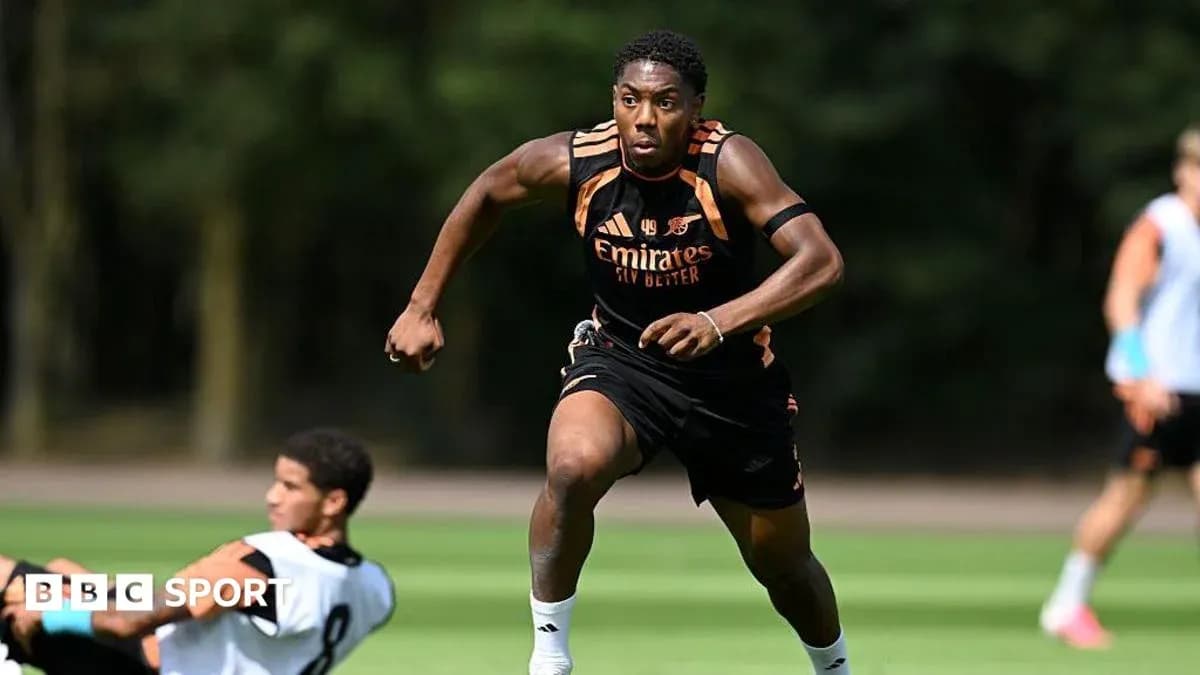
That momentum has carried into pre-season. He has been one of Arsenal’s standout performers over the summer schedule and has started the last two friendlies as Mikel Arteta’s side gear up for the Community Shield against Manchester City on Sunday.
Circumstances may yet open the door wider. Several midfielders are returning late from the World Cup, while £75m signing Bruno Guimaraes is still bedding into his new surroundings. In that gap, Lewis-Skelly senses an opportunity to make another push to become a genuine first-team regular.
United and Chelsea circle – but the picture is messy
On Tuesday, the noise around him spiked again. Reports suggested two Premier League clubs were interested in a move.
One source told BBC Sport that Lewis-Skelly was offered to Manchester United in January. Arsenal, for their part, insist they have not actively offered him to anyone.
United’s need for a left-back is real. Their most recent signing in the role, Patrick Dorgu, has spent pre-season operating higher up the pitch in an advanced role. After Michael Carrick took charge, injuries restricted Dorgu and all of his Premier League appearances under the new boss came on the wing or in a wide attacking position.
Luke Shaw remains first choice and started every league game last season, but his overall fitness record is patchy. United have been linked with Newcastle’s Lewis Hall, yet privately accept how difficult that deal would be, especially after Sandro Tonali and Guimaraes left St James’ Park.
If United did move for Lewis-Skelly, they would gain a player who could also operate as the third midfielder in a system that still prompts internal debate. The sense around Old Trafford, though, is that they prefer a more natural, specialist full-back to challenge directly for a starting berth.
Chelsea’s stance is equally tangled. Like United, they say they have been offered the chance to sign Lewis-Skelly, but again Arsenal maintain they have not put the player on the market to any specific club.
The London rivals already have two left-backs in Jorrel Hato and new signing Pep Chavarria. With no European football this season, Chelsea’s fixture list is lighter and the need for a third left-back is minimal. They also have six central midfielders on the books, even if there is a possibility Enzo Fernandez is sold and Dario Essugo leaves on loan.
Without substantial sales, it is hard to see Chelsea committing serious money to Lewis-Skelly.
Player wants Arsenal, Arsenal want flexibility
Through all of this, Lewis-Skelly’s position is clear. He wants to stay at Arsenal. His focus is on fighting for a place and turning his pre-season form into something more permanent.
He knows the challenge. Guimaraes has arrived for a huge fee and will expect to anchor the midfield. That inevitably squeezes space. Yet Arsenal’s schedule, spread across multiple competitions, still promises enough minutes for a versatile, high-energy academy graduate if he convinces Arteta he belongs in the core group.
The club’s wider transfer strategy complicates matters. Arsenal need to sell before the window closes. Gabriel Jesus and Gabriel Martinelli are understood to be available at the right price. Fabio Vieira and Reiss Nelson are not in Arteta’s plans.
Last summer, Arsenal spent heavily, bringing in eight players for around £250m. They have already passed the £100m mark in this window and are still looking at further additions before the deadline.
Some money has come back in. Christian Norgaard has joined Everton for £7m and Leandro Trossard has moved to Besiktas for about £15m. Even so, Arsenal know they must stay nimble as the clock ticks down.
The “pure profit” dilemma
That is where Lewis-Skelly’s status as an academy graduate bites. Any fee for him would count as pure profit in the traditional accounting sense, a powerful lever for a club trying to balance heavy outlay.
Lewis-Skelly is acutely aware of that label. When Arsenal lifted the Premier League trophy at Selhurst Park on the final day of last season, he posted a picture of himself with the title and captioned it, pointedly: “pure profit”.
The landscape has shifted slightly with the introduction of the new Squad Cost Ratio (SCR) rules. Under SCR, income from player sales is spread evenly across the length of a player’s contract rather than hitting the books in one lump sum. That change dulls the immediate accounting impact of cashing in on an academy product.
Even so, the underlying tension remains. He is both a promising midfielder and a financial asset.
For now, a move does not appear imminent. No agreement, no advanced talks, no bags packed at London Colney.
But certainty is another matter. With Arsenal still active in the market, rivals circling for opportunities and a young player determined to prove he belongs in the heart of Arteta’s team, Lewis-Skelly’s story this season may yet be defined not by where he starts it, but by where – and how often – he plays when it really matters.